Does NIH recommend acupuncture?

"NIH recommends acupuncture" - that's the headline on a recent web article on an acupuncturists' website. Now, I know that NIH has granted millions of dollars to acupuncture researchers who have tried their best to prove it works, but I didn't think NIH officially endorsed it. For one thing, despite these wasted millions, the best evidence shows that acupuncture doesn't work, not even a little bit.

What the article was referring to illustrates the dangers of NIH's far-too-gentle treatment of acupuncture and other "alternative" practices. It also shows how promoters of questionable or downright bogus practices can distort the facts to suit their own ends.

What the acupuncturists found was an NIH news site that ran an article called "Understanding acupuncture: time to try it?" (Note the question mark.) The article was written by Harrison Wein, a science writer at NIH who interviewed a handful of researchers, most of them promoters of acupuncture themselves who are funded by NCCAM.

(I've written about NCCAM before, so here I'll just remind readers that it was created by Congress as a way to earmark funds for bad science that can't pass muster in normal peer review. NCCAM grants over $200 million per year to its stable of mediocre scientists.)

Wein did a very poor job of describing the complete implausibility of acupuncture, but he did at least point out that sham acupuncture works just as well as "real", and it doesn't even matter if you use toothpicks that don't pierce the skin. So does his article endorse acupuncture? In a sidebar titled "If you want to try acupuncture," it says:
  • "Don’t use acupuncture as a replacement for conventional care"
  • "Don’t rely on a diagnosis of disease by an acupuncturist who doesn’t have conventional medical training"
and a few similar things, none of them recommendations for acupuncture. The article concludes by asking the question again:
"Should you try acupuncture? Studies have found it to be very safe, with few side effects. If you’re thinking about it, talk to your doctor."
So no, not an endorsement. Just a much-too-gentle recommendation to talk to your doctor first. The writer (Wein) regurgitates the claims of acupuncture promoters hook, line, and sinker - and he doesn't cite any evidence for his statement that it is "very safe." In fact, acupuncture often causes infections, sometimes serious ones. And as I wrote last month in The Atlantic: in 1995, a 40-year-old Norwegian woman visited an acupuncturist for relief from fibromyalgia. As described in The Lancet, she died two hours later, and an autopsy revealed that the needle had punctured her left ventricle.

Think that's just one unfortunate anecdote? Well, in the journal BMJ last year, researchers reported that acupuncture infections are a significant problem worldwide, and that they have been under-reported for years. Infections caused by acupuncturists have led to "joint destruction, multi-organ failure, flesh-eating disease and paralysis" as well as hepatitis B and C and mycobacteriosis.

So I don't agree that acupuncture is "very safe." After I gave an interview on Minnesota Public Radio last month, I was attacked by acupuncturists claiming that they don't use "dirty needles" (which I never claimed) - but in saying this, the attackers reveal their own ignorance. Needles aren't the problem: it's that every site on the skin as well as the acupuncturists hands that need to be sterilized. You see a photo on the website of the American College of Acupuncture and Oriental Medicine of a bare-handed person inserting needles into someone's skin. In case they remove it after reading this article, here it is:

All this should be beside the point, though, because acupuncture simply doesn't work. One of the acupuncture researchers (funded by NCCAM) interviewed in the NIH news story, Karen Sherman, had this response to the data showing that toothpicks work as well as needles:
"For example, when researchers have compared inserting needles with just pressing a toothpick onto acupuncture points, they’ve often found both treatments to be successful. But Sherman questions whether these are really controls. Many traditional acupuncturists would consider them true treatments, too. The important thing, in their view, is to hit the right spot, not necessarily how deep you go."
So when the evidence doesn't show what she likes, Dr. Sherman changes the definition of placebo. This is called "moving the goalpost," and it's a classic sign of bad science (and a bad scientist). Actually, she goes even further, saying "I don’t really think you can come up with a great placebo needling." In other words, in Dr. Sherman's world, acupuncture can't really be tested. I guess it's just magic.

Even though the NIH article doesn't recommend acupuncture, it uncritically repeats some ridiculous claims, such as:
"… the body contains a delicate balance of 2 opposing and inseparable forces: yin and yang. Yin represents the cold, slow or passive principle. Yang represents the hot, excited or active principle. Health is achieved through balancing the 2. Disease comes from an imbalance that leads to a blockage in the flow of qi—the vital energy or life force thought to regulate your spiritual, emotional, mental and physical health. Acupuncture is intended to remove blockages in the flow of qi and restore and maintain health."
I want to laugh at this, but it appears on an honest-to-goodness NIH website. As my colleagues at Science-Based Medicine put it, "acupuncture is a pre-scientific superstition." It does not deserve our respect, nor should we take it seriously.

There's no scientific evidence whatsoever that "the flow of qi" has any physiological basis. The passage above should have been followed with a bit of real information, such as: "Scientifically, there is no more evidence for qi than there is for the tooth fairy or Santa Claus. However, some researchers argue that Santa Claus is quite a bit more plausible." But that would perhaps be hoping for too much backbone from NIH. Note to NIH: don't give pseudoscientists the imprimatur of legitimacy by repeating their claims. And pay better attention to what you allow on your website.

Federal judges decide that private companies own your DNA


Many scientists cheered last year when a federal judge ruled that human genes couldn't be patented. The case involved Myriad Genetics, which holds the patent rights on two genes, BRCA1 and BRCA2, that are associated with increased risks for breast and ovarian cancer. Thanks to these patents, you can't look these genes in your own body without paying a fee to Myriad. Sounds ridiculous, right? Well, that was the state of gene patents until last May, when judge Robert Sweet ruled that the Myriad's patents were invalid.

But now the courts have reversed themselves again. In a 105-page decision, two federal judges decided that the whole matter comes down to the meaning of the word "isolated." I kid you not.

Judge Sweet's ruling last year was based on the obvious scientific fact that genes are a product of nature, not an invention, and therefore they could not be patented. Patent lawyers were very upset over Sweet's ruling. Why was this controversial? Well, because the U.S. Patent and Trade Office has been granting gene patents for decades. Basically, once the USPTO decided to allow one gene patent, they never looked back, and they've now given out patents for over 4,000 human genes.

But this past week, an appeals court reversed last year's ruling and said yes, Myriad Genetics does indeed own the rights to the BRCA genes. The decision by Judge Alan Lourie reveals an astounding lack of understanding of DNA, genes, and genomes. I guess I shouldn't be surprised, but I had been hopeful that after the earlier ruling throwing out these patents, science and logic would prevail. I guess I should never underestimate the scientific ignorance of judges, though I should add that one of the three judges voted against his colleagues.

What was their contorted reasoning? They decided that "isolated DNA" is not the same as the natural DNA in your body, and that this distinction allows companies to patent it. (The word "isolated" occurs 219 times in the decision.) The judges wrote:
"According to Myriad, isolated DNA does not exist in nature, and isolated DNAs, unlike native DNAs, can be used as primers and probes for diagnosing cancer."

The mind boggles. Following this nugget, Judges Lourie and Moore give us a little mini-lesson in molecular biology:
"Native DNA exists in the body as one of forty-six large, contiguous DNA molecules…. Isolated DNA, in contrast, is a free-standing portion of a native DNA molecule, frequently a single gene…. Accordingly, BRCA1 and BRCA2 in their isolated state are not the same molecules as DNA as it exists in the body."

This is scientific nonsense, but the court bought it. (Over at TechDirt.com, Mike Masnick made the colorful analogy that this is like "arguing that because a severed finger is not attached to a hand, the finger is not naturally occurring, and, thus, is patentable.") Wrote the judges:
"we conclude that the challenged claims are drawn to patentable subject matter because the claims cover molecules that are markedly different—have a distinctive chemical identity and nature—from molecules that exist in nature."

Among other problems, Judges Lourie and Moore don't understand a basic fact of genetics: that genes are "isolated" by our body's own genetic machinery when they are copied into RNA and then translated into proteins. Or perhaps they do understand, but they don't care because they just want an excuse to keep gene patents around. This is what can happen when lawyers (judges) make scientific decisions: they go on for pages and pages about the semantics of a word ("isolated"), and produce a result that is scientifically meaningless.

Judge Bryson makes much more sense in his dissent, writing:
"the question in this case is whether an individual can obtain patent rights to a human gene. From a common-sense point of view, most observers would answer, `Of course not. Patents are for inventions. A human gene is not an invention.' The essence of Myriad’s argument in this case is to say that it has not patented a human gene, but something quite different—an isolated human gene."

So that's two judges (Sweet and Bryson) against human gene patents, and two in favor. This case isn't over yet; last week's ruling by the 3-judge panel will likely be appealed to the full appeals court next. It's hard to predict what they will say. Meanwhile, Myriad charges $4000 to run tests on BRCA1 and BRCA2, as I wrote last year. This means that if a woman wants to test her own DNA for any mutations in the BRCA genes - including mutations that weren't even known when Myriad got the patent - she must pay Myriad merely to look at her own genes.


I'm not a lawyer, but I already see one way around Myriad's patents in this flawed decision. The judge's (and Myriad's) reliance on "isolated BRCA genes" refers to the process of isolating and copying the genes using a laboratory method called RT-PCR, and then sequencing just the isolated bits. Today, though, we can sequence a person's entire genome, without "isolating" any particular genes, for under $5000, and then we can test for mutations in the BRCA genes without ever "isolating" them. In fact, a colleague and I published a paper just last year describing how to do this, and we released a free software package that allows anyone to test their BRCA genes at home on a desktop computer. Genomics Law Report has a detailed legal analysis of what our software means for the Myriad case.

Scientifically, it shouldn't matter how the judges define "isolated" DNA. And as two federal judges have now ruled, genes are not inventions, full stop. What's more, gene patents slow down science by throwing legal barriers in the path of anyone who wants to work on those genes. Finally, I'm amazed at the hubris of companies like Myriad - or anyone else - who claim they "own" a gene. Let's hope the full appeals court will reverse the tortured reasoning of Judges Lourie and Moore, and get the patent lawyers out of the laboratory.

The Baltimore Sun dives into the anti-vaccination pool

In recent weeks, the Baltimore Sun, once an excellent newspaper, has dived headfirst into the pool of anti-vaccination pseudoscience. With two prominent opinion pieces, the Sun has given a platform to the anti-vaccine movement that they probably didn't expect, and that they certainly didn't deserve. The puzzle is, why? Who on the Sun's editorial board decided to offer their pages to the voices of fear and unreason?

First, on June 16, the Sun printed an Opinion article by Mark Geier, where he argued that his unfounded theories about the causes of autism make it okay for him to chemically castrate young boys. (I know this sounds shocking, but it's all too true.) I wrote about Geier two years ago: he and his son David administer what they called the "Lupron protocol" to autistic boys. They charge $5000-$6000 per month for their treatment, which is based on their belief that autism is caused by an excess of testosterone. Lupron, the drug they give to children, is a testosterone-suppressing drug that is the chemical equivalent of castration. It is a harsh treatment used to treat advanced prostate cancer. There is no evidence that it helps autistic boys. When the Chicago Tribune interviewed Simon Baron-Cohen, a professor and director of the Autism Research Center at Cambridge University, here was his reaction:
"The idea of using it [Lupron] with vulnerable children with autism, who do not have a life-threatening disease and pose no danger to anyone, without a careful trial to determine the unwanted side effects or indeed any benefits, fills me with horror."
Finally, after Geier had spent many years of selling his quack treatment to vulnerable families, the state of Maryland suspected his medical license suspected in April. Now, for reasons I cannot fathom, the Baltimore Sun has given him a huge billboard to ask for his license back so he can resume his discredited Lupron protocol.

(Geier also claims that mercury in vaccines causes the rise in testosterone levels that he claims to treat. He ignores the overwhelming evidence, re-affirmed again last year, that there is no link between mercury-containing vaccines and autism.)

This wasn't enough bad science for the Sun, which just a few weeks later published another Opinion piece, this one by anti-vaccine activist Margaret Dunkle. In her article, Dunkle claims that the vaccine schedule includes too many doses, and she further claims that these are harmful to children. This "too many, too soon" argumen is a constant refrain of the anti-vax movement (particularly Jenny McCarthy), despite the lack of science to support it. The evidence on her side: a new study published by Gayle Delong, claiming that autism rates and vaccination rates are linked. Who is Gayle Delong? It turns out she is an economist, not a scientist, and she's a board member of SafeMinds, a well-known anti-vaccination group. Delong's study has already been thoroughly debunked by Neuroskeptic, Sullivan, Liz Ditz, and others, who pointed out its deeply flawed statistics and other problems. Dunkle, though, was happy to jump on this junk science and ignore the real science.

The real science tells just the opposite tale. For example, a thorough review published in Pediatrics in 2002 showed that infants today are exposed to fewer antigens than they were 40 years ago, due to better vaccine formulations. It also found that vaccines "prevent the weakening of the immune system." Countless other articles have shown the efficacy of vaccines; the Immunize for Good site is a good source for a realistic picture of the risks versus the benefits.

Is the Baltimore Sun responsible for the anti-vaccination stories appearing on its Opinion pages? I can imagine their response: "we're just presenting both sides," they might argue. Debates are just fine when political opinions are concerned, but you don't get to argue about facts. Scientific facts are not debated from "both sides" - for example, we don't waste time arguing that diseases are caused by "miasmas" as was once believed. And when the subject is vaccines, presenting the anti-science, anti-vaccine argument has real, and harmful, consequences.

The science is clear: vaccines have been the single greatest boon to public health in the history of mankind. Vaccines have saved millions of lives, and allowed parents to live without the fear that their children will sicken and die. Here are some facts: pre-vaccination, whooping cough caused 9000 deaths per year in the U.S. Post-vaccine, this has dropped to 20 deaths per year. Pre-vaccination, there were 350,000 polio cases worldwide in 1988. In 2009, there were just 1,604, and there's a chance we can eliminate polio entirely. Back in 1921, diptheria caused 206,000 cases in the U.S. alone. In 2001, there were just 2 cases.

If we stop vaccinating, these diseases will return. And make no mistake about it: if measles, whooping cough, polio, and other vaccine-preventable diseases return, children will die. I'm sure that the editors of the Baltimore Sun don't want this to happen. But through their ignorance of the science around vaccines, they have allowed their newspaper to become a voice for a dangerously misinformed group of activists whose main goal is to stop vaccines.

How to correct the damage? Well, the Sun could publish multiple articles on their Opinion pages explaining how many lives vaccines have saved. They could help to re-educate parents about how valuable these medicines are, so they will demand them for their children, rather than refusing them as some parents now do. I have only a faint hope that the Sun's editors will take such action, but I'm calling for it anyway. They owe it to the public.

They engineered a better salmon, so why can't I eat it?

What happened to genetically modified salmon? A few months back I was looking forward to my first taste of the new AquaBounty salmon, which grows to maturity twice as fast as wild salmon. Will it taste just as good? Better? I thought I'd know soon. But then politics intervened.

It's almost always bad when politicians meddle in science. Usually they do so because they just don't like what they're hearing, as they have done time after time with global warming. Now it's genetically modified salmon. What happened? The FDA was ready to approve the new salmon until two weeks ago, when Congressman Don Young from Alaska, under heavy lobbying pressure from the Alaskan fisheries industry, simply stepped in to block it. The FDA had already found that the fish was safe to eat, but hadn't yet issued final approval. So Congressman Young and his pals decided to pass legislation to halt the process.

I wrote about AquaBounty's salmon last year, when the FDA was holding hearings to approve it for human consumption. Ironically, the FDA doesn't get to approve genetically modified crops, and our food supply is filled with GM corn, soy, and other plants. But thanks to the vagaries of U.S. law, the FDA gets to weigh in on salmon.

The science is pretty cool: AquaBounty took two genes from other fish and added them to Atlantic salmon. They added a growth gene from Pacific Chinook salmon, and another gene from a fish called ocean pout (Trisopterus luscus). Together, these genes allow AquaBounty's new salmon, called AquAdvantage ®, to grow to maturity in 18 months rather than 3 years. This promises to make salmon farming much more efficient, if we ever allow it.

Better fish farming is incredibly important for the future of wild fish on our planet. Wild fish populations have plunged 90-99% all over the planet, and many fish populations have been completely wiped out. Here on the east coast of North America, wild cod populations completely crashed in the 1990s, and by 2004 the World Wildlife Fund predicted that wild cod would disappear completely in 15 years. The situation isn't any better for Atlantic salmon, which are at "perilously low levels." The U.S. declared Atlantic salmon an endangered species in 2000, and added more salmon populations to the endangered list in 2009.

The solution, obviously, is to farm our fish, just like we do with every other food we eat. As I wrote last year:
"We farm all the other animals that we eat. Imagine that we only ate wild cows, or chicken, or pigs. The human race can't be fed by wild animals alone - we're too numerous and too hungry. Sooner or later, we will drive wild fish to extinction, unless we make the switch to farmed fish."
To make fish farming more efficient, we need to apply new genetic technologies to increase yields the way we have with our crops and with domesticated animals.

These new salmon are nothing to be afraid of, but anti-GMO activists have labelled them "Frankenfish" as a transparent scare tactic. I'm neither a fan nor an opponent GMO foods, but knee-jerk opposition to all GMOs doesn't make any sense. Modifying crops to make them more resistant to pesticides, as Big Agriculture firms (Monsanto in particular) have done, strikes me as a terrible use of the technology. "Roundup Ready" corn and soy allow Monsanto to sell more of their herbicide, and make farmers dependent on it. If anti-GMO forces want to boycott this type of genetically modified organism, I'm on their side.

But not with salmon. AquaBounty salmon doesn't promote the use of pesticides or other industrial chemicals. It just makes salmon farming more efficient. The genes added to the salmon are naturally-occurring ones from other fish, so they are still 100% fish. (In contrast, GM crops have genes injected into them from bacteria and other foreign species.) Furthermore, the farming operations by AquaBounty are all inland farms, so there's almost zero chance of the fish escaping into the wild. (I went to one of the FDA hearings last fall and heard a detailed description of the farms.) And even if they did escape, it wouldn't matter because the AquAdvantage salmon are sterile, and couldn't breed with wild fish.

Despite these facts, environmental organizations such as Food and Water Watch are waging a campaign to "Stop Frankenfish,", and spreading misinformation about the science. I was particularly disappointed by the comments from the Union of Concerned Scientists at last September's FDA hearing. Jane Rissler from the UCS compared GM salmon to the massive BP oil spill in the Gulf of Mexico, a ridiculous bit of overstatement. I thought the UCS were the good guys! I agree with their stances on many issues, but they do not speak for me on this one.

I can't resist pointing out that Republicans such as Alaska's Rep. Young claim to hate regulation, and favor the free market - except when they don't. Here we have Young stepping in and imposing regulation to halt the free market under pressure from lobbyists. Not surprisingly, Young is joined by Alaska Senator Lisa Murkowski, but his efforts are also supported by Democratic Senator Patty Murray from Washington, who also has a salmon industry to protect. As happens all too often, politicians are in favor of science only when they agree with it. They're all too happy to pass laws on behalf of special interests, even if it goes against with their supposed political positions on government regulation.

Sadly, environmentalists who oppose GM salmon don't seem to realize that they are acting against their own interests. The same is true of the fishing industry. If they win, the result will be the eventual extinction of many wild fish species, with unpredictable consequences for the ocean's ecosystem. The arguments about the threat posed by GM salmon haven't stood up to scientific scrutiny, so these groups have turned to politics instead. It looks like they might win, in the short term. But if we insist on taking so many of the ocean's fish for our dinner plates, the wild fish will soon be gone.

Strychnine for your child's cold - courtesy of your friendly homeopath


I was in the pharmacy section of my local grocery store last week, looking for children's ibuprofen, when I stumbled upon Children's ColdCalm, a homeopathic product from Boiron.

This stuff isn't cheap - it's $12.49 at RiteAid, and the price is similar at my local grocery stores (Giant Foods and Whole Foods). If you follow the instructions, you'll give half the package (40 pills) to your child in the first 12 hours.

Not only is it expensive, but it doesn't work - or at least there's no evidence that it does. Boiron is selling parents sugar pills and telling them that it will cure their children of colds. Here's what the package says, right on the front: "Multi-Symptom Cold Relief, Sneezing, Runny Nose, Nasal Congestion, Minor Sore Throat."

Since it's in the "Colds" section of the pharmacy, most parents probably assume this is just like any other medicine. But it's not. It's a homeopathic drug.

The manufacturer, Boiron, makes very specifc claims on their website. Here's a partial list of ColdCalm's ingredients with their claimed benefits:
Belladonna 6C HPUS * Relieves colds with a sudden onset
Eupatorium perfoliatum 3C HPUS * Relieves sinus pain
Gelsemium sempervirens 6C HPUS * Relieves headaches associated with colds
Kali bichromicum 6C HPUS * Relieves nasal discharge
Nux vomica 3C HPUS * Relieves sneezing attacks
Phytolacca decandra 6C HPUS * Relieves sore throat associated with colds
Pulsatilla 6C HPUS * Relieves colds with a loss of taste and smell
What the heck are these? Belladonna sounds familiar - oh yes, that because it's an extremely toxic plant, also called Deadly Nightshade, one of the most poisonous plants in the Western hemisphere.

And "nux vomica": that sounds suspicious. Maybe that's because it is actually strychnine! Yes, that's right, strychnine, once used as rat poison, which is fatal to adults in doses as small as 30 milligrams. I wonder how much Boiron recommends that we give to children?

According to the American Cancer Society:
"Strychnos nux-vomica has not been proven effective for the treatment of any illness. Since the seeds contain strychnine, which is poisonous to humans, conventional medical practitioners do not recommend it as a medicine. Some research has shown that the level of poison in nux vomica preparations may depend greatly on how the seeds are processed."
Need I say more? Pulsutilla, another ingredient in ColdCalm, is a poisonous plant that produces toxins that slow the heart and can cause convulsions.

Is this how they want to cure my child's cold?

But wait, these are homeopathic medicines, which means they've been diluted down to nothing. So perhaps there's so little strychnine in the pills that it won't hurt your child, at least not too much. In ColdCalm, though, the dilutions aren't as tiny as the ones used in typical homeopathic preparations: 3C is one part in 1 million, so there might be some strychnine left in these tablets. We really don't know. A huge problem here is that none of these claims have been tested, so no one (including Boiron) knows what strychnine at these dilutions does to a child. Nor can they say precisely how much strychnine is in each tablet.

You might have noticed the abbreviation HPUS in that ingredient list: this refers to the Homeopathic Pharmacopoeia, a list of homeopathic drugs. HPUS drugs cannot be regulated by the FDA. Yes, you read that right. Homeopathic drugs are approved automatically as long as the homeopaths themselves list them in their "pharmacopoeia." No evidence of efficacy is required. We have Congress to thank for this - specifically, the Food, Drug and Cosmetics Act of 1938, which granted a special exception to homeopathic drugs. The Act was authored primarily by a Senator who believed in homeopathy.

I wrote about Boiron's ridiculous Oscillococcinum flu "cure" last year, but I didn't realize they have a whole line of bogus treatments for colds and flu. And Boiron isn't some small mom-and-pop operation: it's a huge multi-national company selling nothing but homeopathic products, making huge profits selling treatments that don't work.

So parents, if you see "homeopathic" on that package in the pharmacy, you might want to look a little harder at what they're selling you.

Alternative medicine debate at The Atlantic

Over at The Atlantic, one of my favorite monthly magazines, there's a feature article by David Freedman in which I'm quoted at some length, titled "The Triumph of New-Age Medicine." As readers of this blog might guess, I have some disagreements with the title and with many of the points in Freedman's otherwise very well-written piece.

Rather than blogging about it here, The Atlantic invited me to post a response in an online debate they are having. My response, which just appeared today (June 16), is titled "A 'Triumph' of Hype Over Reality" and you can read it here. I encourage you to post comments at the Atlantic site.

Several more experts' responses will appear on this page at The Atlantic over the next few days, if you want to follow the debate. I know I will.

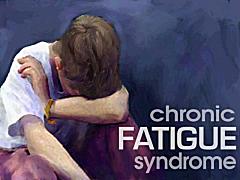
Chronic fatigue syndrome hypothesis collapses further


Two years ago, a team of scientists announced with great fanfare that they'd found the cause of chronic fatigue syndrome: a mouse retrovirus called XMRV. There were many media reports and much excitement, and at least a dozen studies were launched to look for this virus in more patients. Unfortunately for patients, the findings turned out to be seriously flawed.

New results published this week seem to be the final nail in the coffin for the XMRV hypothesis. The editors at Science have taken the unusual step of publicly asking the authors of the 2009 study to retract their findings. As reported in the Wall St. Journal, Science sent a letter to the authors stating:
"At this juncture, Science feels that it would be in the best interest of the scientific community'' for the co-authors to retract the paper."
In addition, the editors published an "expression of concern" this week, which is their way of warning everyone that the results are wrong. Judy Mikovits, the leader of the study, steadfastly insists that she is right and all the others are wrong.

Despite Mikovits' claims, the evidence is very clear that she is wrong. Study after study has found no trace of the virus in CFS patients. Where Mikovits' original study found 67% of the patients had XMRV, followup studies found 0%. A set of three papers in the journal Retrovirology, published in December, showed conclusively that the finding was due to laboratory contamination. The XMRV virus turned up as a contaminant in cancer cell lines that are widely used in laboratory research. As I wrote in January:
"It turns out that a common tumor cell line called 22Rv1 is infected with MLV-X. It also turns out that all the XMRV sequences from human patients are far more similar to the exact same strain of MLV-X that is in the mouse cell line. The tumor cell line was in the lab doing the experiments: ergo, it's contamination. Elementary, my dear Watson."
Two new papers in Science this week found the same thing. One of them, titled "No Evidence of Murine-Like Gammaretroviruses in CFS Patients Previously Identified as XMRV-Infected" looked at patients who had tested positive for the XMRV virus, and found that they didn't have it all. The second study provides new detail on how the XMRV virus got into the cancer cell lines.

So why does Mikovits cling so fiercely to her claims? (She posted a long letter defending herself at the Whittemore Peterson Institute, where she works.) What she doesn't say is that she has gone far beyond her original findings: she and her institute are actively promoting the use of anti-retroviral therapies for CFS patients. As Nature News reported in March,
"The WPI owns a company that charges patients up to $549 to be tested for XMRV, and Mikovits believes that patients who test positive should consult their doctors about getting antiretroviral drugs normally prescribed to those with HIV."
This is a blatant conflict of interest, and it perhaps explains some of Mikovits' stubbornness.

It gets worse. As Trine Tsouderos reported last summer in the Chicago Tribune, Mikovits claimed at the Autism One conference that XMRV also causes autism. She has no evidence to support this startling claim. Mikovits stated to the Tribune that "unless we do something now this (XMRV) could be the worst epidemic in U.S. history."

Mikovits also believes there is a conspiracy against her. In March, she told Nature "I had no idea there was that much bias against this disease." Nonsense. The collapse of the evidence about XMRV and chronic fatigue syndrome is just science doing what it is supposed to do: when a study cannot be replicated, then the hypothesis is abandoned and we move on.

This is a classic tale of a scientist gone bad. Unfortunately for CFS patients, Mikovits is distracting attention from efforts to find the real cause. By speaking at the Autism One conference, she has joined the ranks of pseudoscientists and anti-vaccinationists. It's pretty clear now that she will never retract her findings, despite the pressure from the editors at Science. I can only hope that CFS patients, who are understandably desperate for a treatment, won't be fooled into taking ineffective and possibly harmful therapies based on the failed XMRV hypothesis.