Showing posts with label heart health. Show all posts

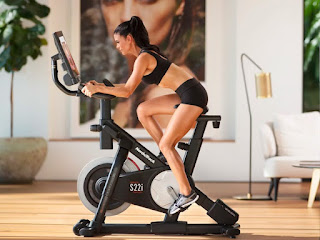
Is a 7-minute workout just as good as an hour-long bike ride? Yes, it can be.


Let’s face it, most of us don’t really like working out. Yes, there are those who are exercise fanatics, who go on and on about the “endorphin high” they get from a long run or bike ride, but these people are exceptions.

And yet it’s indisputable that regular exercise carries a host of health benefits, not only to your heart and cardiovascular system, but also to strength, mood, and overall energy levels. Exercise is just really good for you.

If you’re lucky enough to enjoy a sport that you can play regularly, you might get all the exercise you need without working out. But most members of modern societies simply don’t. Most humans seem to prefer a sedentary lifestyle.

To make up for sitting around most of the time, many people try to work out regularly. The question is, how long do you need to work out get those cardiovascular benefits?

Not very long, it turns out. That’s good news for those who don’t have time for hour-long workouts.

18 minutes is just as good as one hour. Let’s go back to 2005, when a study out of Canada, led by Martin Gibala at McMaster University, showed that very short, intense exercise–pedalling as fast as possible on on a stationary bicycle–was remarkably beneficial, even better than an hour-long bike ride. In just two weeks, the subjects of this study, who were all young and healthy, “increased muscle oxidative potential and doubled endurance capacity.”

You’re probably thinking, what do I need to do?

Well, for this routine, you need three 18-minute sessions per week. In each session, you do the following:

  1. Exercise as hard as possible for just 30 seconds. On a stationary bike, this means you’ll pedal as fast as you can.
  2. Followed this by a 4-minute rest period where you keep pedaling at a relaxed pace.
  3. Repeat this 4 times, which will take a total of 18 minutes.

Voila! You are done. If you don’t have a stationary bike, but you can use another indoor exercise machine with equal effect (treadmill, elliptical, rowing, etc.) as long as it provides an aerobic workout.

You might have noticed that this is really just a 2-minute workout, in four separate 30-second bursts. But the 4-minute rest periods are important, so you need to plan for 18 minutes, and repeat this 3 times a week.

7 minutes is just as good as 45 minutes. Can we get benefits from an even shorter workout? Yes! A 2016 study by the same lab (Martin Gibala and his students) looked at the benefits of exercising all-out for just 20 seconds, with a short rest period in between, They found that a 7-minute sessions of “sprint interval training” (SIT) was just as beneficial as a 45-minute workout.

Again, you may be asking, what do I need to do for this routine?

For this routine, you use an exercise bike and do this:

  1. Pedal furiously (all-out) for 20 seconds.
  2. Follow this by 2 minutes of pedaling at a normal rate.
  3. Repeat this 3 times, for a total of 7 minutes of exercise.

Repeat the whole routine 3 times a week.

(In the scientific study, the all-out phase used a machine that measured power at 500W, and the slower pace was at 50W. Some indoor exercise machines let you measure your output, but you’re not doing a science experiment here. Just pedal as fast as possible for 20 seconds, and you’ll reap most of the benefits.)

One small caveat here is that the routine used by the scientists added a 2-minute warmup and a 3-minute cool-down at a normal pace. So if you want to follow their protocol more precisely, you’ll need 12 minutes. Still, at 12 minutes this is much shorter than the 18-minute routine above.

How about 4-seconds? Okay, now we’re getting a bit ridiculous, right? But an even more recent study, just last year, looked at the benefits of 4-second high-intensity training, with just a 15-second rest period.

Of course, it wasn’t just 4 seconds of exercise. The subjects of this very small study (11 people, averaging 21 years old) at the University of Texas did 30 repetitions of 4 seconds each. More specifically, they “were asked to cycle as hard and as fast as possible for 4 seconds” on a specially equipped exercise bike. After a 30-second recovery, they did it again.

Repeating this 30 times takes about 17 minutes, but over the course of 8 weeks, the experimenters reduced the rest period to just 15 seconds, which reduced the overall session to less than 10 minutes. However, that’s not likely to work for most people, unless you’re a very fit 21-year-old. So I’m going to call this a 17-minute workout.

Repeating this routine 3 times per week produced benefits in both strength and aerobic capacity, much like the SIT training sessions in the Canadian studies.

So how do you do this “4-second workout” (which really takes 17 minutes)? Here it is:

  1. Pedal furiously for 4 seconds.
  2. Rest for 30 seconds, pedaling at a relaxed rate.
  3. Repeat 30 times.

All three of these workouts I’ve described here can produce cardiovascular benefits equal to a 45-minute bike ride, and they only take 18 minutes, 12 minutes (7 minutes plus warmup and cool down), and 17 minutes.

The only downside of all these high-intensity workouts is that you might sweat, which means you’ll need to shower off afterwards. Another option (not backed up by such precise scientific studies) is a less-vigorous but even shorter 6-minute workout, like this one in the New York Times, which needs no equipment at all and should provide health benefits without working up a sweat. You can even do that one at the office.

So if you don’t have an hour to spare 3 times per week, how about 12 minutes? It can’t hurt to try.

Does drinking coffee reduce the risk of atrial fibrillation? Maybe just a little.

Atrial fibrillation is the most common type of heart arrhythmia in the U.S. and Europe, affecting millions of people every day. A-fib is a condition where your heart beats irregularly and less efficiently than normal. Some people experience a-fib without even being aware of it, but it is a serious condition that leads to an estimated 750,000 hospitalizations per year in the U.S. alone.

The causes of a-fib are not completely understood, but one widespread view is that too much caffeine might trigger it. For example, the American Heart Association’s website says that “Avoiding atrial fibrillation and subsequently lowering your stroke risk can be as simple as foregoing your morning cup of coffee.” Although the site goes on to describe more substantial treatments such as beta blockers and calcium channel blockers, the idea of simply cutting out coffee seems very appealing.

As appealing as it sounds, this advice is wrong, at least for men.

In a study published in 2019 in the Journal of the American Heart Association, Vijaykumar Bodar and colleagues at Harvard Medical School looked at data from nearly 19,000 men who participated in the long-term Physicians’ Health Study. They looked at the risk of atrial fibrillation in men drinking anywhere from no coffee at all to 4 or more cups per day.

They found, somewhat surprisingly, that men who drank 1-3 cups of coffee per day had a 15% lower risk of a-fib compared to men who never or almost never drank coffee. They also found a small hint of a “dosage” effect, with the greatest reduction in risk at about 1.5 cups per day, and less benefit as consumption rose to 4 or more cups.

In a commentary published along with the study, Ryan Aleong and Amneet Sandhu point out that coffee contains a number of ingredients that might explain its cardiovascular benefits. They also point out, though, that the benefits are modest at best.

Unfortunately for women, though, coffee doesn’t seem to have the same benefits for them. Back in 2010, the Women’s Health Study reported that higher caffeine consumption did not increase the risk of a-fib in women, but it didn’t decrease it either. In a subgroup of women drinking the highest amount of coffee, they reported a slight increase in the risk of a-fib, but those women also smoked more often.

(Actually, if you look closely at the numbers in Table 2 of the Women’s Health Study report, women in the group who consumed an average amount of caffeine had a 20% lower risk of atrial fibrillation, consistent with the more recent study in men.)

For those of us who like coffee, this seems to be good news. At worst, coffee isn’t bad for heart health, and at best it might slightly reduce the risk of atrial fibrillation.

Some caveats: although these are large studies with thousands of men and women followed for many years, they rely on self-reporting of coffee consumption, which isn’t perfect. That’s probably the best we can do, though, since it’s impractical to measure caffeine consumption precisely over a long period of time.

The best advice, then, appears to be to keep drinking one or two cups of coffee per day, if you enjoy it. For those who have atrial fibrillation, cutting out that morning coffee, as the American Heart Association suggests, is very unlikely to help.

Can the Apple Watch monitor heart health?

Can the Apple Watch accurately detect atrial fibrillation?

When I first heard that scientists were conducting a study to answer this question, I was deeply skeptical. A simple wrist device detecting heart arrhythmias? This seemed too simplistic to be possible.

But a new study, just published in the New England Journal of Medicine, lays out some pretty compelling evidence that the Apple watch can do just that.

Atrial fibrillation (or atrial flutter) is a type of irregular heartbeat that is the most common cardiac arrhythmia in the U.S., affecting some 6 million people a year. The NEJM article estimates that the lifetime risk for "a-fib" might be as high as 1 in 3. Atrial fibrillation isn't necessarily a problem on its own, but it can greatly increase the risk of strokes. Many people have episodes of a-fib without even being aware of them, which is why a simple, convenient way of detecting them could be medically valuable.

The Apple Watch study was truly enormous, with 419,297 subjects monitored for about 4 months. Only a company like Apple, with a popular product like its watch, can even hope to recruit this many people to join a study. The idea was pretty simple: use the Apple Watch to detect an irregular pulse, which might be sign of atrial flutter or arrhythmia.

During the course of the study, 2,161 subjects had at least one report of an irregular pulse, about 0.5% of the total. Each of these subjects was then sent an electrocardiogram (ECG) patch, which they were supposed to wear for several days to determine if they really were having arrhythmias.

Of course, not everyone wore the ECG patch as they were supposed to, but in the end, 450 subjects wore the ECG patch (for an average of about 6 days), filled in all the required questionnaires, and returned the patch for analysis. Among these subjects, 34% of them genuinely did have atrial fibrillation as confirmed by the ECG patch. Some of them had only brief episodes, but a subgroup had nearly continuous symptoms.

The study also tried to determine the false positive rate of the Apple Watch warnings–that is, how often did it report an irregular pulse when the subject was not experiencing a-fib or atrial flutter? The researchers evaluated all of the reports from watches that were being worn by people who also had an ECG patch. In this analysis, 71% of the irregular pulse reports from the watch corresponded to atrial fibrillation simultaneously measured by the ECG patch. The other 29% weren't normal either: three-fourths of those reports were due to "frequent premature atrial contractions."

So overall, the Watch was surprisingly accurate, with an impressively low false positive rate.

How does it work? Well, the back of the watch contains several sensors that detect light (photodiodes), along with green and infrared LEDs that emit light. As Apple's website explains,
"By flashing its LED lights hundreds of times per second, Apple Watch can calculate the number of times the heart beats each minute."
This works because your skin is partially transparent: as everyone knows, you can see some of your blood vessels underneath your skin. In addition to measuring blood flow, the watch can also measure electrical signals using electrodes on the back of the watch and on a small dial on the side of the watch, called the Digital Crown. Here's how Apple explains this:
"When you place your finger on the Digital Crown, it creates a closed circuit between your heart and both arms, capturing the electrical impulses across your chest."
In other words, it behaves like an ECG monitor on your wrist. The NEJM study didn't use this feature of the Apple Watch, which suggests that the watch could be even more effective as a heart monitor in the future.

The Apple Watch is far from perfect, though. For one thing, we don't know how many episodes of atrial fibrillation it missed. Only 0.5% of subjects had a report of irregular pulse, but we don't know how many of the remaining 99.5% had an episode that the watch didn't detect. The authors of the study pointed out that they weren't trying to measure the watch's sensitivity, and they emphasized that
"the absence of an irregular pulse notification does not exclude possible arrhythmias."
Another caveat is that the study was funded by Apple, although it was led by scientists at Stanford and included scientists from multiple other highly regarded universities and medical schools. The funding was clearly disclosed in the NEJM article.

On the other hand, using the Apple Watch is far easier than other currently available procedures for monitoring your heart. Patients who have episodes of arrhythmia are typically told to wear a heart-rate monitor for days or weeks at a time. This involves taping electrodes to half a dozen places on your body, all of which are connected by wires to a device (basically a cell phone) that records the readings and sends them to a monitoring company. These monitors are very expensive to operate, far more than the Apple Watch.

So despite its imperfections, the Apple Watch might be the vanguard of a new wave of lightweight, less intrusive devices for monitoring our health. The technology is only going to get better.