Showing posts with label exercise. Show all posts

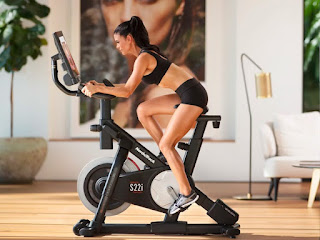
Is a 7-minute workout just as good as an hour-long bike ride? Yes, it can be.


Let’s face it, most of us don’t really like working out. Yes, there are those who are exercise fanatics, who go on and on about the “endorphin high” they get from a long run or bike ride, but these people are exceptions.

And yet it’s indisputable that regular exercise carries a host of health benefits, not only to your heart and cardiovascular system, but also to strength, mood, and overall energy levels. Exercise is just really good for you.

If you’re lucky enough to enjoy a sport that you can play regularly, you might get all the exercise you need without working out. But most members of modern societies simply don’t. Most humans seem to prefer a sedentary lifestyle.

To make up for sitting around most of the time, many people try to work out regularly. The question is, how long do you need to work out get those cardiovascular benefits?

Not very long, it turns out. That’s good news for those who don’t have time for hour-long workouts.

18 minutes is just as good as one hour. Let’s go back to 2005, when a study out of Canada, led by Martin Gibala at McMaster University, showed that very short, intense exercise–pedalling as fast as possible on on a stationary bicycle–was remarkably beneficial, even better than an hour-long bike ride. In just two weeks, the subjects of this study, who were all young and healthy, “increased muscle oxidative potential and doubled endurance capacity.”

You’re probably thinking, what do I need to do?

Well, for this routine, you need three 18-minute sessions per week. In each session, you do the following:

  1. Exercise as hard as possible for just 30 seconds. On a stationary bike, this means you’ll pedal as fast as you can.
  2. Followed this by a 4-minute rest period where you keep pedaling at a relaxed pace.
  3. Repeat this 4 times, which will take a total of 18 minutes.

Voila! You are done. If you don’t have a stationary bike, but you can use another indoor exercise machine with equal effect (treadmill, elliptical, rowing, etc.) as long as it provides an aerobic workout.

You might have noticed that this is really just a 2-minute workout, in four separate 30-second bursts. But the 4-minute rest periods are important, so you need to plan for 18 minutes, and repeat this 3 times a week.

7 minutes is just as good as 45 minutes. Can we get benefits from an even shorter workout? Yes! A 2016 study by the same lab (Martin Gibala and his students) looked at the benefits of exercising all-out for just 20 seconds, with a short rest period in between, They found that a 7-minute sessions of “sprint interval training” (SIT) was just as beneficial as a 45-minute workout.

Again, you may be asking, what do I need to do for this routine?

For this routine, you use an exercise bike and do this:

  1. Pedal furiously (all-out) for 20 seconds.
  2. Follow this by 2 minutes of pedaling at a normal rate.
  3. Repeat this 3 times, for a total of 7 minutes of exercise.

Repeat the whole routine 3 times a week.

(In the scientific study, the all-out phase used a machine that measured power at 500W, and the slower pace was at 50W. Some indoor exercise machines let you measure your output, but you’re not doing a science experiment here. Just pedal as fast as possible for 20 seconds, and you’ll reap most of the benefits.)

One small caveat here is that the routine used by the scientists added a 2-minute warmup and a 3-minute cool-down at a normal pace. So if you want to follow their protocol more precisely, you’ll need 12 minutes. Still, at 12 minutes this is much shorter than the 18-minute routine above.

How about 4-seconds? Okay, now we’re getting a bit ridiculous, right? But an even more recent study, just last year, looked at the benefits of 4-second high-intensity training, with just a 15-second rest period.

Of course, it wasn’t just 4 seconds of exercise. The subjects of this very small study (11 people, averaging 21 years old) at the University of Texas did 30 repetitions of 4 seconds each. More specifically, they “were asked to cycle as hard and as fast as possible for 4 seconds” on a specially equipped exercise bike. After a 30-second recovery, they did it again.

Repeating this 30 times takes about 17 minutes, but over the course of 8 weeks, the experimenters reduced the rest period to just 15 seconds, which reduced the overall session to less than 10 minutes. However, that’s not likely to work for most people, unless you’re a very fit 21-year-old. So I’m going to call this a 17-minute workout.

Repeating this routine 3 times per week produced benefits in both strength and aerobic capacity, much like the SIT training sessions in the Canadian studies.

So how do you do this “4-second workout” (which really takes 17 minutes)? Here it is:

  1. Pedal furiously for 4 seconds.
  2. Rest for 30 seconds, pedaling at a relaxed rate.
  3. Repeat 30 times.

All three of these workouts I’ve described here can produce cardiovascular benefits equal to a 45-minute bike ride, and they only take 18 minutes, 12 minutes (7 minutes plus warmup and cool down), and 17 minutes.

The only downside of all these high-intensity workouts is that you might sweat, which means you’ll need to shower off afterwards. Another option (not backed up by such precise scientific studies) is a less-vigorous but even shorter 6-minute workout, like this one in the New York Times, which needs no equipment at all and should provide health benefits without working up a sweat. You can even do that one at the office.

So if you don’t have an hour to spare 3 times per week, how about 12 minutes? It can’t hurt to try.

Play Tennis For A Longer Life. Science Proves It.

Chris Evert and former President George H.W. Bush playing
tennis at Camp David during Bush's presidency.
Tennis might just be the best thing you can do to extend your life.

A new study from Denmark, published just last week by Peter Schnohr and colleagues, shows that playing tennis may extend your life by nearly 10 years. That's a remarkably big benefit, one that even the study authors were surprised at.

It's been well-established for a while now that exercise helps you live longer. For example, the Cardiovascular Health Study found that people over the age of 75 can expect to gain 1 to 1.5 years of healthy living by being active rather than sedentary. Others studies have looked at the effects of running or walking and found similar positive benefits.

The authors of the new study wanted to look at other sports activities, not just running. Using a large cohort of 20,000 healthy people in the Copenhagen City Heart Study, they identified 8,577 who were in the study from the early 1990s until 2017 and who met a variety of other criteria for inclusion. This gave them 25 years of followup, long enough to ask the question: how does participation in sports affect life expectancy?

In particular, they looked at tennis, badminton, soccer, jogging, cycling, calisthenics, swimming, and health club activities (which included treadmills, ellipticals, and weights).

The bottom line: compared to a sedentary lifestyle, playing tennis extends one's life expectancy by 9.7 years. The other sports all provided benefits too, though tennis was the clear winner. Here's a summary:

  • Tennis: 9.7 years gain in life expectancy
  • Badminton: 6.2 years
  • Soccer: 4.7 years
  • Cycling: 3.7 years
  • Swimming: 3.4 years
  • Jogging: 3.2 years
  • Calisthenics: 3.1 years
  • Health club activities: 1.5 years

The authors didn't expect tennis to do so well, as you can see in this quote:
"Surprisingly, we found that tennis players had the longest expected lifetime among the 8 different sports."
For those who don't read scientific papers regularly, I should point out that the word "surprisingly" rarely gets past the editors unless the result truly is surprising. One part of the surprise is that spending more time exercising did not correlate with the greatest benefits. In fact, the cohort of people who spent the longest time on their exercise was the health club group, who showed the smallest increase in longevity.

One possible reason for tennis, badminton, and soccer doing so well is that out of the 8 sports studied, these are the ones that require 2 or more people and involve social interaction. As the authors explain,
"Belonging to a group that meets regularly promotes a sense of support, trust, and commonality, which has been shown to contribute to a sense of well-being and improved long-term health."
Or it might be that the type of exercise you get in tennis – short bursts of activity rather than slow, steady plodding exercise – might be better for you. The authors noted that
"short repeated intervals of higher intensity exercise appear to be superior to continuous moderate intensity physical activity for improving health outcomes."
If you're still skeptical, the only other study similar to this one, a very large study from Britain published last year, came to the same conclusion: racquet sports had the greatest benefit on all-cause mortality, followed by swimming and aerobics.

So if you're not doing it already, take up tennis! It's easy to find clinics and teams at almost any level (in the U.S., that is), thanks to the thousands of local clubs and to the huge network of USTA leagues, with play ranging from beginners on up, and age groups up to 85 and even 90.

That's right, there are tennis leagues for the 90-and-over set. Maybe tennis players really do live longer.

(Caveats: this was an observational study, based on surveys of people's behavior over a 25-year time span. The scientists tried to take into account all the other variables that might affect life expectancy, but humans are complicated and surveys are never entirely reliable. We don't know that tennis, badminton, and the other sports were the cause of longer life–it might be that people who play sports are generally healthier, and that both leads to longer life and allows them to play more sports.)

Is being a little bit obese unhealthy?

Everyone knows that being obese is very bad for your health. But how overweight do you have to be before you should worry? A new study covering millions of people attempts to answer this question.

The short answer: being a little bit fat isn't so bad, especially if you're already a senior citizen, but the fatter you are, the shorter your life expectancy. Let's dive into the details.

The new study, published in The Lancet, is a combined evaluation (a meta-analysis) of 239 studies that included over 10 million people from four continents: Asia, Australia, Europe and North America. All the studies followed their subjects for a long time, averaging nearly 14 years of observation. The authors (a large consortium called "The Global BMI Mortality Collaboration") wanted to exclude people who might have already been sick, so their study only looked at people who (a) had never smoked, and (b) who lived at least five years after the study began.

This left them with nearly 4 million people, of whom 385,879 died at some time during the course of the study. From this large data set, the researchers computed the risk of death as a function of body mass index (BMI).

[Aside: BMI is a simple function of your height and weight. For example, someone who stands 5'11" and weights 170 has a BMI of 23.7. A height of 5'6" and weight of 150 gets you a BMI of 24.2. You can calculate your own BMI using this calculator.]

The study divided people into six groups:

  • underweight, BMI 15–18.5
  • normal, BMI 18.5–24.9
  • overweight, BMI 25–29.9
  • obesity grade 1, BMI 30–34.9
  • obesity grade 2, BMI 35–39.9
  • obesity grade 3, BMI 40 or above

The main outcome that they studied was mortality (death) from any cause. Of course, one can argue that this is too simplistic, since if someone dies from, say, an auto accident, it probably wasn't due to their weight. But the results were consistent across all four continents, which argues that the study design was probably good. Here are the main findings for each group:
  • BMI 15–18.5: 47% increased risk of death
  • BMI 18.5–24.9: no increase (normal)
  • BMI 25–29.9: 11% increased risk of death
  • BMI 30–34.9: 44% increased risk of death
  • BMI 35–39.9: 92% increased risk of death
  • BMI 40 or above: 171% increased risk of death
Another way to describe these hazard ratios is this: with a BMI above 40, people are 2.71 times as likely to die during any particular time period as people with a normal BMI. 

If these numbers seem scary, keep in mind that this is relative risk, not absolute risk. So an 11% increase in risk might mean that your chance of dying increases from 1% to 1.11%; it certainly doesn't mean you have an 11% risk of dying. 

To put some real numbers on this risk, consider this comparison: out of 1,075,894 people with a near-optimal BMI between 22.5–25.0, 98,833 died during the course of the study, or 9.2%. (Remember that these data come from 239 different studies, and the average length of followup is 14 years. So fewer than 1% of this group died per year.) Compare this group to people with obesity grade 1, or BMI from 30–35. That group had 330,840 people, of whom 37,318 died, or 11.3%. After various adjustments, this translates into a 44% relative increase, but the actual mortality rate, per year, was about 0.66% versus 0.81% in the two groups.

One mildly positive note: if you're already 70 or older, having a BMI from 25–30 has almost no effect; in other words, it's okay to be a little plump when you're older.

A word of warning to men: the ill effects of obesity are much stronger in men than in women. The study breaks down those hazard ratios by sex, and in each range the risk is higher for men than for women. So for example, if you're a woman with a BMI of 30–35, your hazard ratio is 1.37 (37% higher risk of death), but for men it is 1.70 (70% increase). 

There are many, many more details in the study, including a breakdown of how BMI is associated with four major causes of death (heart disease, cancer, respiratory disease, and stroke), and if you're interested in those, you should read the study

Of course, one can think of many caveats to these findings: people die from all sorts of illnesses, and many of them are not caused by being overweight. For any individual case, we might not be able to say whether someone's weight had anything to do with their illness. Nonetheless, this very large study shows clearly that the more obese you are, the greater your risk of dying. That's precisely what we would expect if obesity was causally linked to mortality.

So is it okay to be a little bit fat? The answer is probably yes: people with a BMI of 25 might view themselves as "a bit" fat, even though they are not overweight. But very high BMIs (and very low BMI, below 18.5) are definitely unhealthy. Unfortunately, no one has an easy answer to the problem of losing weight (despite what you might have heard from Dr. Oz), but if you do have a dangerously high BMI, reducing it will likely be good for your health.

Does a standing desk lengthen your lifespan?

Standing desks are all the rage lately. These desks allow you to stand up while working on your computer. Some standing desks can be raised and lowered, so you can alternate during the course of the day between sitting and standing. The principal argument for these desks is that they provide health benefits.

Proponents of standing desks claim, plausibly, that they give you more energy and improve posture. The CDC has found that standing desks (or “sit-stand” desks) reduce upper back and neck pain and improve moods. At Smithsonian.com, Joseph Stromberg reported that standing desks reduce the risk of obesity and type 2 diabetes. And a 2012 Australian study found that prolonged sitting increased the risk of death. In other words, standing up more and sitting less can help you live longer. All this makes me want to stand up right now.

The newest claim is that standing up lengthens your telomeres. If true, this would provide a mechanism to explain how standing up might lengthen your life. The new study, led by Swedish scientist Per Sjögren, appeared this month in the British Journal of Sports Medicine.

Telomeres are special DNA “caps” on the ends of everyone’s chromosomes. As we age, these caps gradually get shorter, and if they get too short, the cell dies. They function as a kind of molecular clock, telling a cell when it’s old. A substantial body of scientific evidence shows that if you can maintain telomere length, cells—and their owners—will live longer.

But how could merely standing more, or sitting less, shorten our telomeres? Being skeptical, I read the paper.

Here’s what Sjögren and colleagues did: several years ago, they conducted a study measuring the effect of exercise on weight, cholesterol levels, and a few other characteristics. That study included 101 people, all 68 years old. They randomly chose 49 people (14 men, 35 women) to study the effect of exercise on telomere length. They used blood samples taken 6 months apart, both before and after the exercise regimen. This was all completed back in 2011.

Previously, they reported that there was no difference in telomere length between the “exercise” group and the control group. So how can they publish a new study that seems to reach the opposite conclusion? It turns out there isn't a new study at all, but a re-analysis of the original data.

In the early study, the exercise program did have some significant effects: it increased the amount that people walked around by 1663 steps per day, and decreased their sitting time by 2 hours per day. However, people in both groups spent less time sitting over the course of the study. So the scientists re-analyzed the data and looked at telomere length as a function of four more measurements. For one of these measures, change in sitting time per day, telomere length was reduced enough that the relationship showed a p-value of 0.02.

Unfortunately for Sjögren, this new finding is based on just 12 individuals. That's a tiny number for a scientific study. And when I looked at the key figure in the paper, it’s pretty clear that the effect depends critically on just 2 of those 12 individuals who had both reduced sitting time and longer telomeres. Take those 2 people out, and the effect vanishes. The authors admitted that
“The study sample is small and we cannot rule out that the findings are a chance phenomenon.”
We've seen this sort of thing before: a small study with a minimally significant effect. Usually these types of results never get replicated. As much as I’d love to believe I could lengthen my telomeres by standing up a bit more each day, this rather implausible findnig is simply unconvincing. It’s based on a sub-group of only 12 people—and furthermore, this is a re-analysis of previous data, which feels an awful lot like cherry-picking. If there is any effect, it’s very small.

Nevertheless, other studies do show health benefits from spending more time walking and less time sitting. A daily walk probably confers the same benefit as a standing desk, but a standing desk isn’t a terrible idea either. Just don’t count on it to lengthen your telomeres.