Showing posts with label GMO. Show all posts

DNA is safe to eat. RNA isn't bad either.


Have you eaten any DNA lately? My bet is that you’ve eaten lots of it. DNA is not only safe to eat, it’s present in many truly delicious foods.

For example, chocolate has loads of DNA. Ice cream also has DNA, plenty of it. And lest you think DNA is only in desserts, it’s also found in hamburgers, cheese, bread, all kinds of sushi, and a very long list of other foods. Want to know which foods are DNA-free? Keep reading.

(Aside: why am I explaining that DNA is safe? Scientists reading this might say of course it is, what’s the big deal? If you’re among those, you don’t need to read any further. But many people are afraid to eat DNA because they don’t know what it is, and the name sounds a bit scary. In fact, a study in 2016 found that 80% of Americans thought that foods containing DNA should have a warning label.)

DNA contributes pretty much nothing to the taste of your food, which is sort of obvious given that it’s found in so many different-tasting foods. That’s because flavors are a very complex combination of many, many ingredients, and DNA is just one small part of most foods. If you were to purify DNA and taste it all by itself, it would taste slightly salty. If you want to watch someone trying this for himself, check out this video:


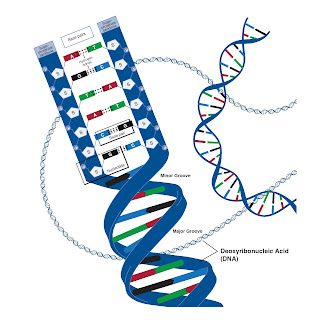
So how do we know that DNA is present in so many different foods? The explanation goes like this: all living things–plants, animals, fungi, bacteria, and others–are composed of cells. Almost every cell in a plant or animal contains a copy of its genetic code, and that code is captured by DNA molecules. Think of DNA as a very, very long string of chemicals, or “bases.”

In rice, to choose just one example, each cell contains 12 chromosomes, and each chromosome is a long DNA molecule. The DNA strings in rice add up to about 430 million bases. So when you’re eating rice, you’re eating all of this DNA in every bite.

The wheat we use to make bread has even more DNA: every cell has about 16 billion bases. That’s 5 times more DNA than human cells have! But interestingly, the wheat we use to make pasta, called semolina or durum wheat, has only about two-thirds as much DNA as bread wheat (and only 14 chromosomes instead of 21). But I digress.

Thus any food that is derived from a plant or animal is almost certain to contain DNA, unless the food is processed so much that every cell from the original plant is removed or pulverized to bits, and the DNA is somehow removed (which normal food processing or cooking does not do). There’s no reason to remove the DNA, though, because it’s completely safe.

Pretty much every food that has DNA in it will also have RNA. RNA is safe to eat too! Some people have been concerned lately about RNA, which has been in the news frequently because it is used in two of the most effective Covid-19 vaccines, the ones from Pfizer/BioNTech and Moderna. Of course, injecting RNA into your arm is different from eating it, but both are very safe. (For more about RNA vaccines, see the article I wrote just a month ago, here.)

Now let’s answer a question I posed at the top: what foods don’t have DNA? The list is remarkably short:

  1. Salt
  2. Sugar*

Yep, that’s it. Salt is a mineral, so it doesn’t come from living things. And sugar is a simple molecule, C12H22O11, produced by plants such as sugar cane and sugar beets. The asterisk (*) next to sugar is there because unless the sugar is very pure, some DNA from the original plants is probably present, so even "pure" sugar might not be DNA-free.

And if you want to wash down that salt and sugar with a DNA-free drink, you can’t use coffee, tea, wine, beer, or fruit juice. All of them contain DNA.

Before I close, I should add that DNA stands for deoxyribonucleic acid. To some, the name is cause for concern: after all, “acid” can’t be good, right? Maybe we should call it “nuclein” instead; that was the name given to it by Friedrich Miescher, the Swiss scientist who first discovered DNA, in 1871.

Bottom line: DNA is in almost everything you eat, you’ve been eating it all your life, and there’s nothing to worry about.

Surprise! Many organic foods are GMOs, and they are transgenic

A new study finds that many common foods, including beer and tea, turn out to be "natural" GMOs. What's a health-food purist to do?

Even though no one has found any evidence that genetically modified organisms (GMOs) are harmful, anti-GMO activists have campaigned against them for years, with considerable success. As of this writing, 19 out of 28 countries in the European Union have voted to ban or severely restrict genetically modified plants, and many other countries impose similar bans.

But all of these restrictions may be in vain, because nature got there first. It turns out that many common foods have already been genetically modified, by a bacterium called Agrobacterium. (Read on to see the list.) And, in news that should be even more frightening to the anti-GMO crowd, these foods are transgenic: they contain genetic material from completely different species. Frankenfoods!

First, as I've argued before, genetic modification technology is just a tool, and a very precise one at that. Scientifically, claiming that GMOs are bad for you is nonsensical–it depends entirely on what the genetic modification is. Whether a food scientist modifies a tomato to taste better by traditional breeding or by using GM technology, you still end up with a tomato that has different genetic content. The only difference is that with traditional breeding, you have no idea what exactly you changed in the plant's DNA. And humans have already consumed billions of servings of GM foods with no ill effects. The GM foods we eat today are perfectly safe.

So back to my first point. What are all these natural Frankenfoods, and how did they get that way?

I'll start with the common sweet potato, or yam. Humans eat hundreds of varieties of sweet potatoes, and you can buy them in markets on every continent. Back in 2015, a group of scientists from Belgium, Peru, China, and the US (Tina Kyndt and colleagues) discovered that every cultivated variety of sweet potato has "foreign" DNA integrated into its genome, from a bacterium called (appropriately) Agrobacterium. They tested 291 different varieties, and found the bacterium 100% of the time. They also tested wild relatives of sweet potato, and found that the wild varieties (which humans don't eat) are missing the bacterial DNA.

Agrobacterium is a bacterium with special properties: it has evolved to be able to insert its DNA directly into the genomes of a wide variety of plants. (Don't worry, it doesn't infect humans.) In sweet potatoes, this happened naturally, centuries or millenia ago, long before humans were cultivating it. But then we came along, and (apparently) we liked the taste of these naturally transgenic sweet potatoes, so those are the ones that we chose to cultivate. As a result, all the sweet potatoes we eat are GMOs, although it happened naturally.

That was five years ago. But in a newly published study, scientists Tatiana Matveeva from Russia and Léon Otten from France discovered that Agrobacterium has made its way into dozens of other plants, including some of our favorite foods and drinks. Matveeva and Otten searched through the genomes (the DNA) of hundreds of plants, and found 39 natural GMOs, as they called them.

So without further ado, here are the natural GMO foods, all of them transgenic, with the common name followed by the formal species name in italics:

  • bananas (Musa acuminata)
  • beer (hops) (Humulus lupulus)
  • cranberries (Vaccinium macrocarpon)
  • date-plum (Diospyros lotus)
  • guava (Psidium guajava)
  • peanuts (Arachis hypogaea)
  • pomelo fruit (Citrus maxima)
  • Suriname cherry (Eugenia uniflora)
  • sweet potatoes (Ipomoea species)
  • tea (Camellia sinensis, which is used for most teas)
  • walnuts (Juglans species)
  • yams (Dioscorea alata)


That's right, beer and tea are GMOs–even if they are labelled as "organic." Keep in mind that this list is undoubtedly incomplete: the new study relied on current genome databases, which are still missing many common foods. 

If you're reading this, you've probably already consumed countless servings of transgenic, GMO foods. As I wrote above, there's no reason to believe that GMO foods are harmful in any way. Plenty of plants are naturally poisonous, of course (think hemlock), but widely-consumed foods got that way for a reason: people like to eat them, and they help sustain us.

If you believe the alarmist claims of the anti-GMO movement, then you're going to have to start avoiding many more foods, including everything on the list above. And yes, that includes beer. 

Does RoundUp cause cancer?

(Quick answer: probably not. See my update at the bottom of this post.)

For many years, environmental activists have been concerned about the herbicide glyphosate, which is the main ingredient in RoundUp®, the world's most widely-used weed killer. Since 1996, global usage of glyphosate has increased 15-fold, in part due to the widespread cultivation of "RoundUp Ready" crops, which are genetically modified to be resistant to RoundUp®. This allows farmers to use the herbicide freely, killing undesirable weeds without harming their crops.

RoundUp®'s manufacturer, Monsanto, has long claimed that glyphosate is safe, and they point to hundreds of studies that support their argument.

Nonetheless, a new study raises the question again.

First let's look briefly at another recent study. A bit more than a year ago, in November 2017, a large study in the Journal of the National Cancer Institute looked at nearly 45,000 glyphosate users (farmers and other agricultural workers who apply glyphosate to crops). These "users" have a much higher exposure to RoundUp® than ordinary people. That study concluded:
"no association was apparent between glyphosate and any solid tumors or lymphoid malignancies overall, including NHL [non-Hodgkin lymphoma]."
They did find, though, that there was a trend–not quite significant–towards an increased risk for one type of leukemia, AML. This trend appeared in users who had the highest exposure to RoundUp®.

In the new study, by a group of scientists from UC Berkeley, Mount Sinai School of Medicine, and the University of Washington, the authors (L. Zhang et al.) decided to focus exclusively on people with the highest exposures to glyphosate. They point out that including people with low exposure, who might have no increased risk of cancer, tends to dilute risk estimates. Statistically speaking, this is undeniably correct, but it also means that their results may only apply to people with high exposures, and not to ordinary consumers.

The punchline from the new study: people with the highest exposure to glyphosate had a 41% higher risk of non-Hodgkin lymphoma.

One caveat to this finding is that it's a meta-analysis, meaning the authors did not collect any new data. Instead, they merged the results from six earlier studies including over 65,000 people, and they focused on those with the highest exposure levels.

Meta-analyses can be prone to cherry-picking; that is, picking the studies that tend to support your hypothesis. However, I couldn't find any sign of that here. The authors include a frank assessment of all the limitations of their study, and they also point out that multiple previous studies had similar findings, although most found smaller increases in relative risk. In the end, they conclude:
"The overall evidence from human, animal, and mechanistic studies presented here supports a compelling link between exposures to GBHs [glyphosate-based herbicides] and increased risk for NHL."
A couple more caveats are important. First, this finding is all about relative risk. Non-Hodgkin lymphoma is one of the most common cancers in the U.S. and Europe, but the lifetime risk for most people, according to the American Cancer Society, is just 1 in 42 (2.4%) for men and 1 in 54 (1.9%) for women. A 41% increase in relative risk increases those numbers to 3.4% (men) and 2.6% (women).

Second, this higher risk only applies to people with very high exposure to glyphosate: primarily people who work in agriculture and apply RoundUp® to crops. Ordinary consumers (including people who eat "Roundup Ready" crops) have a far, far lower exposure, and dozens of studies have failed to show any increased risk of cancer for consumers. For most of us, then, this new study should not cause much concern, but for agricultural workers, it does raise a warning flag.

[Update 18 Feb 7:45pm] After I posted this article, the scientists at the Genetic Literacy Project pointed me to Geoffrey Kabat's piece about the Zhang et al. study. Kabat did a deep dive into the studies that Zhang et al.'s work is based on and uncovered a critical flaw in the study, one that I hadn't found. More than half of the "weight" of the meta-analysis by Zhang, and by far the largest number of cancer cases, come from a single study by Andreotti et al. published in 2018. That study reported risks for 4 different time points: 5, 10, 15, and 20 years. It turns out, as Kabat reports, that only the 20-year period showed any increase in risk of cancer. The relative risks of cancer at 5, 10, and 15 years were actually lower in the group exposed to glyphosate, and yet Zhang et al. didn't mention this fact.


Now, no one thinks that glyphosate lowers the risk of cancer, but Zhang et al. did not report that they had cherry-picked in this way. At a minimum, they should have reported what their findings would be if they used the other time periods. I suspect that they'd have found no increased risk of cancer–but this wouldn't make for such a catchy headline. This omission on their part is a serious flaw, indicating that they (and their results) might have been unscientifically biased.

The bottom line: even in those with very high exposures to glyphosate, the evidence that it causes any type of cancer is very weak. And for ordinary consumers, there's nothing to worry about.

Nobelists call for Greenpeace to drop its anti-science, anti-GMO activism

Golden rice is fortified with vitamin A to prevent blindness.
Has Greenpeace lost its way? I still remember my excitement about the Save the Whales campaign when I was in college, one of the first and most visible of Greenpeace's campaigns. These were the good guys.

In recent years, though, they have adopted as one of their causes a rigidly inflexible opposition to all genetically modified foods, a stance that has no basis in science and that threatens to block technology that has great potential for good.

This past Thursday, a group of 110 Nobel Laureates released a letter excoriating Greenpeace for its long-term campaign against genetically modified organisms (GMOs) and especially against “golden rice.” The Nobelists' letter points out that science has shown that GM foods are just as safe and healthy as any other foods, and that Golden Rice has the potential to relieve a great deal of human suffering.

Unfortunately, anti-GMO activists at Greenpeace and elsewhere are ignoring the science. Their opposition seems to rely on two arguments, both of them superficially appealing, but both wrong.

First, there's the argument that "natural" is always better, whether it be applied to your food or to other aspects of life. Many people find this idea very compelling; after all, we humans are part of nature, so why not consume foods in their natural state? This argument is wrong for many, many reasons, far too many to list here, but I'll just mention a couple. We can start with cooking: it sure isn't natural, but cooking allows us to extract far more nutrients from our food, and is one of humankind's greatest inventions. Or consider pasteurization, an unnatural process that has saved countless millions of people from death by killing the bacteria that are present in purely "natural" milk and other products.

Suffice it to say that there's nothing wrong with modifying our food to make it easier to digest, healthier (as with Golden Rice), or just tastier. The fact that some genetic modifications fail to do any of these things doesn't make GMOs bad, it just means that GM technology can be applied in other ways.

The other argument against GMOs, perhaps the more emotional one, is that they're just a stealth method to allow big agricultural corporations to sell more herbicides and pesticides. This isn't exactly wrong: Monsanto's RoundUp Ready® crops are engineered to allow farmers to use more of the herbicide glyphosphate. Regardless of the arguments about herbicides, the fundamental problem with this argument is that it's a gross over-generalization: just because you don't like RoundUp Ready® soybeans doesn't mean that all GMOs should be banned. As the National Academy of Sciences concluded in a report published earlier this year,
"it is the product, not the process, that should be regulated."
Greenpeace, pay attention. That same NAS report also concluded that GM foods are generally safe and just as healthy as non-GM foods.

Now consider Golden Rice, a variety of rice that has been genetically modified so that it naturally produces beta carotene, which humans metabolize to produce vitamin A. Golden Rice has the potential to reduce vitamin A deficiency, which has devastating effects in parts of the world where children struggle to get enough nutrition. As the Nobel Laureates' letter points out, vitamin A deficiency affects 250 million people worldwide, and
"Vitamin A deficiency is the leading cause of childhood blindness globally affecting 250,000 - 500,000 children each year. Half die within 12 months of losing their eyesight."
How could Greenpeace oppose something that could eliminate so much suffering? I can only conclude that the anti-GMO forces within Greenpeace are so consumed by their rigid opposition that they simply cannot see that GMO technology has the potential for great benefits.

GMWatch, an anti-GMO organizationpublished a lengthy response to the Nobelists' letter the day after the letter appeared. Their rebuttal contains two arguments: first, that Golden Rice isn't yet ready for widespread distribution (Greenpeace's response, printed in The Washington Post, made the same argument, saying "we are talking about something that doesn’t even exist"); and second, that the Nobel Laureates don't have the "relevant expertise."

Hmm. Neither of these arguments stands up to even a tiny bit of scrutiny. First, even if Golden Rice isn't ready for prime time, it's still a great idea. Would Greenpeace support Golden Rice if it were ready to be shipped to hungry children today? They don't say. And both GMWatch and Greenpeace fail to mention (or deny) the fact that one of the major reasons that Golden Rice isn't yet on the market is that anti-GMO groups have worked very hard to block it, lobbying hard for regulatory barriers and even ripping up a test field.

Second, the argument about relevant expertise is ridiculous. Sir Richard Roberts and Dr. Phillip Sharp, two of the Nobel Laureates who spearheaded the effort to write the letter, are among the world's leading geneticists and molecular biologists, as are many of the other Nobelists who signed the letter. I also have to point out that this is a classic ad hominem attack: rather than address the actual topic, GMWatch are attacking the messengers. (Also, somewhat bizarrely, GMWatch contradicts its own argument in an update they posted to their own article. In the update, they write that "[Dr. Phillip] Sharp is a biotech entrepreneur with interests in GMO research," essentially acknowledging that he is an expert in GMO technology.)

Ad hominem attacks may be entertaining, but they fail to support the Greenpeace argument that GMOs should be banned. Nowhere in GMWatch's article, or in Greenpeace's anti-GMO policy, is there any comment about the extensive scientific evidence that shows that GM foods are safe. As I've written before, you're far more likely to be harmed by being hit on the head by a corn cob than by some kind of deviant GMO corn gene.

I asked Sir Richard Roberts if he had any response to the arguments from Greenpeace, and he replied that:
“Greenpeace just reiterate the old arguments that are adequately debunked elsewhere. Why won't they just admit they got this issue wrong? Is it because they have consistently introduced roadblocks and then wonder why it is taking so long to introduce Golden Rice to the market? Are they serious?”
Greenpeace would do well to reconsider their position, as Dr. Roberts and his colleagues argue. They are flat wrong on the science of GMOs, and their dogmaticism is losing them the support of many scientists (and others) who are strong backers of Greenpeace's other causes. For example, Greenpeace's website features their "Save the heart of the Amazon" campaign, an admirable effort to protect a large swath of the Brazilian rainforest. They also have a major campaign to save the Arctic, a cause I support even more enthusiastically.

One last note: organic food stores, led (in the U.S.) by Whole Foods, have been eagerly promoting the "non-genetically modified" nature of their foods, and pushing for laws to require that all GM foods be labelled. First, I have to point out that this is nonsense. Virtually everything you eat has had its genes modified from their natural state, through centuries of breeding by farmers. The only difference with modern GM food is that we can precisely select the genetic changes we want, unlike the slow, incredibly inefficient methods of traditional agriculture.

Ironically (and this is delicious in more ways than one), Whole Foods does sell massive quantities of one GMO: sweet potatoes. It turns out that all sweet potatoes contain bacterial genes! As Tina Kyndt, Dora Quispe and colleagues reported last year, 291 different varieties of sweet potato all contain genes from a bacterium called Agrobacterium tumefaciens. This bacterium has the ability to insert bits of its own genome into its host, and it did exactly that to sweet potatoes sometime in the recent past, after humans started cultivating sweet potatoes (wild relatives don't have the foreign genes). Apparently, ancient human farmers preferred the sweet potatoes with the bacterial genes, and these were passed on to all modern varieties. So sweet potatoes are not only genetically modified, but they are transgenic: they contains genes from a completely different species.

I was at Whole Foods today, and I failed to notice any labels revealing that their sweet potatoes are transgenic. I'll keep checking.

[Full disclosure: I have been privileged to have collaborated scientifically with Sir Richard Roberts, one of the leaders of the group of Nobel Laureates who authored the letter on GMOs. I was not involved in the writing of that letter and I was unaware of it until it was published.]
The 3 Dumbest Products Sold By Whole Foods Market

Whole Foods "Whole Body" products.
I have a love-hate relationship with Whole Foods Market. On the one hand, I love their fresh produce, their baked goods, and many other food choices there. On the other hand, they seem to have embraced anti-science positions in the interest of keeping everything “natural.”

Before describing what they do wrong, let’s start with some things they get right. Their seafood sustainability policy supports fishing practices that allow wild fish populations to survive. This is a shining example that other stores would do well to follow, if we want to preserve remaining stocks of wild salmon, tuna, swordfish, and other fish. Whole Foods stores now mark each fish with a sustainability rating shown as a bright-colored label next to each fish. Bravo!

Whole Foods also offers chicken and beef that was raised humanely, following animal welfare standards that they clearly describe on their website and in their stores. For those who care about the way farm animals are treated, this is a valuable option.

But in some areas of the store, especially their “health” section, Whole Foods wades deep into pseudoscience,  So here are the three of the most egregious examples.

1. Whole Foods sells homeopathic medicines that are little more than snake oil. They make claims for health benefits, both on their shelves and on their website, that are based on little more than magical thinking. For example, they sell “homeopathic flu remedies” claiming that “when taken at the first sign of sickness, these can provide temporary relief of symptoms including fever, chills, and body aches.” This is simply false: no homeopathic treatment has ever been shown to be effective at treating flu symptoms. (I’ve written about homeopathy in more detail here and here.)

It’s ironic that on the one hand, Whole Foods proclaimsWe've long believed that consumers have a right to know what's in your food”. But when it comes to homeopathic remedies, they neglect to inform consumers that these remedies do not contain the ingredients on the bottle at all. That's because homeopathic preparations are so diluted that not a single molecule of the original substance remains. Even more absurd, though, is that even if they weren't diluted to nothing, most homeopathic ingredients have never been shown to have any health benefits to begin with.

2. Whole Foods has an anti-GMO policy, adopted across all their stores, that ignores the science of GMOs. They announced last year that they would label all products in their stores to indicate whether they contained Genetical Modified Organisms. They also have announced that they are trying to eliminate GMOs from their shelves. 

Why is Whole Foods opposed to all GMOs? Their answer is simply: 
Crops are currently modified to survive herbicide treatment, produce their own pesticides and resist certain diseases.“
This answer is a true statement, though it does not describe all GMOs, nor does it explain why we should avoid them. For example, golden rice is a form of rice that’s been modified to contain more vitamin A than regular rice - a modification that is designed to prevent blindness in children, particularly in poor, rural regions where rice constitutes a major part of the diet. Golden rice has even been blessed by the Pope. Is Whole Foods opposed to this form of GMO?

And what’s wrong with engineering a crop to resist disease? Some foods would basically disappear from our shelves if we didn’t have disease-resistant versions. For example, the Hawaiian papaya was nearly wiped out by a virus until, in one of the first uses ever of genetic modification, plant scientists created a resistant variety. This saved the industry, and the papaya itself has exactly the same nutritional value it had before.

I suspect that Whole Foods (and many anti-GMO types) are mostly opposed to Monsanto’s Roundup Ready GMO crops, which are modified to allow farmers to use more of Monsanto’s herbicides. I can sympathize with that position - but not with opposing all uses of GMO technology. That’s throwing the baby out with the bathwater.

3. Whole Foods won’t sell the pain relievers aspirin and ibuprofen, because they’re not “natural." Instead, their Whole Body department sells a wide range of nutritional supplements, for which they make claims such as this
“Not sure which supplement to choose? Grab a full-spectrum wellness or immune support formula. These combinations of herbs, vitamins, minerals and antioxidants are specifically designed to effectively improve overall wellbeing and enhance immune support.“ 
That’s just gobbledygook, but it's carefully worded to avoid FDA regulations. The phrase "enhance immune support" is a common go-to phrase for supplement makers, because it sounds science-y. Not only are supplements mostly useless, but taking megadoses can actually harm you. And there’s no scientific reason to think that “natural” products are better for you. After all, snake venom is 100% natural.

In contrast, ibuprofen and aspirin really work - but you can't buy them at Whole Foods. I continue to shop at Whole Foods for their many excellent food selections. But for anything medical, I shop elsewhere.

Controversial GMO corn study being retracted over the authors' objections

Retractions are always interesting. When a scientific paper is retracted, it usually means the authors have found a serious error, and that the major conclusions are no longer valid. The error can be unintentional, but in some high-profile cases, the story is far more interesting.

Reading about a retraction is, for a scientist, kind of like reading about a celebrity divorce. You know something went wrong, and it just might be a bit scandalous.

Last year, I wrote a detailed takedown ("Does genetically modified corn cause cancer?") of a very poorly done scientific study by Gilles-Eric Seralini and colleagues, in which they claimed that genetically modified corn, Roundup Ready® corn, caused cancer in rats.  The study had many egregious flaws, and I explained a few of them after reading the paper.  Hundreds of other scientists criticized the study at the time, and six French science academies took the unusual step of issuing a joint statement that rejected the study's conclusions.

Among the many flaws, the study used far too few rats to make statistically valid conclusions, and it contained self-contradictory results, such as data showing that rats fed the highest amount of GMO corn lived longer than rats fed the lowest amounts.  They also used a strain of rats that is highly prone to cancer.  Basically, it was unconvincing junk science.

Last week, Retraction Watch reported that this paper is being retracted. Particularly interesting was the news that the retraction is being made by the editors of the journal, not by Seralini and his co-authors, who are pretty darned upset about it. The journal conducted a lengthy investigation (much too lengthy, I might add - they should have been able to act more quickly) and decided that the many flaws in the paper mean that its major findings are not valid.  It is very unusual for editors to force a retraction like this, especially when fraud is not involved. The journal, Food and Chemical Toxicology, issued a statement that said:
"A more in-depth look at the raw data revealed that no definitive conclusions can be reached with this small sample size regarding the role of either NK603 [RoundupReady corn] or glyphosate [Roundup] in regards to overall mortality or tumor incidence. Given the known high incidence of tumors in the Sprague-Dawley rat, normal variability cannot be excluded as the cause of the higher mortality and incidence observed in the treated groups."
In other words, the editors concluded that Seralini's results were not supported by the data. Together with the rest of their statement, it seems pretty clear the editors are admitting that they screwed up during the peer review process, and they never should have published the article.

Seralini is very unhappy.  So unhappy, in fact, that he's threatening a lawsuit, as Forbes contributor Jon Entine reported.

But is this grounds for retraction? Lots of bad science gets published, often due to sloppy peer review, and most of these papers aren't retracted. In this case, it's pretty clear that the high-profile nature of the paper played a role.  Seralini is part of an anti-GMO organization, CRIIGEN, which has used this paper as justification for an aggressive campaign to ban GMO crops in Europe and elsewhere.

As bad as this study is, and as much as I'd like to see it retracted, I'm not sure that the justification given by the editors of Food and Chemical Toxicology is sufficient for retraction. Maybe it's because their statement is too carefully worded - wimpy, in fact. If they just came out and stated clearly that the study's conclusions are erroneous, then they would have a much better case for forcing the retraction. But they don't quite say that.

Here's what they are trying to say: "we screwed up and did a shoddy job in the peer review process, and now we realize that we never should have published this piece of dreck. Now we want to retract it so that no one will associate our journal with this bad science."

I know some very good scientists who have retracted papers merely because they couldn't replicate the results, and they grew worried that something was wrong. That's how science should work: rather than publish something erroneous, most scientists will admit their errors and retract their findings, or at least issue a correction. Obviously, Seralini has no plans to do this. His intent on publishing this paper was to make a political point, not a scientific one, and he distorted his findings in the paper itself, overstating his results with insufficient statistical evidence, and more so in statements to the press.

Retractions are indeed interesting. I'm still not sure the journal did the right thing to retract this paper, but I know they never should have published it in the first place.

(And for those who don't have time to look at the controversy after the original study: no, genetically modified corn does not cause cancer. Not even a little bit.)

GMOs versus antibiotic overuse: which is the greater evil?

People who worry about eating healthy food (and who doesn't?) have recently been very worried about genetically modified organisms, or GMOs.  Meanwhile, industrial livestock producers feed enormous quantities of antibiotics to cows, chickens, and bigs, as a way to make them grow faster.  Which of these practices poses the greater risk?

This one isn't even close. The threat of GMOs pales in comparison to the overuse of antibiotics, which are creating dangerous superbugs that already kill tens of thousands of people each year.

The anti-GMO forces have been making a big push recently to add "GMO" labels to foods. This particularly campaign is based on the hard-to-disagree-with notion that more information is always good. People have a right to know what they're eating, right?

Well, sure. But how many people out there understand what genetic engineering means? How many understand that virtually all the food we eat is genetically modified - including the most wholesome organic foods? Unless you live out in the wilderness eating wild nuts and berries, you're eating plants and animals that have been genetically modified over the centuries by humans, by selecting which ones to plant and breed.  The term GMO is meant to refer to something else:  precise genetic engineering, designed to alter just one or two genes. This creates genetic changes that are far less dramatic than the ones that turned ancient maize into today's modern corn, for example.  Thus the problem with "GMO" label is that it won't inform people unless they have a solid grounding in molecular genetics.
Teosinte is un-modified corn. Not so yummy, is it?
GMO opponents claim that GMOs are bad for you.  So far at least, there's no scientific evidence for this claim.  If GMOs were so bad, people would be dropping like flies every night after dinner.

But in the world of infectious disease, a different, far more deadly scenario is unfolding. Drug-resistant bacteria are spreading fast. Scientists have been warning for years that we are blindly marching towards an era when people start to die of previously treatable bacterial infections. Antibiotics, one of the greatest technological advances in the history of civilization, are losing their effectiveness.

Last week, the Washington Post reported that "nightmare bacteria" are real and on the rise.  In the U.S. alone, over 23,000 people died last year as a result of drug-resistant bacterial infections, according to the CDC. The CDC report implicated the use of antibiotics in animals as one of the primary causes.

Also last week, the Center for a Livable Future at the Johns Hopkins School of Public Health issued a report looking at how we've responded to report 5 years ago that recommended ways "to curb the threats to human health posed by modern industrial agriculture practices." How have we done? According to Dr. Robert Lawrence, director of the Center:
"There has been an appalling lack of progress.  The failure to act by the USDA and FDA, the lack of action or concern by Congress, and continued intransigence of the animal agriculture industry have made all of our problems worse."
Can the FDA regulate antibiotics in livestock? Not really, thanks to intensive lobbying by industry. One of the authors of the Hopkins report commented that the FDA is “almost pleading with industry to make voluntary changes.”

But industry isn't going to do this on their own, and so far the government has been utterly ineffective.  The study points out that:
"Congress has killed every effort to restrict the feeding of farm animals the same antibiotics used in human medicine ...  even as antibiotics have grown less effective in treating infection."
So listen up, GMO alarmists: you're protesting the wrong thing. If you really want people to eat healthier food, start raising Cain over the use of antibiotics in livestock.  If you want labels on our food, insist on labels showing whether our food animals were raised antibiotic-free.  Stop worrying about a hypothetical fear of a few genetic changes in soybeans, and worry instead about the very real rise of superbugs.  You're right to worry about how we raise our food - you're just looking in the wrong place.


They engineered a better salmon, so why can't I eat it?

What happened to genetically modified salmon? A few months back I was looking forward to my first taste of the new AquaBounty salmon, which grows to maturity twice as fast as wild salmon. Will it taste just as good? Better? I thought I'd know soon. But then politics intervened.

It's almost always bad when politicians meddle in science. Usually they do so because they just don't like what they're hearing, as they have done time after time with global warming. Now it's genetically modified salmon. What happened? The FDA was ready to approve the new salmon until two weeks ago, when Congressman Don Young from Alaska, under heavy lobbying pressure from the Alaskan fisheries industry, simply stepped in to block it. The FDA had already found that the fish was safe to eat, but hadn't yet issued final approval. So Congressman Young and his pals decided to pass legislation to halt the process.

I wrote about AquaBounty's salmon last year, when the FDA was holding hearings to approve it for human consumption. Ironically, the FDA doesn't get to approve genetically modified crops, and our food supply is filled with GM corn, soy, and other plants. But thanks to the vagaries of U.S. law, the FDA gets to weigh in on salmon.

The science is pretty cool: AquaBounty took two genes from other fish and added them to Atlantic salmon. They added a growth gene from Pacific Chinook salmon, and another gene from a fish called ocean pout (Trisopterus luscus). Together, these genes allow AquaBounty's new salmon, called AquAdvantage ®, to grow to maturity in 18 months rather than 3 years. This promises to make salmon farming much more efficient, if we ever allow it.

Better fish farming is incredibly important for the future of wild fish on our planet. Wild fish populations have plunged 90-99% all over the planet, and many fish populations have been completely wiped out. Here on the east coast of North America, wild cod populations completely crashed in the 1990s, and by 2004 the World Wildlife Fund predicted that wild cod would disappear completely in 15 years. The situation isn't any better for Atlantic salmon, which are at "perilously low levels." The U.S. declared Atlantic salmon an endangered species in 2000, and added more salmon populations to the endangered list in 2009.

The solution, obviously, is to farm our fish, just like we do with every other food we eat. As I wrote last year:
"We farm all the other animals that we eat. Imagine that we only ate wild cows, or chicken, or pigs. The human race can't be fed by wild animals alone - we're too numerous and too hungry. Sooner or later, we will drive wild fish to extinction, unless we make the switch to farmed fish."
To make fish farming more efficient, we need to apply new genetic technologies to increase yields the way we have with our crops and with domesticated animals.

These new salmon are nothing to be afraid of, but anti-GMO activists have labelled them "Frankenfish" as a transparent scare tactic. I'm neither a fan nor an opponent GMO foods, but knee-jerk opposition to all GMOs doesn't make any sense. Modifying crops to make them more resistant to pesticides, as Big Agriculture firms (Monsanto in particular) have done, strikes me as a terrible use of the technology. "Roundup Ready" corn and soy allow Monsanto to sell more of their herbicide, and make farmers dependent on it. If anti-GMO forces want to boycott this type of genetically modified organism, I'm on their side.

But not with salmon. AquaBounty salmon doesn't promote the use of pesticides or other industrial chemicals. It just makes salmon farming more efficient. The genes added to the salmon are naturally-occurring ones from other fish, so they are still 100% fish. (In contrast, GM crops have genes injected into them from bacteria and other foreign species.) Furthermore, the farming operations by AquaBounty are all inland farms, so there's almost zero chance of the fish escaping into the wild. (I went to one of the FDA hearings last fall and heard a detailed description of the farms.) And even if they did escape, it wouldn't matter because the AquAdvantage salmon are sterile, and couldn't breed with wild fish.

Despite these facts, environmental organizations such as Food and Water Watch are waging a campaign to "Stop Frankenfish,", and spreading misinformation about the science. I was particularly disappointed by the comments from the Union of Concerned Scientists at last September's FDA hearing. Jane Rissler from the UCS compared GM salmon to the massive BP oil spill in the Gulf of Mexico, a ridiculous bit of overstatement. I thought the UCS were the good guys! I agree with their stances on many issues, but they do not speak for me on this one.

I can't resist pointing out that Republicans such as Alaska's Rep. Young claim to hate regulation, and favor the free market - except when they don't. Here we have Young stepping in and imposing regulation to halt the free market under pressure from lobbyists. Not surprisingly, Young is joined by Alaska Senator Lisa Murkowski, but his efforts are also supported by Democratic Senator Patty Murray from Washington, who also has a salmon industry to protect. As happens all too often, politicians are in favor of science only when they agree with it. They're all too happy to pass laws on behalf of special interests, even if it goes against with their supposed political positions on government regulation.

Sadly, environmentalists who oppose GM salmon don't seem to realize that they are acting against their own interests. The same is true of the fishing industry. If they win, the result will be the eventual extinction of many wild fish species, with unpredictable consequences for the ocean's ecosystem. The arguments about the threat posed by GM salmon haven't stood up to scientific scrutiny, so these groups have turned to politics instead. It looks like they might win, in the short term. But if we insist on taking so many of the ocean's fish for our dinner plates, the wild fish will soon be gone.

Scientists build a better salmon

Salmon may soon be the first genetically modified animal to hit our dinner plates. We've been eating GMO foods for years, mostly without noticing it, but until now all the genetically modified organisms have been plants.

The new salmon was developed by AquaBounty Technologies, a company in Massachusetts, and here╒s how it works: start with Atlantic salmon, add a growth gene from the Pacific Chinook salmon, and add another gene from the ocean pout (Trisopterus luscus). In combination, these two genes make the Atlantic salmon grow to maturity in just 18 months, instead of the normal 3 years. The new salmon have the potential to make salmon farming much more efficient. The Washington Post reported this week that the FDA is close to approving the fish for human consumption.

This is cool science. So why are all the reports, both in the mainstream media and the blogosphere, making it sound like a frightening development?

Let's get one thing straight: we have to learn how to farm our fish. The human race is rapidly depleting the stocks of almost every wild fish that we like to eat, and many traditional fisheries are already wiped out. Others have been depleted so badly that severe fishing limitations have been imposed in a desperate attempt to allow stocks to recover. This can't go on.

Think about it: we farm all the other animals that we eat. Imagine that we only ate wild cows, or chicken, or pigs. The human race can't be fed by wild animals alone - we're too numerous and too hungry. Sooner or later, we will drive wild fish to extinction, unless we make the switch to farmed fish.

And as I wrote recently, oily fish like salmon contain omega-3 fatty acids, which appear to carry health benefits, especially when compared to the fats contained in other meats. We should all eat more salmon.

Okay, but what about the downsides of GMO salmon? The anti-GMO forces have issued statements warning of dire consequences if these "Frankenfish" are allowed on the market. Wenonah Hauter, the director of Food and Water Watch, a nonprofit whose goals I generally support, issued a statement that is full of misinformation. For example, she claims that the salmon are "toxic", which sounds pretty scary. As evidence, she says "a recent study commissioned by the European Union revealed that fish that have been modified to grow faster also have a higher tolerance to the toxins in their environment."

I looked up the EU study, by by Fredrik Sundström at the University of Gothenburg, to learn what it actually said. Although the university's press release says that "transgenic fish can be more resistant to environmental toxins," the study itself didn't provide any evidence for this claim. In fact, it didn't even study toxins. Instead, Prof. Sundström looked at what might happen if GMO fish escaped into the wild, and he concluded that they might survive better than wild fish. He didn't conclude anything about toxins.

Hauter of Food and Water Watch isn't the only one to get this wrong. Reporter Paulina Reso at the New York Daily News got it just as wrong, reporting that "A study commissioned by the E.U. found that these engineered fish have a higher tolerance to toxins, putting consumers at risk." She cites the same press release from the University of Gothenburg.

Not only is the claim about toxins unfounded, but it ignores the very real (and widely documented) danger of mercury accumulating in wild fish, including salmon. If you're truly concerned about toxins in fish, you would support fish farming, not oppose it.

The Center for Food Safety's George Kimbrell, quoted in The Post article and elsewhere, threatened to sue the FDA if they approve the new transgenic salmon. He says they are concerned about "catastrophic consequences like the gulf oil spill." Wow, that sounds awful! Transgenic salmon will be as bad as the largest oil spill in U.S. history? Is he kidding? Rather than spend time on breathless hyperbole, Kimbrell should be worried about the very real possibility of driving wild salmon to extinction. He doesn't explain what his concern is based on, and it seems that his group simply opposes any genetically modified organisms on principal. Their opposition is not based on science, nor on any well-thought-out concern about nature or the environment.

And yes, I know that fish farming itself can be harmful to the local environment. But our response can't be to abandon fish farming and continue overfishing until all wild fish are extinct. As the saying goes, don't let the perfect be the enemy of the good. We should work on ways to improve fish farming techniques and make them more sustainable.

Transgenic technology is cool. Of course it can be used in ways that don't benefit consumers - but so can traditional genetic techniques (which don't require any FDA approval, by the way). Take tomatoes: I can't remember the last time I found a tasty store-bought tomato in the U.S. They look great but taste like cardboard, all thanks to selective breeding that makes them easier to pack and transport. If someone creates a transgenic tomato that tastes good, I'll be the first in line to buy it. Meanwhile, I'm looking forward to the day when I can taste the new transgenic salmon.