Showing posts with label genetics. Show all posts

DNA is safe to eat. RNA isn't bad either.


Have you eaten any DNA lately? My bet is that you’ve eaten lots of it. DNA is not only safe to eat, it’s present in many truly delicious foods.

For example, chocolate has loads of DNA. Ice cream also has DNA, plenty of it. And lest you think DNA is only in desserts, it’s also found in hamburgers, cheese, bread, all kinds of sushi, and a very long list of other foods. Want to know which foods are DNA-free? Keep reading.

(Aside: why am I explaining that DNA is safe? Scientists reading this might say of course it is, what’s the big deal? If you’re among those, you don’t need to read any further. But many people are afraid to eat DNA because they don’t know what it is, and the name sounds a bit scary. In fact, a study in 2016 found that 80% of Americans thought that foods containing DNA should have a warning label.)

DNA contributes pretty much nothing to the taste of your food, which is sort of obvious given that it’s found in so many different-tasting foods. That’s because flavors are a very complex combination of many, many ingredients, and DNA is just one small part of most foods. If you were to purify DNA and taste it all by itself, it would taste slightly salty. If you want to watch someone trying this for himself, check out this video:


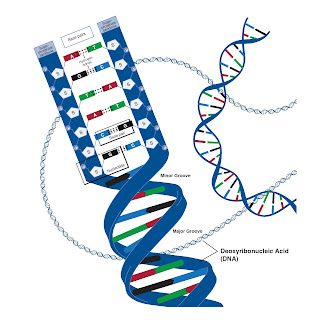
So how do we know that DNA is present in so many different foods? The explanation goes like this: all living things–plants, animals, fungi, bacteria, and others–are composed of cells. Almost every cell in a plant or animal contains a copy of its genetic code, and that code is captured by DNA molecules. Think of DNA as a very, very long string of chemicals, or “bases.”

In rice, to choose just one example, each cell contains 12 chromosomes, and each chromosome is a long DNA molecule. The DNA strings in rice add up to about 430 million bases. So when you’re eating rice, you’re eating all of this DNA in every bite.

The wheat we use to make bread has even more DNA: every cell has about 16 billion bases. That’s 5 times more DNA than human cells have! But interestingly, the wheat we use to make pasta, called semolina or durum wheat, has only about two-thirds as much DNA as bread wheat (and only 14 chromosomes instead of 21). But I digress.

Thus any food that is derived from a plant or animal is almost certain to contain DNA, unless the food is processed so much that every cell from the original plant is removed or pulverized to bits, and the DNA is somehow removed (which normal food processing or cooking does not do). There’s no reason to remove the DNA, though, because it’s completely safe.

Pretty much every food that has DNA in it will also have RNA. RNA is safe to eat too! Some people have been concerned lately about RNA, which has been in the news frequently because it is used in two of the most effective Covid-19 vaccines, the ones from Pfizer/BioNTech and Moderna. Of course, injecting RNA into your arm is different from eating it, but both are very safe. (For more about RNA vaccines, see the article I wrote just a month ago, here.)

Now let’s answer a question I posed at the top: what foods don’t have DNA? The list is remarkably short:

  1. Salt
  2. Sugar*

Yep, that’s it. Salt is a mineral, so it doesn’t come from living things. And sugar is a simple molecule, C12H22O11, produced by plants such as sugar cane and sugar beets. The asterisk (*) next to sugar is there because unless the sugar is very pure, some DNA from the original plants is probably present, so even "pure" sugar might not be DNA-free.

And if you want to wash down that salt and sugar with a DNA-free drink, you can’t use coffee, tea, wine, beer, or fruit juice. All of them contain DNA.

Before I close, I should add that DNA stands for deoxyribonucleic acid. To some, the name is cause for concern: after all, “acid” can’t be good, right? Maybe we should call it “nuclein” instead; that was the name given to it by Friedrich Miescher, the Swiss scientist who first discovered DNA, in 1871.

Bottom line: DNA is in almost everything you eat, you’ve been eating it all your life, and there’s nothing to worry about.

Does the length of your fingers predict sexual orientation?

Imagine my surprise last week when I saw an article in Science that claimed "finger lengths can predict personality and health."* Huh?

The author, science writer Mitch Leslie, gives us the rather startling number that over the past 20 years, more than 1400 papers have been published linking finger lengths to personality, sexual orientation, cardiovascular disease, cancer, and more.

What is this magical finger length ratio? Simple: it's the ratio between the lengths of your index (2nd) and ring (4th) fingers, also called the 2D:4D ratio. Take a look: is your index finger longer than your ring finger?

It turns out that most people have slightly longer ring fingers than index fingers, and in men the difference is a bit larger. If the ringer finger is longer, than the 2D:4D ratio is less than one. One recent study reported that this ratio was 0.947 in men and 0.965 in women. Another study found average values of 0.984 and 0.994 for men and women. Not only is this a tiny difference, but in every study, the 2D:4D ratio among men and women overlapped, meaning the number alone doesn't tell you very much.

Nonetheless, some researchers have taken this tiny physiological difference and run with it. Nearly 20 years ago, Berkeley psychologist Marc Breedlove (now at Michigan State) published a study in Nature where he and his colleagues measured finger-length ratios in 720 adults in San Francisco. Based on this data, they concluded that finger-length ratios show
"evidence that homosexual women are exposed to more prenatal androgen than heterosexual women are; also, men with more than one older brother, who are more likely than first-born males to be homosexual in adulthood, are exposed to more prenatal androgen than eldest sons."
Whoa! They are not only claiming that the 2D:4D ratio is predictive of homosexuality, but also that exposure to prenatal androgen is the root cause of both finger lengths and sexual orientation. (Confusing correlation with causation, perhaps?) Not surprisingly, this claim is not widely accepted.

There are many, many more claims out there. In 2010, the BBC boldly reported that 
“The length of a man's fingers can provide clues to his risk of prostate cancer, according to new research.”
based on this study in the British Journal of Cancer. That study found that men whose index fingers were longer than their ring fingers had a reduced risk of cancer. (I don't believe it for a second, but if it makes you feel better, go ahead.) And a 2016 report found that both men and women with a low 2D:4D ratio (longer ring fingers) had better athletic abilities. 

The Science article goes on to explain, though, that "the results often can't be replicated." Most of these studies are small, the measurement techniques vary widely, and efforts to reproduce them (when others have tried, which isn't that often) usually fail. It didn't take me long to find a few, such as this study from 2012, which swas the 2nd failure to replicate a result claiming a link between sex hormone exposure and the 2D:4D ratio.
The author's left hand

After reading the whole Science article, one comes away with the impression that finger ratio science is almost certainly bogus. The presentation, though, gives far more space to the claims of those who believe in it, and one gets the strong impression that the journalist (Mitch Leslie) is on their side. A hint to that is in his last sentence where, after saying that the two sides are "talking past one another," he writes "more than 20 papers using the digit ratio have already come out last year."

And since the last sentence is often a giveaway for what the writer really thinks, let me conclude by saying that both my ring fingers are longer than my index fingers.

[*The print version of Science contains precisely this claim in the subheading to the article: "Some researchers say a simple ratio of finger lengths can predict personality and health." Interestingly, the online version of the same article does not have this headline. Instead, it reads "Scientists try to debunk idea that finger length can reveal personality and health." It appears as if the online editors were more skeptical than the print editors.]

The NY Times is far too worried about 23andMe's genetic test

The New York Times decided to publish an editorial this weekend warning people to "be careful about 23andMe's Health Test." What are they worried about?

Although the NY Times article is accurate, the warning suggests that 23andMe misleading its customers somehow. Is it? I decided to take a look.

 I'm a customer of 23andMe, and I'm also a researcher in genetics and genomics, so I know quite a bit about how their technology works and about what it can reveal. I've looked at 23andMe's latest genetic health reports, and they are remarkably clear and accurate.

Let me illustrate by revealing part of my own genetic test results. First I looked at my results for BRCA1 and BRCA2, the two genes that the NY Times article discusses.

I don't have any of the harmful mutations in the BRCA genes, which 23andMe reports like this:
Notice that they immediately provide the caveat that more than 1,000 other variants in these genes have been linked to cancer risk, and they make it abundantly clear that they didn't test any of those. Here's what the NY Times article said:
"The 23andMe test can miss other possible mutations.... there are more than 1,000 other BRCA mutations that contribute to your breast cancer risk. The 23andMe test doesn’t look for any of them."

A reader of the Times might think, upon reading this, that 23andMe somehow hides this fact. But the Times article's warning is little more than a paraphrase of what 23andMe's website states.

The Times editors also caution that
"Just because you test negative for the few mutations that 23andMe screens for doesn’t mean that you won’t get breast cancer."
Duh. 23andMe explains this as well, and much more, such as:
"This test does not take into account other risk factors for breast, ovarian, prostate, and other cancers, such as personal and family health history." [from 23andMe]
23andMe also provides a wealth of information about the BRCA genes, including links to the scientific papers describing the genes and their link to cancer. I was very impressed by how thorough they are.

The Times editors focused only on the BRCA genes, but 23andMe also tests a handful of others (9, in my case). I looked at the APOE gene report, which has a mutation that has been linked to Alzheimer's disease. The bad variant is called Îµ4, and fortunately I don't have it.

Once again, the 23andMe site was very clear about what this means, providing a detailed table showing the risks for people with and without the mutation. In my case, they tell me that:
"Studies estimate that, on average, a man of European descent has a 3% chance of developing late-onset Alzheimer's disease by age 75 and an 11% chance by age 85."
Looking at the detailed table, one learns that if you have one copy of APOE ε4 variants, your risk of developing Alzheimer's by age 75 is 4-7%, and if you have 2 APOE ε4 variants–the worst case–then your risk jumps to 28%. The website provide links to 10 scientific papers with far more detail, for those who want to know the basis of these numbers. This is far more than most people will want to know, and I couldn't find any flaws in 23andMe's description of the science.

The Times editorial concludes with this:
"23andMe has said that its health tests can raise awareness about various medical conditions and empower consumers to take charge of their health information. But doctors and geneticists say that the tests are still more parlor trick than medicine."
That last statement is the most egregious misrepresentation by the Times editors. Who are these geneticists who call DNA testing a "parlor trick"? The genetic tests run by 23andMe, which use technology that is run daily at thousands of labs around the world, are nothing of the sort. They are a highly accurate assay that has been repeated millions of times and validated by hundreds of peer-reviewed studies. Usually the NY Times is one of the most thorough and accurate sources in the media, but they really dropped the ball this time.

The fact is, genetics is not fate. Identical twins, who share identical DNA, rarely die of the same causes. Thus even if you knew your genetic risks perfectly, for every mutation in your DNA, you might not find anything to change in your behavior. At most, you might learn that you should get mammograms or colonoscopies slightly more often. It's legitimate to argue that you won't learn anything useful from the 23andMe tests, but you will learn something about genetics.

As far as changing your behavior to reduce health risks, you don't need a sophisticated genetic test for that. Just eat more leafy greens.

[Note: although I'm a customer of 23andMe, I have no financial relationship with the company and I'm neither an advisor to nor an investor in them.]

European Union gets it wrong on GMOS. Again.

Teosinte on the left, modern
corn on the right, a hybrid in
the center.
A European Union court just issued a new decision about GMOs. Disappointingly, this decision is likely to confuse rather than clarify this complex and contentious issue. The court announced that plants whose genomes have been modified with CRISPR technology, a very precise form of genome editing, are subject to the EU's very strict restrictions on genetically modified crops.

More specifically, the Court of Justice of the European Union (ECJ) decided that:
"Organisms obtained by mutagenesis are GMOs."
If we take this literally, then here’s a list of all the foods that have never been subjected to mutagenesis, and are therefore NOT GMO:
  1. Salt
  2. Wild boar
  3. Wild blueberries
That’s it. (OK, maybe there are a few others.)

We have been modifying the genes of the foods we eat for millenia. Every loaf of organic, non-GMO bread is made from wheat that humans have modified since ancient times. Every glass of milk from your grass-fed, bovine-growth-hormone-free cow comes from a cow that humans have bred for centuries. All cows are genetically modified. Those delicious croissants you bought at the organic bakery? Sorry, those are GMOs, no matter how organic you think they are.

And corn? Have you seen what ancient corn, called teosinte, looks like? I encourage you to Google it (or see the image on this blog, above). Modern corn is the result of many generations of human-driven genetic modifications.

To be fair, the EU court recognized that many of our foods have been genetically modified for a long time, and that it might be impractical to remove all of them from our food supply. So they carved out an exception:
"varieties [of plants] obtained by means of mutagenesis techniques which have conventionally been used in a number of applications and have a long safety record are exempt...."
What's ironic here–though I'm confident that the EU court didn't mean this–is that by this definition, virtually all of the GMO crops in the U.S. are exempt. You see, we've been eating them for decades, and they have a phenomenal safety record.

Two years ago, the US National Academies of Sciences, Engineering, and Medicine issued a massive report that reviewed over 1,000 studies of GMOs. The bottom line: there are no health risks whatsoever from eating genetically modified foods.

Earlier gene editing technology sometimes added foreign genes to an organism, such as adding a bacterial gene to a plant. The EU court's new decision is intended to clarify that even if a foreign gene is not involved, plants bred using the newest form of gene editing (CRISPR technology) are nonetheless GMOs.

Banning GMOs doesn't make sense, and it never did. Genetic technology is just a tool, one that can be used for countless purposes, some of them highly beneficial–such as golden rice, which has the potential to prevent blindness in countries where many people depend on rice as their main staple food. If someone objects to a particular use of GM technology, such as Monsanto's use of it to create herbicide-resistant plants, that's something we can reasonably debate. But banning all GMOs is throwing out the baby with the bathwater.

Now if you'll excuse me, I've got to go out to my grill and see how my wild boar is doing. It might need a bit more salt.

Jurassic World fact check: can we clone dinosaurs?

One of this summer’s biggest hits was the movie Jurassic World, which earned a record $209 million on its opening weekend back in June. It's so popular that it’s still showing in theaters now, more than two months later.

Like its predecessors, the fourth movie in the Jurassic Park series features a theme park filled with dinosaurs that were created by cloning dinosaur DNA. In the movie, the dino DNA was collected from mosquitos preserved in amber, which (in the fictional movie world) had sucked the blood of dinosaurs 65 million years ago.

The success of the movie spurred YouGov.com to conduct a poll, asking Americans if they believed it was currently possible to create dinosaurs from DNA found in fossils. 28% said yes.

It makes for a fun story, but is there any science behind it? Well, yes and no.

Can we clone a living organism entirely from scratch, just from its DNA sequence alone? Yes! Not only can we do it, but it has already been done. Genome scientists Craig Venter and Hamilton Smith, both former colleagues of mine, achieved this at least twice, creating bacteria by synthesizing the necessary DNA and then “booting up” a new bacterial cell, which went on to replicate itself and grow into colonies of brand-new bacteria. Very impressive work, although bacterial genomes are quite small, only a few million nucleotides long.

Moving up a step, just last year, Hopkins scientist Jef Boeke (who is now at NYU) and his team synthesized an entire yeast chromosome. Yeast are single-celled like bacteria, but they're eukaryotes, evolutionarily closer to humans and dinosaurs than bacteria. Eukaryotes keep their DNA sequestered inside a nucleus, which in turn makes them way harder to clone from scratch. Synthesis of the remaining yeast chromosomes is under way, and it’s entirely feasible that we’ll have artificial yeast in just a year or two.

As of today, though, no one has even come close to synthesizing a multi-cellular creature like a dinosaur–or a chicken, or a frog, or a human. But in principal, it is possible to create a living animal just from its DNA, though it might take a few more decades to do it.

So yes, we might someday create animals from DNA. But dinosaurs? Alas, this half of the Jurassic World question gets a big “no.”

The problem is, despite the compelling story in the movie, there is no dinosaur DNA left on the planet. None at all, despite what you might have read. Dinosaurs went extinct about 65 million years ago, mostly likely because of a massive asteroid impact in the Yucatan peninsula, and DNA simply doesn’t last that long.

But wait, you might ask: what about all these stories about Neandertal DNA, or woolly mammoth DNA, or other ancient species? These studies are true and are very exciting. Scientists have reconstructed the genome of our Neanderal relatives from very old bones, around 30,000-40,000 years old. We can extract DNA from bones that old, although the DNA is badly degraded. I worked on an ancient DNA project myself, using an 11,000 year old mammoth thigh bone to reconstruct part of its genome. We were able to recover quite a lot of mammoth DNA from that bone.

Other work on ancient samples has demonstrated that in the most extreme conditions, where the bones have been continuously frozen in the Greenland ice sheet, DNA may survive as long as 1 million years. However, dinosaurs lived in temperate climates where DNA degrades far more quickly, and virtually all dinosaur DNA was probably gone within a few thousand years after the dinosaurs became extinct.

(By the way, that same YouGov poll that asked about cloning dinosaurs also asked "Do you believe that dinosaurs and humans once lived on the planet at the same time?" 40% of Americans said yes, demonstrating once again that Americans are woefully misinformed about evolution and the history of the planet.)

So alas, a mosquito that sucked the blood of a Tyrannosaurus rex, and then got swallowed and preserved in tree sap, would not yield any T. rex DNA for present-day cloning experiments.

This doesn’t mean we’ll never have a Jurassic Park, but if we do, we’ll have to guess at what that dino DNA looked like, perhaps using the DNA of birds. Perhaps, though, we should focus on saving the species we have left, which we are rapidly wiping out, before worrying about reviving long-lost dinosaurs.

MMR vaccine (still) doesn't cause autism, new study finds

Nope.
We’re still spending vast amounts of time and money trying to counter the ill effects of a discredited, retracted paper from 1998 that claimed to find a link between the MMR (measles, mumps, and rubella) vaccine and autism. Even after the The Lancet retracted the study, and even after the British Medical Council revoked the medical license of its lead author, Andrew Wakefield, many people continue to withhold vaccines from their children because of a fear that somehow, despite all the evidence to the contrary, vaccines might cause autism. Vaccines, I hasten to add, have saved millions of lives and are probably the greatest medical advance of the past two centuries.

Now another study has appeared to add more weight to the evidence about the safely of the MMR vaccine. The new study by Anjali Jain and colleagues, just published in the Journal of the American Medical Association, looked at a huge number of children–95,727–for evidence of any link between autism and the MMR vaccine.

The results were not surprising, to those who have been following the science. To quote the conclusions directly
“Receipt of the MMR vaccine was not associated with increased risk of ASD [autism spectrum disorder], regardless of whether older siblings had ASD. These findings indicate no harmful association between MMR vaccine receipt and ASD even among children already at higher risk for ASD.”
That should settle it, right? But then, dozens of previous studies should have already settled this question. Unfortunately, due to the ongoing activism of anti-vaccine groups such as Age of Autism, (who already attacked this new study) and to conspiracy theorists such as Robert F. Kennedy Jr. (whom I wrote about last summer, and who was campaigning against vaccines in Vermont just last week), misguided claims that vaccines cause autism or neurological problems persist.

Here are the numbers from the new study. The authors compared vaccinated children to unvaccinated children, using a huge database of medical claims that included at least 5 years of followup. (This was an "observational" study, by necessity–it would be unethical to withhold vaccines from children on purpose.) The relative risk for autism in children who had 2 doses of the MMR vaccine (the recommended amount) compared to unvaccinated children was 0.74. In other words, a child was somewhat less likely to be diagnosed with autism if he or she were vaccinated. 

Even more surprising was the relative risk among children who had an older sibling with autism: in this smaller group, children with 2 doses of MMR were just 44% as likely to be diagnosed with autism as unvaccinated children. This statistically significant finding indicates, unexpectedly, that vaccines might actually protect children from autism.

The authors were quick to note that there are other good reasons for this apparent protective effect of vaccines: in particular, if parents of autistic children withheld vaccines from their younger children, this could explain the effect. Why? Because we know that autism has a genetic component, and that if one child has autism, his younger sibling is more likely (because they share many genes) to have autism as well. Jain and colleagues explained that if these parents withheld vaccines–because of fears spread by the anti-vaccine movement–then their children could contribute to the apparently lower rate of autism in children who were vaccinated. The authors couldn’t rule out a protective effect of vaccines, but scientifically it seems unlikely, and they wisely offered an alternative explanation.

So: once again we have a large, carefully conducted study showing that the MMR vaccine does not cause autism, and even finding evidence that vaccinated children have lower rates of autism. Let's hope this study helps to end the anti-vax movement, so that we can soon stop spending time and money trying to refute their long-discredited hypotheses and instead focus on trying to understand the true cause.

Can a cosmetic lotion turn back time? Not yet.

A few years ago, L’Oréal introduced two new product lines that used “gene science” to "crack the code" and make your skin young again. The new products were supposed to boost the production of “youth proteins” in your skin, making it look years younger. According to L’Oreal’s ad campaign, the benefits were clinically proven.

Except they weren’t. Last week, the FTC announced that L’Oréal had settled charges that the advertising for these products, Youth Code™ and Lancôme Génifique, was deceptive and misleading.

In a statement, L’Oréal responded that these claims "have not been used for some time now" and "the safety, quality, and effectiveness of the company's products were never in question."

What did L’Oréal claim? Here are some quotes from an ad for Lancôme Génifique:
"At the very origin of your skin's youth: your genes. Genes produce specific proteins. With age, their presence diminishes. Now, boost genes' activity and stimulate the production of youth proteins."
This sounds pretty amazing - and expensive, as much as $132 per bottle for Lancôme Génifique. L’Oréal Youth Code™ makes similar claims: on of its ads asks "Imagine: what if you could grow young?" and then goes on to promise "Even though you can't grow young, we now have the knowledge to help you begin cracking the code to younger acting skin."

The FTC apparently disagrees with L’Oréal's statement that the effectiveness of these cosmetics was not in question. Here is just one claim from a L’Oréal's ad that was highlighted by the FTC:
Génifique Youth Activating Concentrate is clinically proven to produce perfectly luminous skin in 85% of women, astonishingly even skin in 82% of women, and cushiony soft skin in 91% of women, in seven days.
This claim appears in a very scientific-looking bar graph in ad for Lancôme Génifique. It must be science - it's a graph! Alas for L’Oréal, the FTC states that science doesn't support this claims and that it is "false and misleading."

When I asked what studies supported the claim that these products could activate genes, a L’Oréal spokesman pointed me to two published studies, here and here. These are indeed peer-reviewed studies in high-quality journals. However, they don't support the claims made for these skincare products. Instead, they examine which genes are activated when the outer layer of skin is stressed by tape stripping, UV radiation, and washing with detergent. Neither study provides any evidence for a lotion that could activate the same genes, nor do they show that activating those genes could restore skin to its youthful state.

Can skin cream possibly make your skin young again? Well, it's plausible. A baby's skin does behave differently from an adult's skin, and much of that difference may be due to genes being turned on or off. But today, even if we knew the identity of these "youth proteins", we don't have the technology to turn them on.

To their credit, L’Oréal does invest significantly in research, so maybe they will find a youth-restoring cream one day. But not yet.

It's easy to find dramatic claims for products that restore youthful skin. Procter and Gamble's Olay® has many webpages devoted to anti-aging products, and you can be pretty certain that none of them will make you young again either. Like L’Oréal, P&G makes claims about genes:
"That discovery [the human genome] led P&G Beauty Scientists to explore how skin-related genes respond to aging and environmental stress at the molecular level."
As a geneticist myself, I can't help liking the idea that we might somehow convince skin cells to turn on a set of genes to restore their youthful state. Perhaps one of these companies will someday develop a lotion to do this - I hope they will. But they haven't done it yet. So for now, save your money: expensive skin creams are no better than inexpensive ones.

A DNA Sequencing Breakthrough for Pregnant Women

DNA sequencing has made its way to the clinic in a dramatic new way: detecting chromosomal defects very early in pregnancy.  We've known for 25 years that traces of fetal DNA can be detected in a pregnant women's blood. But these traces are very small, and until now, we just didn't have the technology to detect an extra copy of a chromosome, where the DNA itself is otherwise normal.

Last week, in a study published in The New England Journal of Medicine, Diana Bianchi and colleagues showed how DNA sequencing can detect an extra copy of a chromosome with remarkable accuracy. This report heralds a new era in prenatal DNA testing.

First, some background: three copies of chromosome 21 causes Down syndrome, a genetic disease that causes intellectual disability and growth delays. Down syndrome is also called trisomy 21, where trisomy = 3 copies of a chromosome instead of the normal 2 copies. Much less common is Edwards syndrome, caused by three copies of chromosome 18. Edwards syndrome, or trisomy 18, has much more severe effects, with the vast majority of pregnancies not making it full term. Having an extra copy of any other chromosome almost always causes an early miscarriage. For many reasons, prospective parents want to know if a fetus carries any of these abnormalities.

The accuracy of the new test is remarkable. Out of 1914 young, healthy pregnant women, there were just 8 pregnancies where the fetus had an extra chromosome, and the test detected all 8. What was most impressive was its low false positive rate: in total, the new DNA-based test had just 9 false positives (for either chromosome 21 or chromosome 18 trisomy).  By contrast, the conventional screening test, which also identified all 8 true cases, produced 80 false positives, nearly 9 times as many as DNA sequencing.

Why does this matter? In most cases, women with a positive result on one of these tests will opt for amniocentesis ("amnio"), an invasive procedure where a doctor inserts a long needle directly into the womb and collects a sample of amniotic fluid. Amnio almost always gives a definitive answer about Down syndrome. With the conventional method, its false positive rate is so high that even with a positive test, over 95% of amnios will be negative, versus 55% with the new DNA sequencing test. Or to put it another way, as Bianci et al. wrote:
"if all women with positive results had .. decided to undergo an invasive procedure, there would have been a relative reduction of 89% in the number of diagnostic invasive procedures."
89% fewer invasive procedures is a huge reduction, not only in costs but in stress for the parents and risk to the baby (because amnio carries a small risk of miscarriage).

With DNA sequencing getting faster and cheaper every year, it might be surprising that we are only now seeing it used to detect trisomy. The difficulty with detecting an extra copy of a chromosome is that the DNA sequence itself is normal. If you sequence the genome, you won't find any mutations that indicate that the fetus has an extra chromosome copy. This is where the remarkable efficiency of next-generation sequencing comes in.

In a matter of hours, modern sequencing machines can sample millions of small fragments of DNA. We can use computational analysis to determine which fragments come from the fetus, and how many came from each chromosome. If any chromosome has three copies, we'll see a 50% increase in DNA from that chromosome. The power of sequencing lies in large numbers: because we can sequence many fragments from each chromosome, a 50% increase is easy to detect.

The method that Bianchi used to detect trisomy was published in 2011 by Amy Sehnert and colleagues from 2011, some of whom are contributors to the new NEJM study. [Side note: they use a software program called Bowtie, developed by my former student Ben Langmead, to do the analysis.] The method is likely to get even better over time, further reducing the false positive rate.

The American College of Obstetricians and Gynecologists has already recommended DNA testing for pregnant women at high risk of fetal aneuploidy (an extra chromosome). To be precise, they recommend that high-risk pregnant women be offered fetal DNA testing as an option, after they get genetic counseling. This new study, which was conducted in a low-risk population, shows that the benefits of prenatal DNA testing should offered to all women.

1098 reasons why women are genetically superior to men


Calico cats prefer Mother's Day

Everyone knows that women have two X chromosomes, while men have just one.  Instead of a second X, men have a Y chromosome. The X chromosome is far larger than Y, with 1098 genes  versus just 27 genes that are unique to the Y chromosome.

Well, one might argue, men have all the X chromosome genes too, so what's the advantage to having an extra copy?  It seems that we only need one copy of each of these 1098 X genes.

As it turns out, female mammals (not just humans) have a unique advantage over males: they get to choose, for each copy of those 1098 genes, which ones to use.  And they can pick and choose different ones along the X chromosome, sometimes using the gene (called an allele) from their own mother, other times using the allele from their father.  The other copy is turned off, through a remarkable process called X inactivation.

The female advantage is more than just the choice of which X chromosome to use.  An amazing feature of genetics is that females can use different genes in different cells.  The calico cat shown here is a beautiful illustration of this: early in development, some of the pigment cells in this cat chose the orange fur gene, while other cells chose the black fur gene.  As these cells divided, they created patches of black and orange fur.  As far as anyone can tell, these choices are random, which is why every calico cat has a different pattern of black and orange fur.

It's also why every calico cat is female.

So there you have it: women have over 1000 genes that offer a choice, while men are stuck with a single X chromosome.  Quite an advantage.  (Of course, we men can argue that those 27 Y chromosome genes must be pretty special too.)

Oh, and there's one more advantage women have over men: only women can be moms.  Happy Mother's Day!

Test your kids' genes for sports ability: hype or reality?

A company called Sports X Factor recently announced that it's selling a genetic test that will reveal your potential to be a sports star. They're marketing it as a way to predict what sports your kid will excel at. Is this real, or just another over-hyped attempt to cash in on parents' aspirations for their children?

Sports X Factor, which sells the test for $180, stated in a press release a few weeks ago that the test
"can make workouts more effective, children’s sports choices more appropriate and trainers’ awareness of potential risk factors more precise. It can even save a life."
Wow, sounds impressive. But is it true?

In some ways, this is nothing new. Another company, Atlas Sports Genetics, started offering a similar test in 2008. They make similar promises, claiming that their test
"Gives parents and coaches early information on their child’s genetic predisposition for success in team or individual speed/power or endurance sports."
Unlike some of the rank pseudoscience I often blog about, this claim actually has some real science behind it. Back in 2003, Kathryn North and colleagues at the University of Sydney published a paper in a leading genetics journal about a gene called ACTN3. They found that mutations in this gene were associated with elite sprinters, both male and female. Superficially, it's easy to take this association and turn it into a "speed gene," but it's not.

The science is much more nuanced. (Isn't it annoying when things aren't so simple?) ACTN3, which affects muscle fibers, has three common genotypes. Let's call them Red, White, and Blue.* Elite-level sprinters are usually Red or White: 92% of male sprinters and 100% of female sprinters in the original study were one of these. In the general population, 30% of people are Red and 52% are White. For elite endurance athletes, there tendency is the opposite: slightly more of them are Blue, but the difference isn't significant.

The advice from Atlas Sports Genetics is a gross over-generalization of the science. Here's how they interpret the test results:
Blue: Predisposition to endurance events
White: Equally suited for both endurance and sprint/power events
Red: Predisposition to sprint/power events
The science simply isn't this clear. The only thing you might say is that Blue genotypes are not likely to be Olympic sprinters. But that's true of 99.999% of us anyway. There's no "predisposition" to particular sports.

The newer test from Sports X Factor looks at 9 genes, not just ACTN3. Although a broader test might sound superior, the genes they test include ApoE4, which is associated with a slightly higher risk of Alzheimer's disease. This raises serious ethical questions. Do you really want your child to know that he/she might be pre-disposed to Alzheimer's? As Hank Greely, a Stanford lawyer and bioethicist, said in the Washington Post, “I think this company is a good advertisement for the need for more regulation of genomic testing,”

I suggest that parents save their money, and instead take a test that I'm offering right here, for free, to determine your child's sports potential. Just follow these two easy steps:
  1. Ask your child, "do you want to play soccer?"
  2. If the answer is yes, sign your child up for a kids' soccer team.
Wasn't that easy? And it works for almost any sport! Just replace "soccer" by your kid's favorite sport. Oh, and then you have to go to the games. That's the hard part.

*For science geeks only: the genotypes Red, White and Blue are RR, RX, and XX respectively. The mutation is R577X, where the X is mutation that introduces a premature stop codon at position 577 that shortens the ACTN3 protein. RR means that both copies of the protein are full-length. RX means one copy is shortened, and XX means both are. About 18% of the population is XX ("Blue").

Scientists build a better salmon

Salmon may soon be the first genetically modified animal to hit our dinner plates. We've been eating GMO foods for years, mostly without noticing it, but until now all the genetically modified organisms have been plants.

The new salmon was developed by AquaBounty Technologies, a company in Massachusetts, and here╒s how it works: start with Atlantic salmon, add a growth gene from the Pacific Chinook salmon, and add another gene from the ocean pout (Trisopterus luscus). In combination, these two genes make the Atlantic salmon grow to maturity in just 18 months, instead of the normal 3 years. The new salmon have the potential to make salmon farming much more efficient. The Washington Post reported this week that the FDA is close to approving the fish for human consumption.

This is cool science. So why are all the reports, both in the mainstream media and the blogosphere, making it sound like a frightening development?

Let's get one thing straight: we have to learn how to farm our fish. The human race is rapidly depleting the stocks of almost every wild fish that we like to eat, and many traditional fisheries are already wiped out. Others have been depleted so badly that severe fishing limitations have been imposed in a desperate attempt to allow stocks to recover. This can't go on.

Think about it: we farm all the other animals that we eat. Imagine that we only ate wild cows, or chicken, or pigs. The human race can't be fed by wild animals alone - we're too numerous and too hungry. Sooner or later, we will drive wild fish to extinction, unless we make the switch to farmed fish.

And as I wrote recently, oily fish like salmon contain omega-3 fatty acids, which appear to carry health benefits, especially when compared to the fats contained in other meats. We should all eat more salmon.

Okay, but what about the downsides of GMO salmon? The anti-GMO forces have issued statements warning of dire consequences if these "Frankenfish" are allowed on the market. Wenonah Hauter, the director of Food and Water Watch, a nonprofit whose goals I generally support, issued a statement that is full of misinformation. For example, she claims that the salmon are "toxic", which sounds pretty scary. As evidence, she says "a recent study commissioned by the European Union revealed that fish that have been modified to grow faster also have a higher tolerance to the toxins in their environment."

I looked up the EU study, by by Fredrik Sundström at the University of Gothenburg, to learn what it actually said. Although the university's press release says that "transgenic fish can be more resistant to environmental toxins," the study itself didn't provide any evidence for this claim. In fact, it didn't even study toxins. Instead, Prof. Sundström looked at what might happen if GMO fish escaped into the wild, and he concluded that they might survive better than wild fish. He didn't conclude anything about toxins.

Hauter of Food and Water Watch isn't the only one to get this wrong. Reporter Paulina Reso at the New York Daily News got it just as wrong, reporting that "A study commissioned by the E.U. found that these engineered fish have a higher tolerance to toxins, putting consumers at risk." She cites the same press release from the University of Gothenburg.

Not only is the claim about toxins unfounded, but it ignores the very real (and widely documented) danger of mercury accumulating in wild fish, including salmon. If you're truly concerned about toxins in fish, you would support fish farming, not oppose it.

The Center for Food Safety's George Kimbrell, quoted in The Post article and elsewhere, threatened to sue the FDA if they approve the new transgenic salmon. He says they are concerned about "catastrophic consequences like the gulf oil spill." Wow, that sounds awful! Transgenic salmon will be as bad as the largest oil spill in U.S. history? Is he kidding? Rather than spend time on breathless hyperbole, Kimbrell should be worried about the very real possibility of driving wild salmon to extinction. He doesn't explain what his concern is based on, and it seems that his group simply opposes any genetically modified organisms on principal. Their opposition is not based on science, nor on any well-thought-out concern about nature or the environment.

And yes, I know that fish farming itself can be harmful to the local environment. But our response can't be to abandon fish farming and continue overfishing until all wild fish are extinct. As the saying goes, don't let the perfect be the enemy of the good. We should work on ways to improve fish farming techniques and make them more sustainable.

Transgenic technology is cool. Of course it can be used in ways that don't benefit consumers - but so can traditional genetic techniques (which don't require any FDA approval, by the way). Take tomatoes: I can't remember the last time I found a tasty store-bought tomato in the U.S. They look great but taste like cardboard, all thanks to selective breeding that makes them easier to pack and transport. If someone creates a transgenic tomato that tastes good, I'll be the first in line to buy it. Meanwhile, I'm looking forward to the day when I can taste the new transgenic salmon.