Showing posts with label placebo. Show all posts

Sadly, the Washington Post once again falls for acupuncture pseudoscience

It’s like playing whac-a-mole. No matter how many times I write a column showing that some wildly implausible practice is nonsense, new articles pop up claiming “Hey, look at this! It really works!”

So I’m going to try to whack another mole, because people can be harmed by bad information, especially when it comes in the form of medical advice.

Recently the Washington Post ran a column under the headline, “Does acupuncture work for chronic pain? Here’s what the science says.” (The column first appeared back in July, but the Post’s website promoted it again just last week.)

Before giving you the Post’s answer, let me give you the correct answer. No! Not “maybe” or “sometimes” or “we’re not sure.” Acupuncture doesn’t treat anything, and it carries a real risk of harm, particularly from infections. I’ll get to that below.

I’ve written on this topic many times before (in 2013in 2012in 2010, and more), and I’ve even called out the Washington Post for their pro-acupuncture pseudoscience (see this column, which I wrote in 2016). The physicians over at Science-Based Medicine have debunked more acupuncture studies than I can count; they’ve even created a special webpage (which I highly recommend) dedicated to explaining the bogus claims that acupuncture proponents make.

Acupuncture, in case you don’t know this, is a practice where people who call themselves acupuncturists (they are not doctors) stick needles into your body to “treat” various conditions. The claim is that these needles can manipulate your vital life force, or “qi”, which runs along supposed acupuncture lines throughout your body.

That’s just wrong. Modern biology has taught us a whole lot about human physiology, and there just aren’t any lines with mystical forces flowing through them. There are nerve fibers, true, but acupuncturists don’t use those. (And if their needles were piercing nerves, it would hurt like heck.)

Acupuncture and qi are part of Traditional Chinese Medicine, or TCM, a collection of largely ineffective and sometimes very harmful folk beliefs. TCM’s popularity started to grow in the mid-20th century when Chairman Mao launched a propaganda campaign pushing it. Mao himself never used TCM, but his government couldn’t afford real medicine, so they convinced people that inexpensive folk medicine was just as good. It wasn’t.

But I digress.

Acupuncturists claim to treat many conditions, but they especially like to claim that they can treat chronic pain, for at least a couple of reasons. First, pain is inherently subjective, so the only way to measure if a treatment is working is to ask the patient. This makes it hard to study objectively. And second, pain symptoms usually wax and wane, even without any treatment. Patients usually want treatment when the pain is at its worst, which means once the pain subsides, the patients will give credit to whatever they were doing at that time. So pain is fertile ground for people selling quack treatments.

Now let’s get to that column in the Washington Post. The column promises to tell you “what the science says,” and it quickly gets to the point, saying yes, it does! First it puts forward the logically flawed (and non-scientific) claim that hey, the U.S. Medicare system now covers acupuncture for back pain, so it must be effective.

Ugh, where do I start? Well, like it or not, Medicare approval of a treatment doesn’t mean the treatment works. (And conversely, some treatments that work are approved for coverage by Medicare.) So that’s just a logical fallacy. I wish it were true that Medicare was purely science-driven, but both the federal and state government have been lobbied for years by acupuncturists (and other purveyors of dubious therapies) to provide public tax dollars to cover their practices. For a deeper dive into these lobbying efforts, I recommend the lengthy takedown by Jann Bellamy explaining that acupuncture is “legalized quackery.”

The Post article then goes on to discuss the science, for which it relies primarily on a single study, a meta-analysis published in 2019 by Andrew Vickers. (The column was written by Dr. Trisha Pasricha, who has sterling credentials, including training at Johns Hopkins Medicine where I also work. Alas, good credentials don’t always mean that you can trust the holder of those credentials, and this is one of those instances.)

Vickers has published multiple meta-analyses, and if he’s shown anything, it’s how easy it is to cherry-pick from the (extensive) acupuncture literature and find studies that prove whatever point you want to make. The Post column asserts that Vickers used 39 “high-quality” studies, but that is debatable. Many of the studies were done in China, which (as Science-Based Medicine physicians David Gorksi and Steven Novella have pointed out) virtually never publishes a negative study of acupuncture.

I’ve done a deep dive into one of Vickers meta-analyses of acupuncture–an earlier one–for one of my medical school classes, where I use it to illustrate how bad studies can be mis-reported by scientists themselves and by the media. I don’t have time to go through it here, but among other problems, Vickers doesn’t seem to understand how placebo controls work.

Here’s what I mean by cherry-picking. Vickers went through 100’s of studies to pick the 39 that he included. One of those supposedly high-quality studies looked at acupuncture for knee arthritis. That study found that both acupuncture and sham acupuncture (the placebo arm) and the same small effect on knee pain, and that patients who received no treatment at all reported more pain than patients. The authors of the study (and Vickers) concluded–wrongly–that because acupuncture was better than nothing, it must be working. Wrong! If you don’t beat the placebo, then your treatment fails.

For a drug trial, failing to beat the placebo means the game is over. But with acupuncture, it means “more studies are needed,” and the whac-a-mole game continues.

Oh, and I should add that as far as knee arthritis goes, the reduction in pain in both the acupuncture and placebo group was much less than has been reported in studies that use ibuprofen.

That’s right, ibuprofen is far better than acupuncture. Not to mention cheaper and more convenient.

If this weren’t enough, a more recent study has already contradicted the Vickers study as physician-blogger Steven Novella pointed out in a recent column. Novella wrote that “the evidence is too low quality to conclude that acupuncture works, as desperate as proponents are to say we can reach that conclusion.” So no, Dr. Pasricha, the latest science does not say that acupuncture works. Quite the opposite.

I’m still understating how badly acupuncture has failed every well-designed study to test its effectiveness. Studies have shown that placing the needles in random locations works just as well as using so-called acupuncture points. Other studies showed that sham acupuncture, where the needles don’t pierce the skin but where subjects believe they did, also works just as well. And “expert” acupuncturists can’t agree on the locations of acupuncture points.

And don’t get me started on acupuncture and the risk of infection. Acupuncturists aren’t trained in real medicine, and they don’t use proper sterile procedures. This means that they don’t necessarily sterilize their hands, or your skin at all of those points where they’re plunging needles into you. There have been thousands reports of infections due to acupuncture (dating back decades), some of them fatal. And because acupuncturists aren’t part of the medical system, we can be virtually certain that infections are under-reported.

Acupuncture isn’t going away any time soon, because people are making money from it, and no matter how many studies show that it’s nothing more than a fiction, those people will keep insisting on more studies. Plus they can point to hundreds of poorly-done studies that claim to show benefits, and argue–as the Post column does too–that “more research is needed.” I’m not making this up: that precise phrase appears in Dr. Pasricha’s article.

There are even scientific journals entirely devoted to acupuncture (here and here, for example), and they make money too, for the for-profit publishers that produce them. So you can be sure that more studies are coming, and some of them will be positive, even though acupuncture is utterly ineffective.

Even so, the Washington Post can and should do better. Here’s my (free) advice for those considering acupuncture: save your money, and just take some ibuprofen.

Most of our common cold medicines don’t work

We still don’t have a cure for the common cold. In your local pharmacy, though, you can find many shelves filled with products that claim to treat the symptoms.

Well, it turns out that one of the most widely used ingredients, long believed to be effective at treating congestion, doesn’t work at all. The ingredient, phenylephrine, has been in use for decades, and it’s in many common cold medicines that are taken by millions of people each year, including Nyquil Severe, Sudafed PE, Robitussin CF, Tylenol Cold & Flu and others.

It turns out that phenylephrine was never properly studied for effectiveness. How can this be? It’s FDA approved, which usually means it has to be safe and effective, right? Not exactly, as I explain below.

As for phenylephrine: well, the studies have finally been done, and last month an FDA panel unanimously concluded, after reviewing the results, that phenylephrine is “useless and no better than a placebo.” It probably won’t cause you any harm, but it won’t have any effect on your stuffy nose.

To understand how this happened—and why it might be true of many other FDA-approved remedies that you can buy at the pharmacy—you have to know about how the FDA approval process has changed over the years. Pharmacists Randy Hatton and Leslie Hendeles, who worked for years trying to get phenylephrine properly reviewed, explained in a recent New York Times editorial that when the FDA was originally created, way back in 1938, it was only required to ensure that drugs were safe.

At the time, that was tremendous progress. Prior to 1938, drug manufacturers could claim pretty much whatever they wanted to.

But it wasn’t under 24 years later, in 1962, that Congress required the FDA to show that drugs were also effective. Therefore the thousands of drugs approved prior to 1962 were mostly safe, but they might not actually treat the disease they were intended to treat. After 1962, the FDA created a process to check those previously approved drugs, but they’ve never had enough staff or funding to check most of them. So phenylephrine was never properly reviewed, until now.

What’s next for phenylephrine? The FDA might ban it from the market, but that will take time, and it might not happen, because the FDA doesn’t have to follow the advice of its panels, although it usually does. Meanwhile, you can still buy cold remedies with phenylephrine, and they still claim to treat congestion.

And don’t even get me started on other treatments that are not only ineffective but that aren’t even subject to review by the FDA, such as homeopathic remedies. These include Zicam, which claims in large print on the front of its packaging that it “shortens colds.” It doesn’t, and Zicam’s manufacturer doesn’t even have to prove it, because it’s homeopathic. If you zoom way in one of the labels on the Zicam website, you’ll find the disclaimer that “Claims [are] based on traditional homeopathic practice, not medical evidence. Not FDA evaluated.” On some of the packages, I couldn’t even find the small print.

(Aside: Congress protected homeopathic preparations from FDA scrutiny way back in 1938, thanks to a homeopath who was also a U.S. Senator, and who helped write the original FDA legislation.)

I wrote about Zicam and other ineffective cold remedies in 2014 (”The Top Five Cold Remedies that Do Not Work”), and that advice still holds. Now we can add another one to the list.

We simply don’t have any drugs that work particularly well for the common cold, despite the many claims you can find online and on the labels of so-called cold remedies. The best thing you can do is just drink warm liquids such as tea or lemon-infused water, stay home and get plenty of rest.

The US will try treating opioid addiction with fake medicine

If you can't afford to offer real medical care, why not offer fake medicine? The U.S. Medicare system is about to give this strategy a try, for treating back pain.

Last week, Medicare announced that it wants to start paying for studies of acupuncture as a treatment for low back pain, as reported by the Washington Post and Stat. The government's reason, according to Secretary of Health and Human Services Alex Azar, was that we need this option to help solve opioid addiction:
“Defeating our country’s epidemic of opioid addiction requires identifying all possible ways to treat the very real problem of chronic pain, and this proposal would provide patients with new options while expanding our scientific understanding of alternative approaches to pain.”
If you break down HHS Secretary Azar's statement, it's mostly correct. Yes, treating opioid addition should explore all methods for treating chronic pain. And yes, this program will provide "new" options, even though the option in question is nonsense.

But (3) no, studying acupuncture will not expand our scientific understanding of "alternative approaches" to pain. Why not? Because thousands of studies have already been done, and the verdict was in, long ago, that acupuncture is nothing more than an elaborate placebo.

The problem is, acupuncture proponents never give up. Every time a study shows that acupuncture fails (and this has happened, repeatedly), they claim it wasn't done properly or make another excuse. I've even seen proponents argue that studies in which acupuncture failed were in fact successes, because acupuncture and placebo treatments both outperformed the "no treatment" option.

(Aside: we use placebo treatments because we've known for decades that any treatment, even a sugar pill, may show a benefit as compared to no treatment at all. Acupuncture research has created placebos by using fake needles that don't actually pierce the skin, or by placing needles in random places rather than the so-called acupuncture points. Scientifically speaking, if a treatment doesn't outperform a placebo, then the treatment is a failure.)

To make matters worse, the new HHS program will fund "pragmatic" clinical trials rather than the usual, gold-standard randomized trials (RCTs). Without going into details, let's just say that pragmatic trials are much less well-controlled than RCTs, allowing more room for mistakes and misinterpretation. This is a bad idea even when the intervention being studied is legitimate. It's an even worse idea here, where trials have shown, over and over, that acupuncture doesn't work.

Secretary Azar might be confused because the acupuncture industry has managed to get hundreds of studies published, many of them positive–but most of them are poorly designed, and who has time to read all that bad science? (The rare well-designed studies always show that acupuncture doesn't work.) Acupuncturists have even created pseudoscientific journals devoted entirely to acupuncture, as I wrote about in 2017. Some of these journals are published by respected scientific publishers, but they are still little more than fake journals.

Not surprisingly, with entire journals trying to fill each issue with acupuncture articles, last week's Medicare announcement noted that
"the agency [CMS] recognizes that the evidence base for acupuncture has grown in recent years". 
No, it hasn't. What has grown is the number of articles. Adding more garbage to a pile doesn't make it smell better.

For those who aren't familiar with the claims of acupuncture, let's do a very quick summary: acupuncturists stick needles in a person's body at specific points in order to manipulate a mystical life force that they call "qi" (proounced "chee"). This idea is "a pre-scientific superstition" that has no basis in medicine, physiology or biology, and has never had any good scientific evidence to support it.  Acupuncturists don't even agree on where the acupuncture points are, which should make it impossible to do a scientific study. It's not at all surprising that acupuncture doesn't work; indeed, if it did work, modern medicine would have to seriously examine what mechanism could possibly explain it.

But wait, argue proponents, what about all the wise traditional doctors in China who developed acupuncture over thousands of years? Well, it turns out that acupuncture wasn't popular in China until the mid-20th century, when Chairman Mao pulled a fast one on his population because he couldn't supply enough real medical care. Mao didn't use acupuncture himself and apparently didn't believe in it. I highly recommend this expose of Mao's scam, by Alan Levinovitz in Slate.

So rather than spend millions of dollars on yet another study of acupuncture for pain, I have a better suggestion for HHS: invest the funds in basic biomedical research, which has had a flat budget for more than a decade now. As long as it goes through proper peer review, almost any research will be far better than wasting the money on acupuncture.

Now, I'm not naive enough to think that Medicare will take my advice, but I can tell them right now what their new "pragmatic" trials will reveal. Acupuncturists will happily take the money, treat people suffering from back pain, and report that some of them experienced reductions in pain. Some of the patients will invariably agree, because back pain comes and goes, and it's hard to know why it went away.

Then the acupuncturists will say, "look, it works! Now please cover acupuncture for all Medicare patients." Then we'll spend more tax dollars on pseudoscience, and patients will be in just as much pain as ever. If Medicare falls for this (and I fear they will), then Chairman Mao will have fooled the U.S. government, just as he fooled many of his own people half a century ago.

Russian homeopathy, hiding in plain sight

It turns out that Russia has its very own brand of bogus medicine:"release-active drugs," or RADs. Dozens of scientific articles have been published claiming that these substances can be used to treat or cure a remarkably broad range of illnesses, including:
"... influenza, hemorrhagic fever, meningococcal meningitis, herpes, HIV, diabetes, erectile dysfunction, sleep disorders, obesity, chronic inflammatory joint diseases, attention deficit hyperactivity disorder, ..., alcoholism, allergies, and many other health problems." 
If this sounds too good to be true, that's because it is.

Thanks to a new report published in the journal BMJ Evidence-Based Medicine (provocatively titled "Drug discovery today: no molecules required") we now know that RADs aren't drugs at all, because they don't actually contain anything. As the new study reveals,
"The problem [with RADs] is that typical dilutions of the active ingredient are so high (from 1:1024 to 1:101991) that no molecules of the initial antibodies should be present in the ‘drug’ itself."
In other words, RADs are simply homeopathy by another name. As I've written many times before, homeopathy is one of the most patently absurd forms of pseudoscience, and although it's been debunked countless times, it remains popular due in part to commercial interests that profit handsomely from selling ineffective but expensive sugar pills.

RADs are produced by a single Russian company, with the odd name "OOO NPF Materia Medica Holding." The papers promoting the benefits of RADs are authored by a variety of Russian authors, but they are nearly all co-authored by or associated with one person, Oleg Epstein, who is also the company's founder.

Epstein and his Russian compatriots have been very clever about disguising the fact that their "release-active drugs" aren't drugs at all. Their papers are full of scientific jargon, which has no doubt helped them get their work past reviewers who (as every scientist who has published papers knows) can sometimes be a bit lazy.

They've also taken advantage of–one might say abused–the U.S. clinical trials system, ClinicalTrials.gov, by registering 22 studies of RADs there, such as this one.

The authors of the BMJ report (Alexander Panchin, Nikita Khromov-Borisov, and Evgenia Dueva, all Russian, though Dueva is based in Canada) are unsparingly blunt in revealing how Epstein has manipulated the scientific system in Russia to gain approval (and lucrative sales) of his so-called drugs. For example, Epstein has published 90 papers on RADs in a single journal, including 48 in a special issue that he edited himself.

Panchin and colleagues also took a closer look at 6 papers about RADs that were published in English-language journals, all co-authored by Epstein. They report that
"the articles contained misleading descriptions of active substance concentrations, severe flaws in study design and methodology, as well as concealed conflict of interests.... the authors did not mention that MMH manufactures and sells RADs and holds the corresponding patents. Epstein was not mentioned as the founder and CEO of MMH."
They contacted all of these journals, and only one journal, PLoS ONE, went so far as to retract the bogus science on RADs. Kudos to PLoS ONE for doing so. The other journals, some of them published by reputable scientific publishers including Elsevier, Wiley, and Springer, either didn't respond or refused to take action.

Fortunately for consumers, RADs haven't yet spread into U.S. and European markets, although their manufacturers are trying. In a recent letter published in a the Journal of Medical Virology, Epstein and his co-authors write that
"Currently we are in the process of approving evaluation requirements for our products, taking into account their peculiarities and allowing their potential authorization in the USA and Europe."
Buyer beware. The Russian quacks are coming.

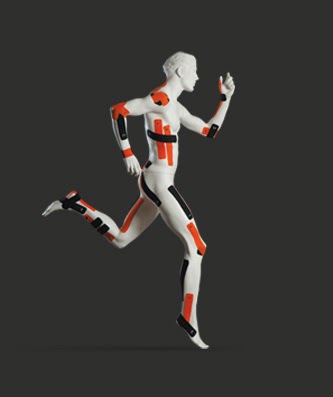
What's up with the magic tape that athletes are wearing?

Li Na with kinesio tape on her knee, playing on clay.
When Chinese tennis star Li Na won the Australian open final this weekend, she had two long, wide strips of black tape criss-crossing her right knee. And in the semifinals, Poland’s Agnieszka Radwanska had two similar pieces of tape criss-crossed over her right shoulder.  Sports fans have been seeing this sight for a few years now: we saw these big pieces of tape slathered across the legs of many Olympic swimmers in the 2008 and 2012 Olympics. 

So what is this tape on the knees, shoulders, and thighs of top athletes? And more important, does it work?

Why is it so popular? After all, with so many world-class athletes using it, it must help somehow, right? Nope. Athetic tape has become hugely popular thanks to clever marketing: during the 2008 Olympic games in Beijing, tape manufacturer KT tape donated its “kinesio tape” to 58 countries for their athletes to use. Many athletes gave it a try, and millions of viewers saw it on television.

Athletes are notoriously superstitious. If they have a good performance, they will obsessively try to repeat everything they wore, ate, or otherwise did that might have led to that performance. Obviously, with so many athletes wearing elastic tape in 2008 games, some of them performed well. This merely reinforces the superstition that somehow the tape helped.

Tape man! (From the KT website.)
Fortunately, this claim is pretty easy to study, and multiple studies were done after the 2008 Olympics, looking at the possible benefits of athletic tape. A review of ten scientific studies published in the journal Sports Medicine in 2012 found little benefit. They reported that 
“The efficacy of KT [kinesio tape] in pain relief was trivial given there were no clinically important results.” 
Other studies looked at other effects, and for these the authors reported “KT had some substantial effects on muscle activity, but it was unclear whether these changes were beneficial or harmful.” Not a slam dunk for the benefits of kinesio tape, apparently.  

Tennis player Li Na was wearing the tape on her knee. What does the science say about tape for knee pain in particular? Here the evidence is not so clear. A small study last year by Marc Campolo and colleagues compared at Kinesio Tape® to another taping method called the McConnell Taping (MT) and to no tape at all. The difference between the tapes is that KT is elastic, while the MT technique uses rigid tape. This study found a small benefit for both types of tape on pain while climbing stairs or doing knee squats. This result is interesting, but the study only had 20 subjects, far too few to say anything conclusive. And it wasn't "blinded" - the subjects obviously knew they had tape on their knees. So they might have been telling the scientists what they wanted to hear, a common phenomenon in these types of studies.

Of course, the company that sells KT tape is not nearly so careful in their claims. Their website says:
“KT TAPE is lightweight, comfortable to wear, and can be used for hundreds of common injuries such as lower back pain, knee pain, shin splints, carpal tunnel syndrome, and tennis elbow, just to name a few.”
This is, to put it mildly, a bit of overstatement.  As the recent review article stated, when it comes to pain relief, the evidence shows “no clinically important results.”

There are a remarkable number of studies looking at various kinds of taping for joint or muscle problems, but the evidence is, on the whole, weak at best. My reading is that elastic tape probably has no more than a placebo benefit. But in sports, a placebo benefit can be significant: if you think it helps, it might really help.  

And think of the other benefits: KT tape comes in lots of cool colors, and for just a few bucks, you’ll look like a pro. A women's pro, that is: I didn't see any tape on Rafael Nadal or Stanislas Wawrinka in the men's final. Maybe that's because removing a big piece of tape from a hairy leg has got to hurt.

Dr. Oz tries to do science again, this time with green coffee bean extract

Dr. Mehmet Oz hosts a popular TV show in which he promotes all sorts of medical treatments, some good and some - well, not so good.  And once in a while, he tries to do a science experiment, as he did in 2011 with a badly flawed experiment on arsenic in apple juice.

Well, Dr. Oz has done it again.  This time he wanted to re-examine a claim that he himself had made on an earlier show about green coffee bean extract.

In April 2012, Oz aired a segment on his TV show called "Green Coffee Bean Extract: The Fat Burner That Works!"  On it he "this miracle pill can burn fat fast, for anyone who wants to lose weight." Not surprisingly, sales of green coffee bean extract skyrocketed in response.
"A marketing apocalypse was ignited!" Dr. Oz pointed out in his show in September of 2012.  "I was surprised by the firestorm," he said.
Dr. Oz loves this topic, by the way. He's run dozens of shows on weight-loss gimmicks, such as "The New Silver Bullet for Weight Loss" in which he promoted a new diet pill called Qnexa, and "Ancient Ayurvedic Secrets to Lose Weight".  But let's leave those for another day.

One problem with Oz's first green coffee bean show was that he based it on a study that has some serious problems.  That study claimed that a particular brand of green coffee bean extract called GCA led to significant weight loss.  Subjects lost a lot of weight, too: 8 kilograms (over 17 pounds) on average.    Dr. Oz called it "a staggering, newly released study."  Wow, must be good, right?

Let's look at that study, shall we?  First, it only involved 16 people, a tiny sample.  There were 3 treatments: high dose GCA, low dose GCA, and placebo.  The subjects were divided into 3 even smaller groups, but not by treatment: instead, each group took all 3 treatments, for 6 weeks at a time, with a 2-week rest period in between.  The only difference between groups was the order of the treatments (high-dose/low-dose/placebo).  Subjects in all 3 groups lost about the same amount of weight.  What was the difference?  Well, the authors claimed that the amount of weight loss during the periods when the subjects were taking GCA was greater than when they weren't, even though they lost weight even during placebo treatment.

One critique of the study is there was no proper placebo control.  Looking at the paper, it is impossible to tell how much weight loss is being attributed to the green coffee beans rather than the daily monitoring of diet, which is known to help with weight loss.  And it's a really, really small study.

Perhaps a larger problem is that the trial was carried out in India, and then written up by a U.S. researcher, Joe Vinson from the University of Scranton, as revealed by a story in The Globe and Mail (Canada) last December.  That's right: the subjects were recruited in India, all data was collected there, and the data was emailed to Vinson so he could write it up.

Even more troubling was that Vinson was paid by the makers of GCA to write the study.  Worse yet, the paper states that "The authors report no conflicts of interest in this work." When asked about this by The Globe and Mail:
"Vinson said that he doesn’t gain financially if the company sells a lot of product and that the journal didn’t require him to disclose the relationship."
This small, badly run study was anything but "staggering", as Dr. Oz called it.  I have little confidence that the data sent to Vinson from India was even correct.

Maybe Dr. Oz might was worried too, because a few months after his original show, he ran another show in which he looked at green coffee bean extract again.  He said he was responding to criticism of his earlier show, and he wanted to set the record straight.  For his second show, "Green Coffee Bean Extract: The Answer to Weight Loss?" he ran his own experiment:
"For the first time, we are doing an unprecedented experiment," he said. "We're doing our own study, right here on this show.... the first of its kind EVER on television!"  
Oz's experiment involved 100 women - all of them in the studio audience for his show - who took either green coffee bean extract or a placebo pill for two weeks.  And the result?  I won't make you watch the video; here is the entire statement of results, from Oz's website:
"In two weeks, the group of women who took the green coffee bean extract lost, on average, two pounds. However, the group of women who took the placebo lost an average of one pound – possibly because they were more aware of their diet for that two weeks because of the required food journal."
On the show, Oz stated proudly: "green coffee bean worked for us."

Maybe Dr. Oz's science experiment was better than the Vinson study.  But that doesn't mean it was any good.  First off, Oz seems to have ignored some critical rules on how to run a experiment involving humans.  As Scott Gavura pointed out at the Science-Based Medicine blog, Oz's study "makes a mockery of good research methodology."  Oz failed to explain how the women were recruited for the experiment, and Gavura points out that apparently did not obtain the ethics board approval that all experiments on human subjects require.

Oz also seems willfully ignorant of the notion that 2 weeks is far too short a time to assess the value of a weight-loss treatment.  Will he go back to those same women a few months later to see if the effect lasted? Somehow I doubt it.

But what about that result?  The women who took the coffee bean extract lost 2 pounds, versus just 1 pound for the other group.  (Actually, thanks to Scott Gavura, we know that the difference was even smaller, just 0.76 pounds.) Oz provides no statistical analysis to demonstrate that is even marginally significant. Nor does he provide the raw data that would allow others to replicate his analysis, as he might have to do if he were actually to try to publish his study. But for Oz, what he described on his show seems to be proof enough.  That's is a poor excuse for science.

Meanwhile, sales of green coffee bean extract continue to climb.  My advice: save your money.  And the next time Dr. Oz runs a science experiment, be skeptical.