Showing posts with label lab leak. Show all posts

New report says COVID was probably a lab leak: should we believe it?


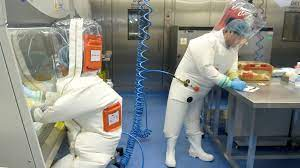
A week ago, Vanity Fair and ProPublica published a long exposé on the origins of Covid-19, in which they revealed new evidence of a lab leak in the Wuhan Institute of Virology (WIV) in November 2019.

The big reveal: the report makes it appear much more likely than before that Covid-19 originated through an accident at WIV, where presumably one of the scientists was exposed to the virus. The new evidence in the ProPublica report largely centers on the work of a translator, Toy Reid, who claims to have a unique gift for interpreting the “secret language of Chinese officialdom.” Even native Chinese speakers can’t really follow it, he claims in the article.

Reid scrutinized a collection of internal and external communications from WIV, and says that he found messages in the fall of 2019 that indicated “inhumane working conditions and hidden safety dangers.” And most significantly, a message on November 12 refers to some kind of biosecurity breach, which might have referred to an accidental exposure of someone in the lab to a virus.

The date of this incident appears to coincide with an incident described in a 2021 article in the Wall St. Journal, which reported that 3 WIV employees sought hospital care in November of 2019. This incident has never been confirmed to involve Covid-19 infections.

To add some context: Reid’s findings were released by a Republican U.S. Senator, Richard Burr, in a report that was not endorsed by the full Senate committee investigating COVID-19’s origins. Burr’s report concluded that Covid-19 was “more likely than not, the result of a research-related incident.”

Not surprisingly, this new report has been getting a lot of attention.

The report initially might seem convincing, until you realize that it doesn’t include any actual biological evidence: no reports of actual infections, and no specifics about any viruses that might have escaped from WIV at the time. It seems to be based entirely on the translation super-powers of Toy Reid.

It didn’t take long for other experts to weigh in. There are plenty of Chinese-language speakers out there, including native speakers who are likely much more fluent than Toy Reid. One translator wrote on Twitter that Reid “screwed up.” Another said that a critical passage identified by Reid “doesn’t suggest a biosafety problem had occurred at all.”

Hmm. Here I have to admit that I have no idea who is right here, since I don’t speak or read Chinese. However, it does appear that ProPublica and Vanity Fair may have put too much faith in a single translator who might have had a political bias.

And there’s more. A number of virologists weighed in to point out that the Vanity Fair piece had ignored work that pointed to the Huanan Wholesale Seafood Market (in Wuhan) as the source of the virus. I wrote at length about that research in March, when 3 new scientific papers had just appeared (as preprints), all pointing fingers at the seafood market as the source of the pandemic.

Unfortunately, all of the evidence in those papers was circumstantial. None of them found an infected animal that was the true source of Covid-19. Instead, they found that many early cases in people were centered on the seafood market. Even supposing that is correct (and it might not be, because China never allowed outside scientists to go to Wuhan and test people all over the city), it is still just circumstantial. Perhaps a scientist from WIV got infected and stopped by the seafood market that day–we may never know.

But let’s return to this week’s controversy, shall we? A virologists who led one of the papers I discussed back in March, Michael Worobey, was also quoted in the Vanity Fair article. He had major objections to what they wrote, and he posted them in a lengthy Twitter thread here, which is well worth reading.

Vanity Fair described Worobey’s work as providing evidence that a natural zoonotic origin (in other words, an origin in an animal at the Wuhan seafood market) for Covid-19 was “plausible.” Worobey objected, pointing out that his comments were much more definitive, and that his position is that:

"OUR TWO RECENT PAPERS establish that a natural zoonotic origin is THE ONLY plausible scenario for the origin of the pandemic." (all-caps in original)

After Worobey’s Twitter thread appeared, Vanity Fair and ProPublica updated their stories to include exactly that quote, without the all-caps.

Worobey makes a compelling case that Vanity Fair and ProPublica misquoted him (or at least omitted important details), and it seems they have fixed that error. However, neither the Twitter thread nor Worobey’s scientific paper make a definitive case that, as he puts it, a natural origin is the “only plausible scenario” for Covid-19.

Not at all. The paper by Worobey and colleagues concluded that “the earliest known COVID-19 cases from December 2019 were geographically centered on this market.” Let’s grant that this statement is accurate: even so, their data does not prove that the market was the “origin” of the pandemic, especially because they failed to find any animals infected with Covid-19 from that market. They only found human cases. This leaves open the question of where the very first human case occurred: it’s entirely possible that the first human was infected elsewhere–perhaps at the Wuhan Institute of Virology–and that human visited the seafood market while actively spreading the virus.

And their data relies on samples collected in Wuhan, which is of course controlled by the Chinese government. Note the wording of that conclusion from the paper, which refers to “the earliest known cases.” China does not want the world to think that the Wuhan Institute of Virology might have caused the pandemic, so how can we ever know if there were early cases originating from WIV?

On the other hand, as I wrote back in March, China has known for decades that their live animal markets are a source for novel human viruses, including the 2003 SARS outbreak and multiple cases of avian influenza jumping from birds into people. And yet they have done nothing to shut down those markets.

So it’s complicated. In any case, as Matthew Iglesias pointed out in The Guardian, even if the entire Vanity Fair article is wrong, the lab leak hypothesis is still plausible–very much so. The fact remains that one of China’s major virology research institutes, which was known to be conducting research on SARS-like viruses, and which was known to be collecting viruses from bats, is located just a few miles from the live animal seafood market. That’s one heck of a coincidence.

Finally, let’s take a step back: why all this attention to whether the virus originated from a virology institute or from a live animal market? Either way, the implication is that humans caused this pandemic. As I wrote back in March, we should take away at least two lessons from this experience: first, that live-animal food markets should be shut down, especially those that sell wild animals rather than farm-raised ones; and second, that gain-of-function research on deadly viruses should be shut down as well.

So let’s stop arguing about the precise origin of the pandemic, and start taking steps to prevent the next one.
COVID-19 probably started in a live animal market rather than a lab. That's still a huge problem.

A couple of weeks ago, three scientific studies were released on preprint servers (meaning they haven’t yet been peer-reviewed), all with the same conclusion: Covid-19 started in the Huanan Wholesale Seafood Market, in Wuhan, China.

I looked at the papers, and I’ll summarize them at the end of this article, but let’s start with the implications. For two years now, the world has speculated on whether the SARS-CoV-2 virus leaked from a lab. As I wrote in this space last June, and as many others have observed, the Wuhan Institute of Virology (WIV) was a possible source of the virus. WIV was doing research on coronaviruses in bats, including “gain-of-function” research that aimed to give viruses new capabilities.

It’s easy to imagine that an employee of WIV accidentally got infected, and unknowingly started a worldwide pandemic.

This “lab leak hypothesis” was fiercely denied by China, and initially denied by many independent scientists as well, who published statements that the virus almost certainly originated in the wild, probably in bats. Unfortunately, China shut down nearly all access to WIV, and probably destroyed all samples of coronaviruses there (we may never know), so it was impossible for the World Health Organization (WHO) or anyone else to conduct an independent investigation.

A year or so into the pandemic, as China continued to stonewall any investigation, scientists started to re-consider the lab leak hypothesis. It seemed highly plausible, for a number of reasons, that a lab leak could have occurred, even if no gain-of-function research was going on.

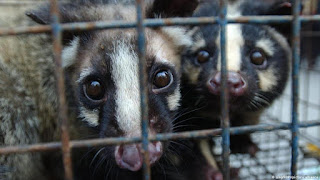
The three new studies, though, all point their fingers to the same place: the Huanan Seafood Market. All of them conclude that the virus probably first infected people directly from animals being sold, either for food or for use in Traditional Chinese Medicine, in the live animal market. Despite its name, incidentally, the market sold a wide variety of live animals, including raccoon dogs, bats, chickens, ducks, snakes, badgers, giant salamanders, and crocodiles.

Let’s suppose the new studies are right. Does this absolve China of responsibility for the Covid-19 pandemic?

Not at all.

China’s huge, open-air live animal markets have been implicated for decades in outbreaks of new infectious diseases, and China has known about it all along. The original SARS outbreak in 2002, which started in Guangdong province, was one prominent example. We were able to contain that outbreak because infected people were highly symptomatic, allowing public health experts to identify and quarantine them. At the time, the Chinese government suppressed reports of the disease and was slow to cooperate with the WHO.

Since at least the late 1990s, influenza experts have warned that new strains of bird flu could jump from birds to humans, and that China’s live animal markets were the most likely source. Many cases of bird flu were reported in the period from 1997 through 2005, often associated with live poultry markets, and yet China did nothing to regulate or shut down those markets.

Studies published in the early 2000’s showed that multiple animals, not just birds, were carrying the original SARS virus, and that these animals were being traded in China’s live animal markets. Yet China ignored the risks.

One reason these markets are especially dangerous to the public is that traders often sell unusual wild animals there, not for food, but for Traditional Chinese Medicine, as I’ve written before. Bats are among the many animals used (or abused) in TCM, and scientists reported as early as May 2020 that bats being sold in the Huanan Seafood Market were the most likely source of the Covid-19 virus.

China should have shut down these markets years ago. They represent an enormous public health threat, and yet the Chinese government ignored the warnings for years. Now that Covid-19 is winding down, or at least moving to an endemic phase, China has a new opportunity to show the world that it takes this threat seriously, by ending all trade in exotic live animals, and by shutting down its live animal markets. (Some live animals, such as fish, are not a threat and might be sold safely, but almost all mammals and birds carry viruses that could jump to humans.)

And lest anyone think otherwise, we still need to impose a ban on gain-of-function research in deadly viruses, as I’ve been arguing for years. All the way back in 2014, I asked the question, “should scientists be artificially mutating viruses so that they have the potential to become a worldwide pandemic?” I thought the answer was obvious, and yet the NIH (in the US) allowed the research to continue, after “pausing” it for a few years in the mid-2010’s.

When NIH initially paused its support for gain-of-function work, many virologists pushed back, arguing that they had plenty of safeguards in place, and no virus would ever leak out. Plus, they argued, their work was important in helping us prevent pandemics. Right.

We now know, definitively, that those virologists were wrong. We know that leaks are at least a possibility, even from the most secure biological labs, which is why multiple scientists, including some virologists, called for a fuller investigation into the lab leak hypothesis back in May 2021.

We also know that gain-of-function research did nothing to prevent the Covid-19 pandemic. Nothing, Zip. Nada.

We can take at least two lessons from this pandemic: first, that live-animal food markets should be shut down, especially those that sell wild animals rather than farm-raised ones; and second, that gain-of-function research on deadly viruses should be shut down as well.

Finally, for those who want to know about those three new papers I referenced at the beginning, here’s a brief summary.

The first paper, by George Gao et al., is a summary of extensive virus testing at the Huanan Seafood Market, on samples collected in early 2020. They found SARS-CoV-2 in 73 environmental samples (collected from locations in the market but not in people or animals), and yet “no virus was detected in the animal swabs covering 18 species of animals in the market.” In other words, the virus was found at the marketplace, but not in any of the animals, suggesting that infected people walking through the market were the source of those positive samples. Where did those people get the virus? This paper doesn’t answer that question.

The paper by Michael Worobey et al. shows more, however: not only do they show that all of the early cases were clustered in or very near the Huanan Seafood Market, but also that “positive environmental samples were strongly associated with vendors selling live animals.” In other words, even though we haven’t found the original animal source of the virus, the locations are all centered on live animal vendors. They conclude that the Huanan market was “the unambiguous epicenter of the COVID-19 pandemic.”

The third paper, by Jonathan Pekar et al., reports that there were actually two distinct events where the original SARS-CoV-2 virus jumped from animals to humans, both at the very beginning of the pandemic, probably in late November 2019. These authors also point the finger at the Huanan Seafood Market, and they implicate another animal, raccoon dogs, as a likely source. Raccoon dogs are closely related to foxes (not raccoons, despite the name), and were being sold as food in the Huanan market. Scientists have known since at least 2003 that raccoon dogs can carry SARS coronaviruses. This paper illustrates yet again why live-animal markets represent a threat to human health.

Why the "Lab Leak" Hypothesis Doesn’t Mean the COVID-19 Virus was Engineered

The “lab leak” hypothesis about the origin of Covid-19 has been getting a lot of attention lately, and deservedly so. This is the idea that the SARS-CoV-2 virus accidentally escaped from a laboratory in Wuhan, China, that conducts research on coronaviruses. Just a few weeks ago, a group of highly respected virologists and epidemiologists published a letter in the journal Science calling for a more thorough investigation, stating that the lab leak hypothesis was not taken seriously enough in earlier investigations.

The coincidence of having a major virus research facility, the Wuhan Institute of Virology (WIV), just a short distance from the live animal food market that was originally believed to be the source of the outbreak is too great to ignore. Even more curious is that WIV was actively doing research on coronaviruses in bats, including the bats that carry a strain of SARS-CoV-2 that is the closest known relative to the Covid-19 virus itself.

From the beginning of the outbreak, attention was focused on WIV, and various conspiracy theorists suggested, without any evidence, that the Covid-19 virus was either intentionally engineered, intentionally released, or both. Let me just say right off the bat that I don’t believe either of those claims.

However, I do think the lab leak hypothesis is credible, and it’s also possible that “gain of function” research (more about this below) might be responsible.

In arguing against (unsupported) claims that the Chinese released the virus on purpose, a group of virologists published a paper very early in the pandemic, in March 2020, which looked at the genome sequence of the virus and concluded that “SARS-CoV-2 is not a laboratory construct or a purposefully manipulated virus.” Other studies since then have come to similar conclusions: the virus is very similar to naturally-occurring coronaviruses, and it is possible that it simply evolved naturally in the wild, probably in bats.

Even so, the lab leak hypothesis remains highly credible, regardless of whether or not the virus was genetically engineered. Here’s why. First, we know that lab accidents can happen and viruses can escape, even if these accidents are rare. We also know that the Wuhan Institute of Virology had thousands of viruses, including coronaviruses, in its facility. And despite claims that viruses couldn’t possibly have escaped accidentally, a 2017 Nature article describing the then-new Wuhan Institute reported, perhaps prophetically, that “worries surround the [Wuhan Institute of Virology], too. The SARS virus has escaped from high-level containment facilities in Beijing multiple times.”

The secrecy of the Chinese government, which has not yet allowed independent, outside scientists full access to WIV to investigate, hasn’t helped matters. We need to know if any viruses in WIV are similar to the Covid-19 virus, and at this point we can’t trust the Chinese government’s assurances on this question. Of course, even if they allow outsiders to investigate now, we cannot know that they have preserved all the viruses that were present in the lab in the winter of 2019-2020.

Now let’s talk about gain-of-function research. Gain of function, or GoF, refers to research that tries to make viruses or bacteria more harmful, by making them more infectious. This seems crazy, right? And yet it’s been going on for years, despite the efforts of many scientists to stop it. In the past, GoF research focused on the influenza virus, and in particular on a small number of scientists (highly irresponsible ones, in my view) who were trying to give avian influenza–bird flu–the ability to jump from birds into humans. I wrote about this in 2013, and in 2017, and again in 2019, each time calling on the US government to stop funding this extremely dangerous work. The NIH did put a “pause” on gain-of-function research for a few years, but the work resumed in 2019.

Now, let me explain why GoF research does not require artificially engineering a virus. Viruses mutate very rapidly all by themselves, and RNA viruses like influenza and SARS-CoV-2 mutate even more rapidly than DNA viruses. So a GoF experiment doesn’t need to engineer a virus to make it more infectious: instead, scientists can simply grow a few trillion viral particles, which is easy, and design experiments to select the ones that are more infectious. For example, some GoF research on bird flu simply sprays an aerosol mixture of viruses into a ferret’s nose (influenza research often uses ferrets, since you can’t ethically do this with people), and waits to see if the ferret comes down with the flu. If it does (and this has been done, successfully), the strain that succeeds now has a new function, because it can infect mammals. The viruses that are artificially selected (as opposed to natural selection) in these experiments will appear completely natural; no genetic engineering required.

We know that WIV was conducting gain-of-function experiments, and we know that its work included coronaviruses. Was the Wuhan Institute of Virology running GoF experiments on SARS-CoV-2 viruses from bats? Possibly. And if it was, these experiments could easily have produced a strain that infected humans. If a lab employee was accidentally infected with such a strain, that could have started the pandemic. And even if SARS-CoV-2 wasn’t the subject of GoF experiments, a naturally-occurring strain being studied at WIV could still have infected one of their scientists and thereby leaked out into the population.

I’m not saying that any of these events is likely. I am, however, agreeing with the scientists who, in their recent letter to Science, called for a deeper investigation into the cause of the Covid-19 pandemic.

Finally, let me echo a sentiment they expressed in their letter, which is best said by simply quoting them: “in this time of unfortunate anti-Asian sentiment in some countries, we note that at the beginning of the pandemic, it was Chinese doctors, scientists, journalists, and citizens who shared with the world crucial information about the spread of the virus—often at great personal cost.” Rather than seeking to cast blame, we need to uncover the origin of the Covid-19 pandemic, and any behaviors that led to it, as a means to help all societies prevent future pandemics.