Showing posts with label viruses. Show all posts

Gain-of-function research on viruses justifies itself with a scientific error

We still don’t know where Covid-19 started, although we’re pretty sure it started in or near the city of Wuhan, China. The leading theories are that it started either in the Huanan Wholesale Seafood Market (in Wuhan), a live animal food market, or in the Wuhan Institute of Virology (WIV), a large virus research center in another part of the city.

We might never know, because we’d need access to all of the viruses being studied at WIV in late 2019, and those viruses might not even exist any longer.

I’ve been on the fence about this question since the pandemic started (as I wrote here and here and here), in part because we just don’t have enough data. However, I’m now starting to lean more strongly towards the hypothesis that the Covid-19 virus started in the Wuhan Institute of Virology. I just listened to the interview that Sam Harris did with science journalist Matt Ridley and biologist Alina Chan, who together wrote an entire book on the origins of Covid-19, and the evidence they compiled is compelling.

Let’s look at a few key points.

First, the virus itself, SARS-CoV-2, almost certainly originated in bats, and those bats almost certainly came from caves in southern China, over 1000 kilometers away from Wuhan. The bats didn’t get to Wuhan on their own.

So either someone transported bats to the Huanan Seafood Market, or they transported viruses from the bats to WIV. These are our choices.

Second, WIV was doing research on coronaviruses for years. Their scientists traveled regularly to caves in southern China to find novel viruses, and they’ve acknowledged that WIV’s labs had bat viruses, including viruses related to SARS-CoV-2, before the pandemic began.

Third–and this point is under some dispute–many scientists have argued that the virus was a naturally-occurring one. However, this doesn’t make it more likely that the virus originated in the seafood market. It’s just as likely that a scientist or technician working at WIV was accidentally infected, and then went home (maybe stopping by the seafood market on the way) and started a worldwide pandemic.

Fourth, it’s hard to believe that it’s merely a coincidence that one of the top virology labs in China just happened to be located in the city where the pandemic began. WIV was not only the foremost lab in China doing work on SARS-like viruses, but they also claimed previously that they intended to do gain-of-function work to make these viruses more pathogenic.

This startling fact emerged when a 2018 grant proposal by EcoHealth Alliance, a US-based nonprofit that was working with WIV, was leaked to the press in 2021. Even though that proposal was never funded, the text describes how EcoHealth would genetically engineer new viruses, taking the spike protein from one bat coronavirus and inserting it into a different one, and then infecting mice to see what happens.

But wait, some will say: we now have peer-reviewed studies pointing to the seafood market as the epicenter of the pandemic. (I wrote about those studies back in March 2022.) However, as Alina Chan and Matt Ridley explained to Sam Harris (and in their book), the Chinese authorities in early 2020 focused all their attention on the seafood market, to the exclusion of anywhere else. They collected loads of samples from people who had been in or near the market, and very little from anywhere else. Thus we seem to have a classic case of confirmation bias: when you only look at the place where you’re convinced the virus originated, and you find some evidence, then you stop looking. We simply don’t know if the virus was anywhere else.

Now, to the main topic for today: the scientific error used to justify gain-of-function research on dangerous viruses, the error that might have led to the Covid-19 pandemic. Let me explain.

Why, one might ask, were scientists from the Wuhan Institute of Virology going out into the wild, to places where humans would not otherwise go, and bringing back deadly viruses?

This doesn’t just happen in China. The US is funding a large effort to do exactly the same thing: through a program called DEEP VZN (”deep vision,” get it?), USAID is funding scientists in the US and in Africa, Asia, and Latin America to venture into unpopulated areas of the jungle, and to find animals carrying viruses that might infect humans. They’re hoping (!) to discover 8,000 to 12,000 new viruses, and they’re particularly interested in viruses that could cause the next pandemic.

Why does anyone do this? Virus hunters believe that through these efforts, they can predict which of these viruses are destined to become the next pandemic. Furthermore, the argument goes, through gain-of-function research, virologists will be able to determine just what the new pandemic strains will look like. Then, armed with this knowledge, they can convince governments and private companies to design, manufacture, and stockpile vaccines against these viruses. This way (the argument goes) when the pandemic emerges, we’ll be ready.

At the center of this scientific strategy is an obvious error about evolution.

I’ll have to get a bit technical to explain here, so bear with me: the genome of the SARS-CoV-2 virus contains about 30,000 bases of RNA. The key protein that lets it infect human cells is called the Spike protein, which is about 1300 amino acids long and is encoded by about 3900 RNA bases. RNA has an alphabet of 4 letters (A, C, G, and U), which means that each of those positions can mutate into one of the other 3 letters. So we have almost 12,000 possible mutations that affect just one base in the Spike protein.

But 2 or more mutations can happen at once, quite easily, and this too could make the virus more infectious. How many combinations of 2 positions and 3 mutations are possible? Well, about 650,000,000.

And these aren’t the only mutations that might create a pandemic virus. So we’re supposed to believe that:

  1. gain-of-function experiments in the lab will create precisely the same mutations that would happen in the wild, and
  2. virologists can then predict, based on their experiments, that a virus is likely to cause a pandemic, and
  3. this evidence is so convincing that governments will manufacture and stockpile vaccines based on these experiments, and
  4. that this in turn will allow us to prevent the next pandemic.

Yeah, right. The evolutionary mistake is in the first point above, by the way.

Something happened in Wuhan. You might think that virologists, upon hearing about the gain-of-function research at WIV, would pause and think, oh no, we hope our colleagues’ research didn’t cause the pandemic! But instead, they closed ranks and doubled down.

In case you think I’m exaggerating, consider this: just a month ago, 156 virologists co-authored an article in the Journal of Virology that declared:

“gain-of-function research-of-concern can very clearly advance pandemic preparedness and the development of vaccines and antivirals. These tangible benefits often far outweigh the theoretical risks posed by modified viruses.”

In case that wasn’t clear enough, they assert twice more in the article that gain-of-function research will help us prepare for pandemics.

Virologists have been making this argument for years, and yet their experiments had no benefit at all–none, zero, zip–when we were finally faced with a true pandemic. Why should we believe this claim now?

Instead, it’s possible that gain-of-function research, along with the search for novel viruses in the wild, might have accidentally caused the pandemic.

Let me conclude by emphasizing that the vast majority of research on viruses and infectious diseases is incredibly important. Vaccines, antibiotics, antivirals, and other treatments have saved millions of lives, and the scientists doing this work should be applauded. Shutting down dangerous gain-of-function research–by which I mean research designed to take a virus or bacterium and make it more deadly in humans or in other animals–would only affect a tiny percentage of virologists worldwide. Let’s tell them to stop. If they can’t find something better to do, other scientists can.
Panel recommends new controls on deadly gain-of-function research. Will the government listen?

Illustration by Erik English

This past week, a government-appointed panel of scientists released a new report recommending 13 actions the U.S. government should take to control “gain-of-function” research that has the potential to create deadly new pathogens.

This has been a long time coming, but the first thing I want to point out is that this is just an advisory panel. The government hasn’t done anything yet. Let’s unpack what happened, shall we?

First, the panel is called the NSABB: the National Science Advisory Board for Biosecurity. The new report, which was at least 3 years in the making, was created in response to a decade’s worth of concerns, raised by many scientists (including me - see my previous articles here and here and here, among others), about the dangers of a specific kind of research known as gain-of-function.

What is gain-of-function (GoF) research? Well, it can include many scientific experiments, including some that are perfectly reasonable. But the term has been used most often to refer to experiments that are designed to take a virus such as influenza or SARS-CoV-2 and alter it intentionally to make it more deadly.

This seems crazy, right? Yet it’s been going on in the influenza virus research world for at least a decade, which is why many scientists have raised alarms.

The Covid-19 pandemic gave this issue much greater urgency, after suspicions arose that the Covid-19 virus, SARS-CoV-2, might have emerged (accidentally) from gain-of-function experiments at a major virology lab in Wuhan, China. (It probably didn’t, but we still don’t know for sure, as I’ve explained in previous columns.)

So back to the topic at hand: the new NSABB report. What do they recommend, and will it matter? I don’t want to go through all 13 recommendations, but overall it’s a very good start, if (and only if) the U.S. government takes them seriously and implements them all.

And the virology community is already pushing back - but first let me go into just three of the recommendations.

First, the panel recommends that the government require that all GoF research undergo federal-level review if the work is

“reasonably anticipated to enhance the transmissibility and/or virulence of any pathogen.”

Believe it or not, GoF research that does this kind of thing is going on right now, and there’s no rule saying it must be reviewed first.

Second, the panel recommends that the government only allow such research if there’s simply no better, lower-risk way to gain the same scientific insights. As they put it, scientists who want to do GoF work would have to prove that

“there are no feasible alternative methods ... that poses less risk ... and the risks are justified by the potential benefits.”

That’s a high bar to clear, but it seems eminently reasonable to insist upon it before allowing dangerous GoF research to proceed.

The panel also recommends that the new restrictions on gain-of-function research apply to all research in the U.S., regardless of whether it’s funded by the government. This is an important addition, as illustrated recently when Boston University, after being called out for dangerous gain-of-function experiments on the Covid-19 virus, claimed that they didn’t use NIH funds for this, so (they argued) they didn’t break any rules. Technically, they were correct. This recommendation will close that giant loophole.

There’s much more in the NSABB report, and my primary reaction is that (1) it’s a good start and (2) it’s not nearly enough. I’d like to see the government make a blanket statement that research that will make deadly viruses even more deadly is simply forbidden, at least for now. If someone wants an exception, they could make the case, but I’ve yet to see a good argument for these experiments.

What about that pushback from the virologists that I mentioned above? Well, in a lengthy commentary just published in the Journal of Virology, 156 virologists argue that gain-of-function research is wonderful! And it’s brought so many benefits! Just let us handle this, and don’t worry, they seem to be saying.

To make the benefits explicit, the 156 virologists include a table listing dozens of “useful examples” of gain-of-function research. Let’s look at just two of them.

Example 1: the virologists assert that experiments on a virus called M13 led to faster computers, citing a 2018 article. First, this is nonsense: no one has been a faster computer using a modified M13 virus. Second, the M13 virus is harmless to humans (it only infects bacteria), so it wouldn’t be subject to any regulations on GoF research in human pathogens.

Example 2: this one is even more outrageous. The table lists as a “benefit” an experiment that “established that H5N1 has capacity for mammalian transmissibility.” They then cite a notorious experiment from 2012 in which scientists intentionally modified a deadly bird flu virus (H5N1) in order to make it possible for the virus to be transmitted directly between mammals. This was one of the key experiments that led to the widespread alarm about GoF research in the first places. (I wrote about it back in 2013.)

So no, creating a more-deadly virus and then saying “see? look how dangerous this virus is?” is not what I’d call useful.

Clearly, the virologists who wrote this commentary do not want to see any restrictions at all on the kind of research they do. They just don’t see the need for it. Obviously, I disagree, as do many others, including many virologists who support the NSABB recommendations.

As I wrote at the beginning of this piece, the NSABB report is just a set of recommendations, and the government might not do anything. I hope that the government will implement all of them, and then go even further, and put a stop to the dangerous, sometimes reckless experiments that a very small minority of scientists are engaging in.

We need to study viruses, and we need to control infectious diseases, but we can do this without making pathogens more deadly.

New report says COVID was probably a lab leak: should we believe it?


A week ago, Vanity Fair and ProPublica published a long exposé on the origins of Covid-19, in which they revealed new evidence of a lab leak in the Wuhan Institute of Virology (WIV) in November 2019.

The big reveal: the report makes it appear much more likely than before that Covid-19 originated through an accident at WIV, where presumably one of the scientists was exposed to the virus. The new evidence in the ProPublica report largely centers on the work of a translator, Toy Reid, who claims to have a unique gift for interpreting the “secret language of Chinese officialdom.” Even native Chinese speakers can’t really follow it, he claims in the article.

Reid scrutinized a collection of internal and external communications from WIV, and says that he found messages in the fall of 2019 that indicated “inhumane working conditions and hidden safety dangers.” And most significantly, a message on November 12 refers to some kind of biosecurity breach, which might have referred to an accidental exposure of someone in the lab to a virus.

The date of this incident appears to coincide with an incident described in a 2021 article in the Wall St. Journal, which reported that 3 WIV employees sought hospital care in November of 2019. This incident has never been confirmed to involve Covid-19 infections.

To add some context: Reid’s findings were released by a Republican U.S. Senator, Richard Burr, in a report that was not endorsed by the full Senate committee investigating COVID-19’s origins. Burr’s report concluded that Covid-19 was “more likely than not, the result of a research-related incident.”

Not surprisingly, this new report has been getting a lot of attention.

The report initially might seem convincing, until you realize that it doesn’t include any actual biological evidence: no reports of actual infections, and no specifics about any viruses that might have escaped from WIV at the time. It seems to be based entirely on the translation super-powers of Toy Reid.

It didn’t take long for other experts to weigh in. There are plenty of Chinese-language speakers out there, including native speakers who are likely much more fluent than Toy Reid. One translator wrote on Twitter that Reid “screwed up.” Another said that a critical passage identified by Reid “doesn’t suggest a biosafety problem had occurred at all.”

Hmm. Here I have to admit that I have no idea who is right here, since I don’t speak or read Chinese. However, it does appear that ProPublica and Vanity Fair may have put too much faith in a single translator who might have had a political bias.

And there’s more. A number of virologists weighed in to point out that the Vanity Fair piece had ignored work that pointed to the Huanan Wholesale Seafood Market (in Wuhan) as the source of the virus. I wrote at length about that research in March, when 3 new scientific papers had just appeared (as preprints), all pointing fingers at the seafood market as the source of the pandemic.

Unfortunately, all of the evidence in those papers was circumstantial. None of them found an infected animal that was the true source of Covid-19. Instead, they found that many early cases in people were centered on the seafood market. Even supposing that is correct (and it might not be, because China never allowed outside scientists to go to Wuhan and test people all over the city), it is still just circumstantial. Perhaps a scientist from WIV got infected and stopped by the seafood market that day–we may never know.

But let’s return to this week’s controversy, shall we? A virologists who led one of the papers I discussed back in March, Michael Worobey, was also quoted in the Vanity Fair article. He had major objections to what they wrote, and he posted them in a lengthy Twitter thread here, which is well worth reading.

Vanity Fair described Worobey’s work as providing evidence that a natural zoonotic origin (in other words, an origin in an animal at the Wuhan seafood market) for Covid-19 was “plausible.” Worobey objected, pointing out that his comments were much more definitive, and that his position is that:

"OUR TWO RECENT PAPERS establish that a natural zoonotic origin is THE ONLY plausible scenario for the origin of the pandemic." (all-caps in original)

After Worobey’s Twitter thread appeared, Vanity Fair and ProPublica updated their stories to include exactly that quote, without the all-caps.

Worobey makes a compelling case that Vanity Fair and ProPublica misquoted him (or at least omitted important details), and it seems they have fixed that error. However, neither the Twitter thread nor Worobey’s scientific paper make a definitive case that, as he puts it, a natural origin is the “only plausible scenario” for Covid-19.

Not at all. The paper by Worobey and colleagues concluded that “the earliest known COVID-19 cases from December 2019 were geographically centered on this market.” Let’s grant that this statement is accurate: even so, their data does not prove that the market was the “origin” of the pandemic, especially because they failed to find any animals infected with Covid-19 from that market. They only found human cases. This leaves open the question of where the very first human case occurred: it’s entirely possible that the first human was infected elsewhere–perhaps at the Wuhan Institute of Virology–and that human visited the seafood market while actively spreading the virus.

And their data relies on samples collected in Wuhan, which is of course controlled by the Chinese government. Note the wording of that conclusion from the paper, which refers to “the earliest known cases.” China does not want the world to think that the Wuhan Institute of Virology might have caused the pandemic, so how can we ever know if there were early cases originating from WIV?

On the other hand, as I wrote back in March, China has known for decades that their live animal markets are a source for novel human viruses, including the 2003 SARS outbreak and multiple cases of avian influenza jumping from birds into people. And yet they have done nothing to shut down those markets.

So it’s complicated. In any case, as Matthew Iglesias pointed out in The Guardian, even if the entire Vanity Fair article is wrong, the lab leak hypothesis is still plausible–very much so. The fact remains that one of China’s major virology research institutes, which was known to be conducting research on SARS-like viruses, and which was known to be collecting viruses from bats, is located just a few miles from the live animal seafood market. That’s one heck of a coincidence.

Finally, let’s take a step back: why all this attention to whether the virus originated from a virology institute or from a live animal market? Either way, the implication is that humans caused this pandemic. As I wrote back in March, we should take away at least two lessons from this experience: first, that live-animal food markets should be shut down, especially those that sell wild animals rather than farm-raised ones; and second, that gain-of-function research on deadly viruses should be shut down as well.

So let’s stop arguing about the precise origin of the pandemic, and start taking steps to prevent the next one.

Gain-of-function experiments at Boston University have created a deadly new COVID virus. Who authorized this?


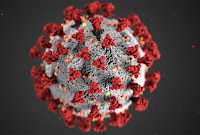
Schematic of the Covid-19
 virus, SARS-CoV-2

After all the controversy over the past few years about gain-of-function research on viruses, especially the Covid-19 virus, I thought this kind of work was on hold, at least in the U.S. Indeed, the controversy grew so hot that NIH issued a statement in May of 2021 declaring that it wouldn’t support such work.

Nonetheless, some scientists continue to pursue gain-of-function work. In a new study, just released on the preprint server bioRxiv, a group of virologists at Boston University did the following. They took the Spike protein from the Omicron BA.1 strain of SARS-CoV-2 (that’s the strain that spread throughout the world last winter, often slipping past the protection offered by vaccines) and combined it with an early 2020 strain of the Covid-19 virus.

This experiment gave them a brand-new, never-before-seen strain of Covid-19. Was it more deadly? You bet!

In their experiments, the BU scientists infected laboratory mice with the original Omicron virus, which caused “mild, non-fatal infection.” But when they infected mice with their new, recombinant virus, which they called Omi-S, 80% of the mice died. To quote from their article:


“the Omicron S-carrying virus inflicts severe disease with a mortality rate of 80%.”


Well, that’s just great. Making matters worse, the researchers found that the new recombinant virus also replicated much faster in mice: “Omi-S-infected mice produced 30-fold more infectious virus particles compared with Omicron-infected mice.” Yes, you read that right: Omi-S might grow 30 times faster than the garden-variety Omicron strain.

This, dear readers, is what we mean by “gain of function” research. The scientists took sequences from two different strains of the Covid-19 virus, one of which was relatively mild, and created a new strain that is far more infectious and far more deadly. As many scientists (and others) have pointed out, research like this carries great risks, foremost among them the chance that an accidental lab leak could create a new pandemic, killing millions of people.

And the benefits? There must be some pretty major benefits to offset this risk, right? Well, not exactly. The researchers say that these experiments show that the pathogenicity of the Covid virus is determined primarily by something other than the Spike protein. That’s a pretty narrow finding, and the authors don’t seem to consider that they might have learned this without creating an entirely new, more-lethal virus.

Does this work violate NIH policies? The NIH director has stated that

“neither NIH nor NIAID have ever approved any grant that would have supported ‘gain-of-function’ research on coronaviruses that would have increased their transmissibility or lethality for humans.”

First, let me point out that this is a very narrow statement: the NIH doesn’t deny that it funds gain-of-function work on viruses, because it does. They even put a “pause” on such work for 3 years, but they lifted it (regrettably) in 2017. I wrote about that at the time (“NIH Re-opens the Door to Creation of Super-Viruses,” December 2017).

Second, the NIH policy carefully says they don’t support work that would make viruses more deadly for humans. The BU study only looked at mice, so one might argue that it wasn’t making the viruses more deadly in humans–but there’s simply no way we can tell that, not unless we intentionally infect someone. Having read the paper, this work seems to me to be a clear violation of NIH rules.

Boston University and the researchers who led the study disagree. In a statement issued last week, BU officials wrote:

“First, this research is not gain-of-function research, meaning it did not amplify the Washington state SARS-CoV-2 virus strain or make it more dangerous.”

Let’s take a look at this denial, shall we? First, let me reiterate that the new experiments combined 2 strains of the Covid-19 virus: the Omicron strain, which has been the main strain infecting humans since last winter, and an earlier strain that was collected from a patient in Washington state in 2020. The Omicron strain causes only mild infections in mice, but the new Omi-S strain–the one that Boston University scientists created in their lab–kills 80% of them. The Washington state strain, which is no longer circulating in people and thus isn’t a current threat, kills 100% of mice.

So that is the BU argument: because Omi-S is less deadly than one of its parental strains, the research doesn’t meet the definition of gain-of-function.

Sorry, but this argument is just nonsense. You don’t get to redefine gain-of-function in the same sentence where you’re denying you’ve done it. These experiments created a brand-new, recombinant strain of Covid-19, and that strain was much more infectious and much more deadly than Omicron, which is one of the strains it was created from. This is precisely what most scientists mean when they describe gain-of-function research and the risks that it carries.

Furthermore, we have no idea how this virus will behave in humans. It might be far more deadly than Omicron in people. Let’s hope we never find out.

And what about that 80% mortality rate? According to Prof. Ronald Corley, Director of BU’s National Emerging Infectious Diseases Laboratories (NEIDL), “This was a statement taken out of context for the purposes of sensationalism, and it totally misrepresents not only the findings, but [also] the purpose of the study.”

Out of context? Well, here’s what the scientists themselves wrote in the very first paragraph (the abstract) of their paper: “We generated chimeric recombinant SARS-CoV-2 encoding the S gene of Omicron in the backbone of an ancestral SARS-CoV-2 isolate and compared this virus with the naturally circulating Omicron variant.... In K18-hACE2 mice, while Omicron causes mild, non-fatal infection, the Omicron S-carrying virus inflicts severe disease with a mortality rate of 80%.”

That’s the scientists’ own statement, and it’s not out of context. The authors themselves were emphasizing this dramatic mortality rate.

The experiments also present another problem for BU. Despite being funded by multiple NIH grants, neither the scientists themselves nor Boston University appears to have informed NIH about this work, which is a requirement for gain-of-function research.

BU officials addressed this problem by stating, first, that the NIH funds only supported some of the underlying “tools and platforms,” and that NIH funds did not directly support the research. Really, BU? How stupid do you think we are? Money, as we all know, is fungible.

Second, according to BU, “there was no gain of function with this research. If at any point there was evidence that the research was gaining function, under both NIAID and our own protocols we would immediately stop and report.” (Read the full BU statement here.)

Well, I would say that when those mice started dying, you had some pretty good evidence that “the research was gaining function.”

I’ve been in touch with multiple virologists who take a similar view. Simon Wain-Hobson, an Emeritus Professor at the Pasteur Institute, wrote to tell me that the BU research “is a GOF outcome in that the recovered virus is more pathogenic than the parental (backbone) virus, albeit in a transgenic mouse setting.” Prof. Wain-Hobson also pointed out that this work “provides a road map to [creating] a virus that might be dangerous to man. By posting this, these authors are making life easier for the next person or copycat.”

Another virologist, Dr. Valentin Bruttel of the University of Würzburg, pointed out the same problems and more, writing that:

• [the experiments] could have produced a virus that is “way more lethal” than the original SARS-CoV-2 strain
• “the study is useless for the general population, because the chance that exactly this Omi-Spike [would] recombine with an extinct variant [the Washington state strain] are zero,”
• “the chimeric virus could cause more severe disease in humans than estimated from mouse data.”

Like Prof. Wain-Hobson, Dr. Bruttel also pointed out that “any terrorist group could copy the BU group’s protocols.”

What does NIH think? They don’t appear convinced by the BU denials. According to an article in The Hill, “NIH is examining the matter to determine whether the research” fits the definition of gain-of-function. And as reported by Helen Branswell in Stat last week, an NIAID official said that NIH should have been informed, at a minimum so that they could determine whether or not the research was permitted under NIH’s gain-of-function rules.

I contacted the lead author of the study to get his response, but he did not reply.

The bottom line here is that some virologists (by no means a majority) believe that conducting gain-of-function research on the Covid-19 virus is just fine. Many other scientists disagree, and strongly. Some have pointed out that this work is qualitatively no different from biowarfare research. I’ve been warning about the risks for years, and I’m certainly not the only one.

Merely requiring scientists to inform the government, which is the current NIH policy, is not enough. We need to shut this research down and take a long, hard look at it before any such experiments can go forward again.