Showing posts with label Wuhan Institute of Virology. Show all posts

Gain of function research needs to be banned, but we need to define it properly


I’ve been writing about dangerous gain-of-function research on viruses for years, originally on the flu virus and more recently on the Covid-19 virus. Many people are deeply concerned about this research, which might have caused the Covid-19 pandemic, and yet there are still no real regulations controlling it, neither in the U.S. nor anywhere else.

I can already hear the objections: oh, but what about the new rules that NIH put in place in 2017, after a 3-year “pause” in some gain-of-function (GoF) research? Those rules were utterly ineffective, but I’ll get to that in a minute.

Despite my arguments, and the concerns of many other scientists, which have been expressed in various forums and articles for at least a decade now, the virology community continues to insist that any limits on GoF are unnecessary, and that GoF is wonderfully beneficial. A group of 156 virologists even wrote an opinion piece, published in the Journal of Virology, making this very point.

I’ve tried to convince some of my colleagues in the infectious disease world that GoF should be banned, and I’ve discovered that many of them–even some non-virologists–are opposed to any government regulation of GoF research.

They are wrong. However, they do raise one important concern that I think is valid, and that I will address in this column. Their concern is that any government regulation will be ham-handed, and will likely end up limiting or preventing a range of very useful experiments that have the potential to lead to beneficial new drugs and vaccines.

I get it. When the government tries to regulate science, it can write rules that are far too broad, or that get mis-interpreted even if well-written, and unintended consequences follow. So let’s not do that: below I’ll explain what I think needs to be banned.

But let’s not forget why we are having this debate right now: there is a very real possibility that the Covid-19 pandemic started in a lab that was doing GoF research on coronaviruses. We know that the Wuhan Institute of Virology (WIV) was doing this kind of research–that fact is not under dispute. We don’t know (and we may never know) if the original Covid-19 virus first appeared as a result of a lab leak, but it might have. That’s why we’re asking whether such research is worth the risk.

Before I explain what I think the rules should be, let’s look at the current NIH rules, which I mentioned above. First, though, let’s remember that NIH rules only apply to research funded by NIH. Research that is funded privately, or by any other part of the government, is unaffected by these rules and remains entirely unregulated.

So: back in 2017, when the NIH lifted the 3-year funding pause, they put in place some rules (detailed here) for work on “potential pandemic pathogens,” or PPPs. (The government loves acronyms.)

The pause itself was prompted by work on avian influenza, led by virologists Ron Fouchier and Yoshihiro Kawaoka, that was designed to turn some deadly bird flu viruses into human flu viruses. The work was successful: the researchers did indeed create viruses that had the potential to infect humans. These results were really alarming to many scientists: I wrote about it at the time, and other scientists also raised the alarm. Those concerns are what led to the funding pause.

Since 2017 then, the NIH regulates (but doesn’t ban) research on PPPs that are both:

  1. “likely highly transmissible and likely capable of wide and uncontrollable spread in human populations, and
  2. likely highly virulent and likely to cause significant morbidity and/or mortality in humans.”

One of the first things to notice about this definition is that avian influenza–the very work that prompted the new rules–isn’t really covered.

Another thing to notice is that work on coronaviruses in bats–the GoF work that was apparently going on in the Wuhan Institute of Virology, and that may have caused the Covid-19 pandemic–wouldn’t have been covered either. Those bat viruses would not have been considered “likely highly transmissible in humans,” not before the pandemic.

Of course, we all know differently now.

In any case, the rules that NIH introduced in 2017 only applied to a very narrow class of work, and as far as I can tell, they didn’t restrict anything. On the contrary: the NIH resumed funding the GoF work on avian influenza work by Fouchier and Kawaoka soon after lifting the funding pause. And let’s not forget that NIH rules aren’t a ban: it remains perfectly legal to do any kind of GoF work.

So how can we put in place intelligent restrictions that will prevent dangerous GoF research in the future?

First, rather than rejecting any restrictions whatsoever, as some virologists have done, scientists should work with the government to craft a thoughtful set of limitations. For starters:

  1. Research that creates new strains of the Covid virus (SARS-CoV-2) that might have greater virulence or transmissibility should be entirely banned.
  2. Research that takes non-human viruses, including avian flu and bat coronaviruses, and gives them the ability to infect any new animals, should be banned.

To scientists who can’t even agree on these restrictions, I would say that it appears you oppose any restrictions whatsoever. If that’s your position, then the government might step in and impose far broader bans, which are not likely to be good. If you’ll agree to these two restrictions, perhaps we can broaden them slightly to cover other types of highly risky GoF work.

Finally, let me return to a point I’ve made before, but that bears repeating: the supposed benefits of GoF research are essentially zero. The claim that GoF research that makes a virus more deadly will help us “understand pathogenicity” or “be prepared for the next pandemic” are just hand-waving arguments. I wrote a whole column just last month explaining why these claims are fundamentally wrong, so I won’t repeat that here.

If we do ban some GoF research, with carefully-crafted rules, we won’t lose anything. Instead, we’ll gain at least two things: first, virologists can apply their expertise to truly beneficial virology work, and second, the scientific community will regain some of the trust it has lost during the pandemic. That would seem like a good thing.

Gain-of-function research on viruses justifies itself with a scientific error

We still don’t know where Covid-19 started, although we’re pretty sure it started in or near the city of Wuhan, China. The leading theories are that it started either in the Huanan Wholesale Seafood Market (in Wuhan), a live animal food market, or in the Wuhan Institute of Virology (WIV), a large virus research center in another part of the city.

We might never know, because we’d need access to all of the viruses being studied at WIV in late 2019, and those viruses might not even exist any longer.

I’ve been on the fence about this question since the pandemic started (as I wrote here and here and here), in part because we just don’t have enough data. However, I’m now starting to lean more strongly towards the hypothesis that the Covid-19 virus started in the Wuhan Institute of Virology. I just listened to the interview that Sam Harris did with science journalist Matt Ridley and biologist Alina Chan, who together wrote an entire book on the origins of Covid-19, and the evidence they compiled is compelling.

Let’s look at a few key points.

First, the virus itself, SARS-CoV-2, almost certainly originated in bats, and those bats almost certainly came from caves in southern China, over 1000 kilometers away from Wuhan. The bats didn’t get to Wuhan on their own.

So either someone transported bats to the Huanan Seafood Market, or they transported viruses from the bats to WIV. These are our choices.

Second, WIV was doing research on coronaviruses for years. Their scientists traveled regularly to caves in southern China to find novel viruses, and they’ve acknowledged that WIV’s labs had bat viruses, including viruses related to SARS-CoV-2, before the pandemic began.

Third–and this point is under some dispute–many scientists have argued that the virus was a naturally-occurring one. However, this doesn’t make it more likely that the virus originated in the seafood market. It’s just as likely that a scientist or technician working at WIV was accidentally infected, and then went home (maybe stopping by the seafood market on the way) and started a worldwide pandemic.

Fourth, it’s hard to believe that it’s merely a coincidence that one of the top virology labs in China just happened to be located in the city where the pandemic began. WIV was not only the foremost lab in China doing work on SARS-like viruses, but they also claimed previously that they intended to do gain-of-function work to make these viruses more pathogenic.

This startling fact emerged when a 2018 grant proposal by EcoHealth Alliance, a US-based nonprofit that was working with WIV, was leaked to the press in 2021. Even though that proposal was never funded, the text describes how EcoHealth would genetically engineer new viruses, taking the spike protein from one bat coronavirus and inserting it into a different one, and then infecting mice to see what happens.

But wait, some will say: we now have peer-reviewed studies pointing to the seafood market as the epicenter of the pandemic. (I wrote about those studies back in March 2022.) However, as Alina Chan and Matt Ridley explained to Sam Harris (and in their book), the Chinese authorities in early 2020 focused all their attention on the seafood market, to the exclusion of anywhere else. They collected loads of samples from people who had been in or near the market, and very little from anywhere else. Thus we seem to have a classic case of confirmation bias: when you only look at the place where you’re convinced the virus originated, and you find some evidence, then you stop looking. We simply don’t know if the virus was anywhere else.

Now, to the main topic for today: the scientific error used to justify gain-of-function research on dangerous viruses, the error that might have led to the Covid-19 pandemic. Let me explain.

Why, one might ask, were scientists from the Wuhan Institute of Virology going out into the wild, to places where humans would not otherwise go, and bringing back deadly viruses?

This doesn’t just happen in China. The US is funding a large effort to do exactly the same thing: through a program called DEEP VZN (”deep vision,” get it?), USAID is funding scientists in the US and in Africa, Asia, and Latin America to venture into unpopulated areas of the jungle, and to find animals carrying viruses that might infect humans. They’re hoping (!) to discover 8,000 to 12,000 new viruses, and they’re particularly interested in viruses that could cause the next pandemic.

Why does anyone do this? Virus hunters believe that through these efforts, they can predict which of these viruses are destined to become the next pandemic. Furthermore, the argument goes, through gain-of-function research, virologists will be able to determine just what the new pandemic strains will look like. Then, armed with this knowledge, they can convince governments and private companies to design, manufacture, and stockpile vaccines against these viruses. This way (the argument goes) when the pandemic emerges, we’ll be ready.

At the center of this scientific strategy is an obvious error about evolution.

I’ll have to get a bit technical to explain here, so bear with me: the genome of the SARS-CoV-2 virus contains about 30,000 bases of RNA. The key protein that lets it infect human cells is called the Spike protein, which is about 1300 amino acids long and is encoded by about 3900 RNA bases. RNA has an alphabet of 4 letters (A, C, G, and U), which means that each of those positions can mutate into one of the other 3 letters. So we have almost 12,000 possible mutations that affect just one base in the Spike protein.

But 2 or more mutations can happen at once, quite easily, and this too could make the virus more infectious. How many combinations of 2 positions and 3 mutations are possible? Well, about 650,000,000.

And these aren’t the only mutations that might create a pandemic virus. So we’re supposed to believe that:

  1. gain-of-function experiments in the lab will create precisely the same mutations that would happen in the wild, and
  2. virologists can then predict, based on their experiments, that a virus is likely to cause a pandemic, and
  3. this evidence is so convincing that governments will manufacture and stockpile vaccines based on these experiments, and
  4. that this in turn will allow us to prevent the next pandemic.

Yeah, right. The evolutionary mistake is in the first point above, by the way.

Something happened in Wuhan. You might think that virologists, upon hearing about the gain-of-function research at WIV, would pause and think, oh no, we hope our colleagues’ research didn’t cause the pandemic! But instead, they closed ranks and doubled down.

In case you think I’m exaggerating, consider this: just a month ago, 156 virologists co-authored an article in the Journal of Virology that declared:

“gain-of-function research-of-concern can very clearly advance pandemic preparedness and the development of vaccines and antivirals. These tangible benefits often far outweigh the theoretical risks posed by modified viruses.”

In case that wasn’t clear enough, they assert twice more in the article that gain-of-function research will help us prepare for pandemics.

Virologists have been making this argument for years, and yet their experiments had no benefit at all–none, zero, zip–when we were finally faced with a true pandemic. Why should we believe this claim now?

Instead, it’s possible that gain-of-function research, along with the search for novel viruses in the wild, might have accidentally caused the pandemic.

Let me conclude by emphasizing that the vast majority of research on viruses and infectious diseases is incredibly important. Vaccines, antibiotics, antivirals, and other treatments have saved millions of lives, and the scientists doing this work should be applauded. Shutting down dangerous gain-of-function research–by which I mean research designed to take a virus or bacterium and make it more deadly in humans or in other animals–would only affect a tiny percentage of virologists worldwide. Let’s tell them to stop. If they can’t find something better to do, other scientists can.

COVID-19 probably started in a live animal market rather than a lab. That's still a huge problem.

A couple of weeks ago, three scientific studies were released on preprint servers (meaning they haven’t yet been peer-reviewed), all with the same conclusion: Covid-19 started in the Huanan Wholesale Seafood Market, in Wuhan, China.

I looked at the papers, and I’ll summarize them at the end of this article, but let’s start with the implications. For two years now, the world has speculated on whether the SARS-CoV-2 virus leaked from a lab. As I wrote in this space last June, and as many others have observed, the Wuhan Institute of Virology (WIV) was a possible source of the virus. WIV was doing research on coronaviruses in bats, including “gain-of-function” research that aimed to give viruses new capabilities.

It’s easy to imagine that an employee of WIV accidentally got infected, and unknowingly started a worldwide pandemic.

This “lab leak hypothesis” was fiercely denied by China, and initially denied by many independent scientists as well, who published statements that the virus almost certainly originated in the wild, probably in bats. Unfortunately, China shut down nearly all access to WIV, and probably destroyed all samples of coronaviruses there (we may never know), so it was impossible for the World Health Organization (WHO) or anyone else to conduct an independent investigation.

A year or so into the pandemic, as China continued to stonewall any investigation, scientists started to re-consider the lab leak hypothesis. It seemed highly plausible, for a number of reasons, that a lab leak could have occurred, even if no gain-of-function research was going on.

The three new studies, though, all point their fingers to the same place: the Huanan Seafood Market. All of them conclude that the virus probably first infected people directly from animals being sold, either for food or for use in Traditional Chinese Medicine, in the live animal market. Despite its name, incidentally, the market sold a wide variety of live animals, including raccoon dogs, bats, chickens, ducks, snakes, badgers, giant salamanders, and crocodiles.

Let’s suppose the new studies are right. Does this absolve China of responsibility for the Covid-19 pandemic?

Not at all.

China’s huge, open-air live animal markets have been implicated for decades in outbreaks of new infectious diseases, and China has known about it all along. The original SARS outbreak in 2002, which started in Guangdong province, was one prominent example. We were able to contain that outbreak because infected people were highly symptomatic, allowing public health experts to identify and quarantine them. At the time, the Chinese government suppressed reports of the disease and was slow to cooperate with the WHO.

Since at least the late 1990s, influenza experts have warned that new strains of bird flu could jump from birds to humans, and that China’s live animal markets were the most likely source. Many cases of bird flu were reported in the period from 1997 through 2005, often associated with live poultry markets, and yet China did nothing to regulate or shut down those markets.

Studies published in the early 2000’s showed that multiple animals, not just birds, were carrying the original SARS virus, and that these animals were being traded in China’s live animal markets. Yet China ignored the risks.

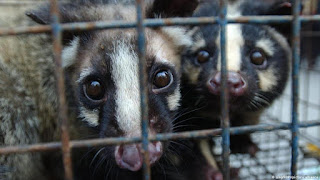
One reason these markets are especially dangerous to the public is that traders often sell unusual wild animals there, not for food, but for Traditional Chinese Medicine, as I’ve written before. Bats are among the many animals used (or abused) in TCM, and scientists reported as early as May 2020 that bats being sold in the Huanan Seafood Market were the most likely source of the Covid-19 virus.

China should have shut down these markets years ago. They represent an enormous public health threat, and yet the Chinese government ignored the warnings for years. Now that Covid-19 is winding down, or at least moving to an endemic phase, China has a new opportunity to show the world that it takes this threat seriously, by ending all trade in exotic live animals, and by shutting down its live animal markets. (Some live animals, such as fish, are not a threat and might be sold safely, but almost all mammals and birds carry viruses that could jump to humans.)

And lest anyone think otherwise, we still need to impose a ban on gain-of-function research in deadly viruses, as I’ve been arguing for years. All the way back in 2014, I asked the question, “should scientists be artificially mutating viruses so that they have the potential to become a worldwide pandemic?” I thought the answer was obvious, and yet the NIH (in the US) allowed the research to continue, after “pausing” it for a few years in the mid-2010’s.

When NIH initially paused its support for gain-of-function work, many virologists pushed back, arguing that they had plenty of safeguards in place, and no virus would ever leak out. Plus, they argued, their work was important in helping us prevent pandemics. Right.

We now know, definitively, that those virologists were wrong. We know that leaks are at least a possibility, even from the most secure biological labs, which is why multiple scientists, including some virologists, called for a fuller investigation into the lab leak hypothesis back in May 2021.

We also know that gain-of-function research did nothing to prevent the Covid-19 pandemic. Nothing, Zip. Nada.

We can take at least two lessons from this pandemic: first, that live-animal food markets should be shut down, especially those that sell wild animals rather than farm-raised ones; and second, that gain-of-function research on deadly viruses should be shut down as well.

Finally, for those who want to know about those three new papers I referenced at the beginning, here’s a brief summary.

The first paper, by George Gao et al., is a summary of extensive virus testing at the Huanan Seafood Market, on samples collected in early 2020. They found SARS-CoV-2 in 73 environmental samples (collected from locations in the market but not in people or animals), and yet “no virus was detected in the animal swabs covering 18 species of animals in the market.” In other words, the virus was found at the marketplace, but not in any of the animals, suggesting that infected people walking through the market were the source of those positive samples. Where did those people get the virus? This paper doesn’t answer that question.

The paper by Michael Worobey et al. shows more, however: not only do they show that all of the early cases were clustered in or very near the Huanan Seafood Market, but also that “positive environmental samples were strongly associated with vendors selling live animals.” In other words, even though we haven’t found the original animal source of the virus, the locations are all centered on live animal vendors. They conclude that the Huanan market was “the unambiguous epicenter of the COVID-19 pandemic.”

The third paper, by Jonathan Pekar et al., reports that there were actually two distinct events where the original SARS-CoV-2 virus jumped from animals to humans, both at the very beginning of the pandemic, probably in late November 2019. These authors also point the finger at the Huanan Seafood Market, and they implicate another animal, raccoon dogs, as a likely source. Raccoon dogs are closely related to foxes (not raccoons, despite the name), and were being sold as food in the Huanan market. Scientists have known since at least 2003 that raccoon dogs can carry SARS coronaviruses. This paper illustrates yet again why live-animal markets represent a threat to human health.

Leave the bats in their caves: it's time to put an end to gain-of-function research on viruses

Why have scientists spent years exploring remote bat caves, pulling out bats infected with novel coronaviruses, and transporting them (or at least samples of infected tissue) into major cities? If you asked the scientists, they’d explain that their research would help prevent the next pandemic. Instead, they might have caused it.

A newly released set of documents, including a rejected grant proposal, shows that a group of scientists at EcoHealth Alliance, a nonprofit research institute in New York, was pursuing “gain of function” research, together with scientists at China’s Wuhan Institute of Virology, that had the potential to create dangerous new strains of coronaviruses. But before I get to that, let’s consider how we got here.

Eight years ago, I wrote an article warning that “scientists will create a deadly new flu strain, just to prove they can.” Those scientists, who were focused on the influenza virus at the time, were boasting about their ability to create pandemic-type viruses in the lab. Don’t worry, they said, we are very careful and these viruses will never leak out into the real world.

Soon after that, these same scientists–Ron Fouchier of Erasmus University and Yoshihiro Kawaoka of the University of Wisconsin–published a paper proving that they had done just that. I wrote another article, asking:

“Should scientists be artificially mutating viruses so that they have the potential to become a worldwide pandemic?”

I wasn’t the only one questioning the wisdom of pursuing this line of research. Hundreds of scientists formed a consortium, the Cambridge Working Group, opposed to gain-of-function research on influenza and other deadly viruses. In response, the Obama White House formed a commission in 2014 to evaluate the risks and benefits of gain-of-function research in viruses.

At the same time, the US instituted a pause on all research that could “confer attributes to influenza, MERS, or SARS viruses such that the virus would have enhanced pathogenicity and/or transmissibility in mammals.” That was a good step. (Covid-19, which didn’t exist at that time, is in the SARS family of viruses.)

In early 2017, after all the noise and protests died down, NIH quietly lifted the pause, allowing the research to resume again. Many scientists objected again, including me. I wrote that

“engineering the flu to be more virulent is a terrible idea.... this research is so potentially harmful, and offers such little benefit to society, that I fear that NIH is endangering the trust that Congress places in it.”

This time, though, the NIH dismissed the concerns of scientists like me and all those in the Cambridge Working Group, basically saying “don’t worry, we’ll be careful.” (I also got the sense that NIH didn’t like having outside scientists second-guessing their decisions, but maybe that’s just me.)

Just out of curiosity, let’s look at some of the warnings from the Cambridge Working Group. They pointed out that if things went wrong, gain-of-function research might create a pandemic virus that, if it accidentally escaped, could kill at least 2,000 people per year. At the high end, warned scientists Marc Lipsitch and Thomas Inglesby in a paper published in late 2014, the world might see 1.4 million deaths per year.

Unfortunately, the higher estimate was too low: Covid-19 has now killed over 4.8 million people in 21 months. Of course, we don’t know if gain-of-function research was responsible.

After lifting the pause, NIH quickly restored funding to gain-of-function flu research, in projects such as “Transmissibility of avian influenza viruses in mammals,” which was led by the University of Wisconsin’s Yoshihiro Kawaoka. What’s more unfortunate, though, is that in 2019 the NIH funded another grant, on coronaviruses in bats (which includes SARS-CoV-2, the Covid-19 virus), to a research institute called the EcoHealth Alliance, led by virologist Peter Daszak.

Now, back to that new tranche of documents that I mentioned at the top of this article.

EcoHealth Alliance has received a huge amount of negative attention over the past year and a half, because they work closely with the Wuhan Institute of Virology (WIV), an institute in China where gain-of-function work on coronaviruses was apparently being pursued. WIV is at the center of the “lab leak” hypothesis, which posits that the Covid-19 pandemic begin with an accidental release of viruses from the lab in Wuhan.

So far, we don’t know if WIV had any role in starting the pandemic, but the circumstantial evidence at least makes this credible, as I wrote last year. WIV’s scientists have collected hundreds of infected bats from distant caves and brought them back to Wuhan for study. Some of that work–collecting those viruses–was funded by a grant from NIH to EcoHealth Alliance.

Government officials, particularly the leaders of NIH and NIAID, Francis Collins and Anthony Fauci, have insisted that NIH never funded gain-of-function research on coronaviruses. In May of this year, Collins issued a statement that

“neither NIH nor NIAID have ever approved any grant that would have supported `gain-of-function’ research on coronaviruses that would have increased their transmissibility or lethality for humans.”

I believe this statement is true; however, note the very careful qualification there. NIH isn’t saying that it never funded any GoF work on coronaviruses–because it apparently did, if you look at the NIH grant to EcoHealth Alliance. That grant mentions “in vivo infection experiments” which suggests that they were infecting mice with coronaviruses. So the NIH statement only says the work would not have made coronaviruses more infectious or more lethal in humans. That’s a very narrow statement.

The newly released documents, uncovered and released by a group called DRASTIC, includes a grant proposal from EcoHealth Alliance to the US Department of Defense. This $14M proposal describes gain-of-function research intended to make SARS viruses more virulent, and that might give those viruses the ability to infect mammals. Fortunately, the DoD didn’t fund the work, but EcoHealth Alliance was clearly very interested in this line of research.

The proposal itself describes how EcoHealth would genetically engineer new viruses, taking the spike protein from one bat coronavirus and inserting it into a different one, and then infecting mice to see what happens. For technical reasons, the proposal says that this process is “exempt from dual-use and gain of function concerns.” However, the DoD reviewer who rejected the proposal disagreed, stating that the proposal “does not mention or assess potential risks of Gain of Function (GoF) research” and that it “does potentially involve GoF research.”

But the danger goes beyond gain-of-function research, a point that is often missed. EcoHealth Alliance also proposes to take “a complete inventory of bats and their SARSr-CoVs at our invention test site cave complex in Yunnan, China that harbors bats with high-risk SARSr-CoVs.” (This was written before the Covid-19 pandemic, obviously.) Previous work by EcoHealth Alliance, including work funded by NIH, involved the same strategy: going out into remote caves and collecting bats with “high-risk” coronavirus infections.

What the heck are they doing? Why are scientists going to remote sites and collecting infected animals and then bringing them back into the middle of cities?

The argument was (and is) that research on these viruses will help us to develop better vaccines and better treatments, and to respond to the next pandemic. We’ve been hearing this for years from the influenza scientists doing gain-of-function work.

For years, I’ve been saying that these claims of theoretical future benefits from gain-of-function research are nonsense. For example, in 2014 I wrote that

“to claim that creating super-viruses in the lab will lead to `improved surveillance’ is, frankly, laughable.”

Well, the next pandemic has arrived. Did all of that gain-of-function research help us fight it? No.

All of the gain-of-function research, and all of the efforts to collect high-risk viruses out in the field, did nothing to help us stop the pandemic. It didn’t help us design better vaccines (although the mRNA vaccines are terrific), it didn’t help us develop better treatments, and it didn’t help us with any public health measures.

It’s long past time to put an end to dangerous work that creates novel, incredibly dangerous viruses in the lab. All of the claims of supposed benefits have now been shown to be little more than hand-waving. (I could use a more vulgar term, but I won’t.)

It’s also time to ask, very critically, whether anyone should be venturing out into remote areas to collect animals that are infected with possible pandemic-causing microbes, and bringing those animals back to densely populated areas. Rather than preventing pandemics, these activities are more likely to cause them.

Look, I know that the lab-leak hypothesis is just that: a hypothesis. It might be that the Covid-19 pandemic was caused by a natural event, when a virus from a wild bat infected a human. It might also turn out that the pandemic started with an accidental infection in a lab, possibly in the Wuhan Institute of Virology where thousands of bat viruses were collected and studied. We might never know.

But one thing has clearly changed. We now largely agree that a virus collected in a lab could cause a worldwide pandemic, killing millions of people. We also have evidence, staring us in the face, that many years of gain-of-function research gave us no help in fighting the pandemic.

It’s time to put a permanent end, not just a pause, to any research that makes pathogens more deadly. And while we’re at it, we should re-examine any research that collects viruses or other pathogens from wild animals, asking if that research too might be more likely to harm than to help humankind. From where I’m sitting, the answer is clear.