Showing posts with label COVID19. Show all posts

Are there two sides in the vaccine debate?

from December 2020.

I keep getting into debates with people about the safety and efficacy of vaccines. I’m not talking about anti-vaxxers (though I’ve encountered plenty of them), but level-headed, rational people who genuinely have doubts.

Usually their doubts about vaccines come from dubious sources, but there’s so much misinformation out there, often coming from people with the letters M.D. or Ph.D. after their names, that I can understand why it’s confusing.

So let me engage in what is sometimes called “both-sides-ism” (a disparaging term, of course) and consider, briefly, the pluses and minuses of vaccines. While I’m at it, I’ll include some points specific to the Covid-19 vaccines.

Let’s start with the pluses, shall we?

  1. Vaccines are the single greatest public health innovation in the history of medicine. They’ve saved millions of lives.
  2. Vaccines completely eliminated smallpox from the planet. They have nearly (but not quite, due to anti-vax resistance) eliminated polio.
  3. The new mRNA vaccines for Covid-19 are remarkably effective, have very few side effects, and are easy to modify as the virus itself mutates over time.
  4. Vaccines protect us so thoroughly against childhood infections that many formerly common infections–including measles, mumps, and Haemophilus influenza–have almost disappeared.
  5. Child mortality from infectious has plummeted in countries with robust early childhood vaccine programs.
  6. The vaccine against human papillomavirus (HPV) will prevent many thousands of cases of cervical cancer, throat cancer, and other cancers, saving lives for decades to come.
  7. Vaccines train our immune system to recognize and fight off infections, in many cases stopping the infection before we even have symptoms.

I could go on, but the bottom line is that vaccines continue to save millions of lives every year. They also dramatically reduce non-fatal illnesses, sparing people a great deal of suffering as well as long-term harms caused by some infections. (For example, mumps can cause permanent hearing loss.)

Given all of these benefits, you might wonder why everyone doesn’t get every vaccine available. Well, some people do, and part of the answer is simply that we don’t have enough vaccines for everyone, and many countries lack the public health infrastructure to deliver vaccines. But there are a few very small minuses, so let’s consider the downsides of vaccines:

  1. The shot (or “jab”) hurts a little bit, and your arm might be sore for a day.
  2. In very rare cases with some vaccines, some people might have allergic reactions. One example is that some flu vaccines are manufactured in chicken eggs, and people with egg allergies might react to those.
  3. In a few rare cases, the live polio virus vaccine has caused some people to get polio. This vaccine was discontinued in the U.S. decades ago.
  4. In rare cases, some people might have an immune response to a vaccine that causes ongoing inflammation. This includes the Covid-19 vaccine. However, the risk is much smaller than the risks associated with an actual infection.

That’s pretty much it. I hope it’s clear that the pluses far outweigh the minuses, but I imagine that some people looking at this list are wondering why I didn’t include a host of other supposed harms of vaccines, such as an increased risk of autism.

That’s because vaccines don’t cause autism or any other neurological disorder, as I’ve written before. Studies involving hundreds of thousands of people have been done to investigate this possibility, starting in the early 2000s, and all of the science points the same way: vaccines do not cause autism.

This supposed risk, and others like it, are inventions of the modern anti-vaccine movement. I won’t go into the history of the anti-vax movement here (I’ve done that before, many times), except to point out that many people promoting anti-vax misinformation are making lots of money selling “cures” for problems that don’t exist in the first place.

Anti-vaxxers continue to invent new harms caused by vaccines, and spread these claims on social media. Even with no evidence whatsoever, some of these claims catch on, because - well, the Internet.

Now back to the title of this column: are there really two sides to the vaccine debate?

Well, no.

Among doctors, scientists, and public health professionals, virtually everyone agrees with my first point in the “pluses” list above. However, we all recognize that when a foreign substance (a vaccine) is injected into one’s body, it’s possible that something unexpected might happen, and we must continually monitor vaccines so that we’ll know if something goes awry.

Let me end with an analogy. Seat belts in cars have been around for decades, and they’ve prevented millions of injuries and deaths. And yet people have argued (and probably still do) that it’s possible that wearing a seat belt might cause harm, for example if the belt jams and one cannot escape a burning car after an accident. (This seems to happen all too often in movies.) Thus you can’t argue that wearing a seat belt is 100% risk-free. Even so, wearing a seat belt is a really good idea, because the benefits are so much greater than the risks.

The same is true of vaccines. There might be some very, very small risks, but the benefits vastly outweigh them. And modern vaccines are safer than ever. There’s no serious debate about that.
New report says COVID was probably a lab leak: should we believe it?


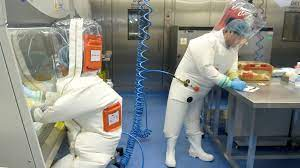
A week ago, Vanity Fair and ProPublica published a long exposé on the origins of Covid-19, in which they revealed new evidence of a lab leak in the Wuhan Institute of Virology (WIV) in November 2019.

The big reveal: the report makes it appear much more likely than before that Covid-19 originated through an accident at WIV, where presumably one of the scientists was exposed to the virus. The new evidence in the ProPublica report largely centers on the work of a translator, Toy Reid, who claims to have a unique gift for interpreting the “secret language of Chinese officialdom.” Even native Chinese speakers can’t really follow it, he claims in the article.

Reid scrutinized a collection of internal and external communications from WIV, and says that he found messages in the fall of 2019 that indicated “inhumane working conditions and hidden safety dangers.” And most significantly, a message on November 12 refers to some kind of biosecurity breach, which might have referred to an accidental exposure of someone in the lab to a virus.

The date of this incident appears to coincide with an incident described in a 2021 article in the Wall St. Journal, which reported that 3 WIV employees sought hospital care in November of 2019. This incident has never been confirmed to involve Covid-19 infections.

To add some context: Reid’s findings were released by a Republican U.S. Senator, Richard Burr, in a report that was not endorsed by the full Senate committee investigating COVID-19’s origins. Burr’s report concluded that Covid-19 was “more likely than not, the result of a research-related incident.”

Not surprisingly, this new report has been getting a lot of attention.

The report initially might seem convincing, until you realize that it doesn’t include any actual biological evidence: no reports of actual infections, and no specifics about any viruses that might have escaped from WIV at the time. It seems to be based entirely on the translation super-powers of Toy Reid.

It didn’t take long for other experts to weigh in. There are plenty of Chinese-language speakers out there, including native speakers who are likely much more fluent than Toy Reid. One translator wrote on Twitter that Reid “screwed up.” Another said that a critical passage identified by Reid “doesn’t suggest a biosafety problem had occurred at all.”

Hmm. Here I have to admit that I have no idea who is right here, since I don’t speak or read Chinese. However, it does appear that ProPublica and Vanity Fair may have put too much faith in a single translator who might have had a political bias.

And there’s more. A number of virologists weighed in to point out that the Vanity Fair piece had ignored work that pointed to the Huanan Wholesale Seafood Market (in Wuhan) as the source of the virus. I wrote at length about that research in March, when 3 new scientific papers had just appeared (as preprints), all pointing fingers at the seafood market as the source of the pandemic.

Unfortunately, all of the evidence in those papers was circumstantial. None of them found an infected animal that was the true source of Covid-19. Instead, they found that many early cases in people were centered on the seafood market. Even supposing that is correct (and it might not be, because China never allowed outside scientists to go to Wuhan and test people all over the city), it is still just circumstantial. Perhaps a scientist from WIV got infected and stopped by the seafood market that day–we may never know.

But let’s return to this week’s controversy, shall we? A virologists who led one of the papers I discussed back in March, Michael Worobey, was also quoted in the Vanity Fair article. He had major objections to what they wrote, and he posted them in a lengthy Twitter thread here, which is well worth reading.

Vanity Fair described Worobey’s work as providing evidence that a natural zoonotic origin (in other words, an origin in an animal at the Wuhan seafood market) for Covid-19 was “plausible.” Worobey objected, pointing out that his comments were much more definitive, and that his position is that:

"OUR TWO RECENT PAPERS establish that a natural zoonotic origin is THE ONLY plausible scenario for the origin of the pandemic." (all-caps in original)

After Worobey’s Twitter thread appeared, Vanity Fair and ProPublica updated their stories to include exactly that quote, without the all-caps.

Worobey makes a compelling case that Vanity Fair and ProPublica misquoted him (or at least omitted important details), and it seems they have fixed that error. However, neither the Twitter thread nor Worobey’s scientific paper make a definitive case that, as he puts it, a natural origin is the “only plausible scenario” for Covid-19.

Not at all. The paper by Worobey and colleagues concluded that “the earliest known COVID-19 cases from December 2019 were geographically centered on this market.” Let’s grant that this statement is accurate: even so, their data does not prove that the market was the “origin” of the pandemic, especially because they failed to find any animals infected with Covid-19 from that market. They only found human cases. This leaves open the question of where the very first human case occurred: it’s entirely possible that the first human was infected elsewhere–perhaps at the Wuhan Institute of Virology–and that human visited the seafood market while actively spreading the virus.

And their data relies on samples collected in Wuhan, which is of course controlled by the Chinese government. Note the wording of that conclusion from the paper, which refers to “the earliest known cases.” China does not want the world to think that the Wuhan Institute of Virology might have caused the pandemic, so how can we ever know if there were early cases originating from WIV?

On the other hand, as I wrote back in March, China has known for decades that their live animal markets are a source for novel human viruses, including the 2003 SARS outbreak and multiple cases of avian influenza jumping from birds into people. And yet they have done nothing to shut down those markets.

So it’s complicated. In any case, as Matthew Iglesias pointed out in The Guardian, even if the entire Vanity Fair article is wrong, the lab leak hypothesis is still plausible–very much so. The fact remains that one of China’s major virology research institutes, which was known to be conducting research on SARS-like viruses, and which was known to be collecting viruses from bats, is located just a few miles from the live animal seafood market. That’s one heck of a coincidence.

Finally, let’s take a step back: why all this attention to whether the virus originated from a virology institute or from a live animal market? Either way, the implication is that humans caused this pandemic. As I wrote back in March, we should take away at least two lessons from this experience: first, that live-animal food markets should be shut down, especially those that sell wild animals rather than farm-raised ones; and second, that gain-of-function research on deadly viruses should be shut down as well.

So let’s stop arguing about the precise origin of the pandemic, and start taking steps to prevent the next one.

USAID is pouring $125 million into collecting dangerous viruses in the wild. What could possibly go wrong?


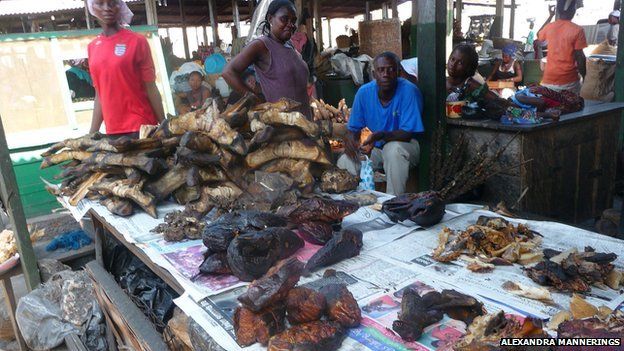
Bushmeat market in Africa. Photo by Alexandra
Mannerings / BBC, 2014.

I just learned that the US Agency for International Development, USAID, is pouring $125 million into an effort to seek out novel viruses in remote areas of the world. This is pretty much exactly what many scientists, including me, have been warning against for years.

How did I miss this? It was announced last October, along with articles about how excited Washington State University was to lead the project, and how pleased the University of Washington was to go out and hunt down animals that were carrying dangerous new viruses.

In any case, I know about it now, and I’m joining the voices (here and here, for example) that are warning that this is a truly terrible idea.

The USAID’s announcement seems utterly oblivious to the enormous dangers posed by this program. Their own headline says they want to find viruses that could cause pandemics! The program, called DEEP VZN (”deep vision,” get it?) is funding scientists in the US and in Africa, Asia, and Latin America to venture (”deep”) into unpopulated areas of the jungle, and to find animals carrying viruses that might infect humans. They’re particularly interested in viruses that could cause the next pandemic.

What could go wrong? Oh nothing, says USAID and the scientists who are happily taking the $125 million in funding. They’ll be super careful! So we should all be pleased with how the government is preparing for the next pandemic.

Uh, no. As I wrote last year:

It’s also time to ask, very critically, whether anyone should be venturing out into remote areas to collect animals that are infected with possible pandemic-causing microbes, and bringing those animals [or just the viruses] back to densely populated areas. Rather than preventing pandemics, these activities are more likely to cause them.

The only tiny nod to risk in the USAID announcement is that they will “safely discover and understand new viruses from animals at high risk locations” (emphasis mine). They make no mention of how they will guarantee this is safe–because they simply can’t guarantee any such thing. 

Oh wait, isn’t this how some people think the Covid-19 pandemic started? Because humans were collecting bats from remote caves? Oh, but perhaps that was different, because some of those bats were being collected for food, and the people collecting them weren’t careful enough.

Never mind that the debate about whether Covid-19 was caused by a lab leak has never been fully resolved. And never mind that the debate itself has made it clear that lab leaks happen all too often, and that it’s clearly possible that a lab leak could cause a pandemic.

(For more on the risks of lab leaks, see my previous articles, from March 2022, June 2021, October 2021, or January 2015 (when the threat was from influenza), or this New Yorker story from 2021.)

The details of DEEP VZN are even more alarming: they plan to collect over 800,000 samples from animals in the wild, and they hope (!) to discover 8,000 to 12,000 new viruses, any one of which might have the potential to start a worldwide pandemic. They’ll focus especially on coronaviruses (the family that includes the Covid-19 virus), Ebola-like viruses, and a group called paramyxoviruses.

Great, so maybe they’ll cause a novel Ebola outbreak too. I’m feeling very comforted now!

I have to note here that USAID, the funder for DEEP VZN, also funded EcoHealth Alliance to collect coronaviruses from bats in China, and EcoHealth partnered with the Wuhan Institute of Virology in that project. As I and many others have written over the past two years, the Wuhan Institute of Virology is a possible source, through a hypothesized lab leak, of the Covid-19 pandemic. We may never know if WIV was involved, because China shut down all access to the lab early in the pandemic.

But it seems USAID didn’t learn any lessons at all from the many publicly expressed concerns about whether it was wise to go into caves in remote areas of China and collect coronaviruses from bats. On the contrary: with DEEP VZN, they are doubling down.

Why do USAID and the scientists at Washington State and UW think this is a good idea? Well, here the story is very familiar. They are making the same pie-in-the-sky claims we’ve been hearing for years: “The hope is that this improved understanding will lead to prevention of future pandemics,” said a UW scientist in their press release. Or “to make sure the world is better prepared for these infectious disease events, we need to be ready” according to a Washington State scientist.

I and others have pointed out the flaws in these claim before, but it’s worth re-stating a few of them:

  1. First, there’s not a shred of evidence that collecting these viruses will help prevent a pandemic, and we now have evidence providing the opposite. Scientists have been collecting coronaviruses since the first SARS outbreak, in 2003, and that work didn’t prevent the Covid-19 pandemic, even though both outbreaks were caused by coronaviruses.
  2. Second, the act of going into remote areas and looking for viruses is highly likely to bring deadly new viruses back into human cities, creating opportunities for a lab leak that could easily cause a new pandemic. And despite some protests to the contrary, lab leaks can and do happen, even from the most secure facilities.
  3. Third, having viruses in labs, even if they’re secure, will do little to help anyone design vaccines against future pandemic viruses. As expert virologists have pointed out, we simply can’t predict what viruses will cause the next pandemic: there are far too many of them, among other reasons.

There’s one more threat I have to mention. DEEP VZN proudly proclaims that it’s going to make all of its data public, including the genome sequences of the viruses that it collects. This strategy blithely ignores the fact that it’s now possible for hostile actors to use these sequences to create deadly new bioweapons. An MIT engineer estimates that some 30,000 people around the world already have this capability. Even if that is a bit alarmist (and I tend to think it is), it’s not so far-fetched to believe that generating all of these sequences greatly increases the risk that someone will create a rogue virus.

If USAID wants to help prevent the next pandemic, there are far, far better ways to spend $125 million of taxpayer money. Here are a few ideas:

  1. Use the money to reduce the consumption of “bushmeat” in countries where this is still practiced. This could be done in many ways, such as training people in better farming methods, or even just providing food directly.
  2. Put a halt to the use of wild animals for ineffective “traditional” medicines, which don’t cure anything and which are one of the main incentives for hunting exotic animals. This would have the additional benefit of saving a number of animal species from extinction.
  3. Use the money to develop faster ways to produce and deliver vaccines, so we don’t have to wait months or years from the time a pathogen starts spreading until we have a vaccine.

Look, I know that some scientists are very excited about going out and finding new viruses, and some of them truly believe this will help prevent future pandemics. But they’ve been saying this for years, and the evidence is now overwhelming that this is a pipe dream. Sending humans out into the wild to gather viruses that would otherwise never make their way into population centers is just a terribly dangerous plan.

Or let’s put this another way: if you discovered that a research facility in your home town were working with hundreds of deadly viruses, would you have any concerns? Any at all? I know I would.

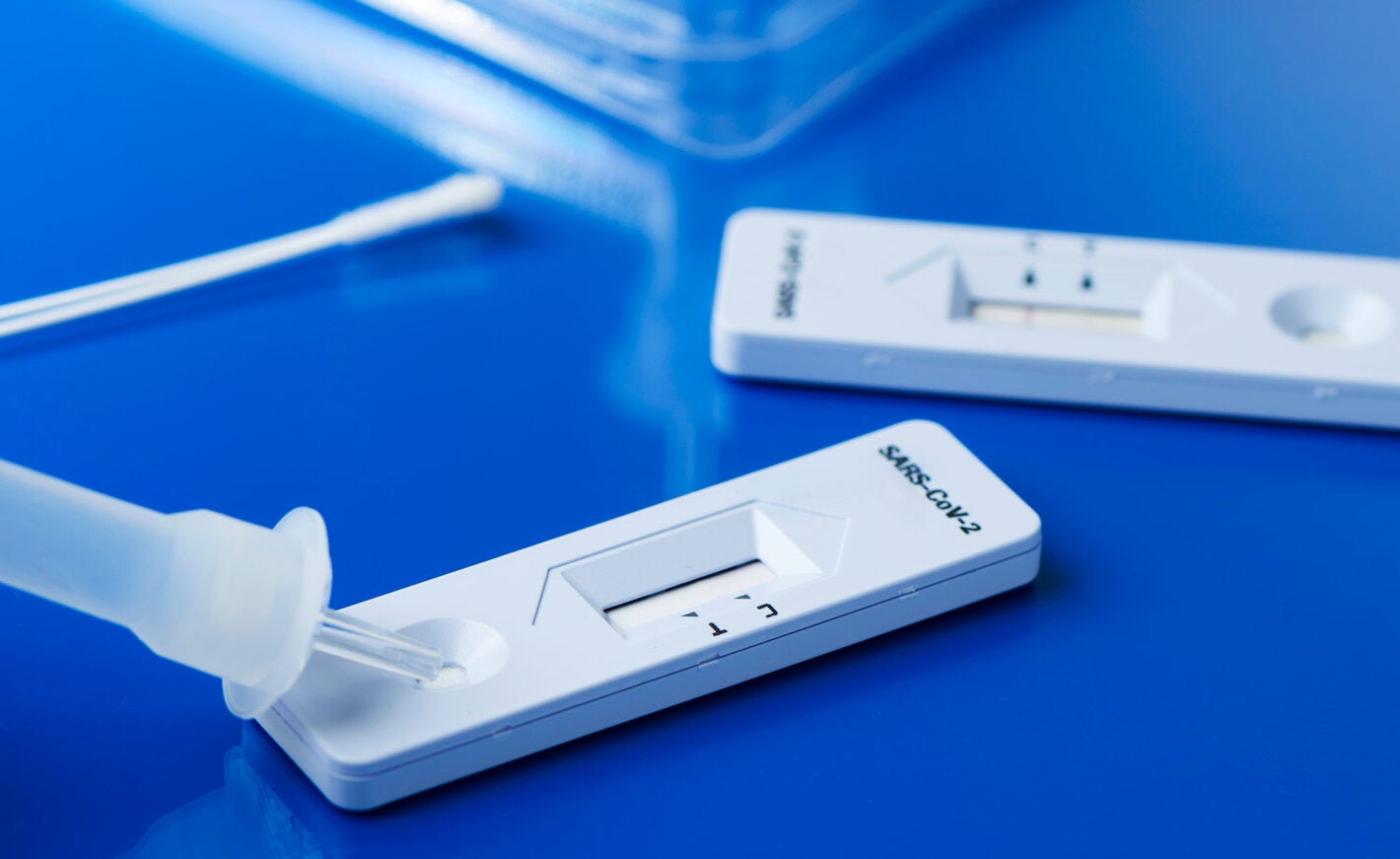
How accurate are the rapid at-home COVID tests?


Now that 15-minute home tests are available, millions of people can get a quick reading on whether their symptoms are due to Covid-19 or something else.

The at-home tests, although very fast and convenient, are less sensitive than the tests available at most Covid-19 testing centers. The home tests are “antigen” tests, while the gold-standard tests available at medical facilities use another technology, RT-PCR. (I’ll explain a bit more about the technical differences at the end of this article.)

An at-home test is far preferable to leaving your home, possibly exposing others to the virus, and then waiting hours or overnight for test results. The question is, how accurate is it?

Very accurate, for the most part. The chance that you’ll get an incorrect reading from a rapid antigen test is less than 1%. But (there’s always a “but”) it depends on what you mean by accurate. By another measure, they are not quite so reliable.

Let’s dig into the numbers from two new studies, which looked at thousands of cases, and see what they tell us.

In the first study, published recently in JAMA, Joshua Gans and colleagues from the University of Toronto looked at over 900,000 rapid-antigen test results. As expected, the vast majority of the tests were negative, and only 1,322 (0.15% of the total) were positive. They collected results using more-sensitive PCR testing for 1,103 of the positive tests, which allowed them to check whether or not the rapid antigen tests were correct. (This assumes the PCR test is always right, which isn’t quite true either, but it’s a good approximation.)

Surprisingly, 462 (42%) of the positive results were negative when double-checked with PCR. In other words, these were false positives. The investigators tracked these tests back to the source, and they discovered that about 60% of the false positives all came from a single batch of the Abbott Panbio Covid-19 rapid tests. So apparently there was a lower-quality batch that yielded more false positives.

However, another way to look at this data is that the overall rate of false positives was still very low. Out of more than 900,000 tests, only 462 were false positives, which yields a false positive rate of just 0.05%.

Another way to explain this is: if you just walked in off the street, your chance of getting a false positive test was about half of 1%. But once you saw that your results were positive, the chance that the positive result was correct was only about 60%, at least in that study.

One thing lacking in the Toronto study is that the investigators didn’t test everyone with PCR. They only used PCR to double-check the positive tests, so that study doesn’t answer the question of how many infections might have been missed.

Fortunately, the second study answers that question.

In this study, released in late January as a preprint on medRxiv by a group of my Hopkins colleagues led by Zishan Siddiqui, the investigators looked at 1054 participants, and tested all of them with both a rapid antigen test and RT-PCR.

Even though this study looked at far fewer subjects (1000 versus 900,000), they checked everyone with PCR, which allowed them to measure both sensitivity and specificity; i.e., they could count how many infections the antigen test missed.

So how good was the rapid antigen test in this study? First, its sensitivity was 92.7%, meaning that it correctly identified 92.7% of people who had Covid-19, whether or not they had symptoms.

What about those false positives? Here the news was better than the Toronto study, but still far from perfect: about 28% of the positive results from the antigen test were false. That’s better than the 42% found in the Toronto study, but it still means that many positive results from the rapid tests turn out to be incorrect.

What’s the take-home message from these studies? Well, I’d summarize it in three points:

  1. The rapid antigen test is generally very accurate, and certainly worth taking if you have any reason to think you might have Covid-19. The chance that you’ll have an incorrect reading, either positive or negative, is very small, less than 1%.
  2. If you get a negative test, you can relax: over 99.5% of negative results are correct, meaning you truly don’t have Covid-19.
  3. If you do get a positive test, you probably have Covid-19, but there’s still a roughly 30% chance that you don’t. If possible, you should immediately get a followup test using RT-PCR, which is more accurate.

Addendum: for those who want to understand the difference between the rapid antigen test and RT-PCR, here’s a bit more on those.

The rapid antigen test contains molecules called antibodies that bind to a specific molecule, the nucleoprotein, which is present on the surface of the SARS-CoV-2 virus. The antibodies in the test kit are designed to bind to other molecules that create a small band of color on a test strip, so you can see the results as a colored band in just 15 minutes. The main drawback of these tests is that they sometimes fail to detect the virus. For more details, a good description can be found here.

The RT-PCR test detects the RNA that is the genetic code of the SARS-CoV-2 virus. Every virus particle contains this RNA, which is a sequence of about 30,000 “letters” or nucleotides. In RT-PCR tests, we first convert the virus’s RNA to DNA, and then amplify it to make millions of copies. Because this test uses an amplification step, it can detect tiny amounts of virus, which is why it is more sensitive than rapid antigen tests. However, it takes at least a few hours to run this test, so it’s not as fast as the antigen test. For more details about how these tests work, check out the NIH explanation here.

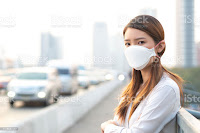
Masks do work, but mask policies are another thing entirely.

The use of masks to prevent the spread of Covid-19 has been controversial almost since the beginning of the pandemic, two years ago.

The U.S. Surgeon General made a huge early blunder, in February of 2020, when he recommended against masks, tweeting that

“masks are NOT effective in preventing general public from catching #Coronavirus, but if healthcare providers can’t get them to care for sick patients, it puts them and our communities at risk!”

That self-contradictory tweet was later deleted, but it caused a tremendous amount of confusion. After all, if masks don’t work, then why is it so important that healthcare workers have them?

Masks do work. The evidence is overwhelming that masks, if properly worn, “substantially reduce exhaled respiratory droplets and aerosols from infected wearers and reduce exposure of uninfected wearers to these particles,” as described in a CDC publication last year.

The idea that masks should help prevent infections is intuitively obvious: Covid-19 spreads through the transmission of viral particles from an infected person. These particles travel through the air, as numerous studies have shown, just like many other infectious diseases. If you can stop the spread of the viral particles themselves, then (obviously) you stop the virus from infecting people.

However, evidence emerged early on in the pandemic that cloth masks and standard surgical masks were not very effective, because they allowed viral particles to leak out (and in). The SARS-CoV-2 virus is really tiny, and it can slip through the gaps in these masks.

In other words, some masks work better than others.

In June of 2020, a large study published in The Lancet reported that N95 masks were far superior at preventing transmission of Covid-19. That study found that “face mask use could result in a large reduction in risk of infection, with stronger associations with N95 or similar respirators compared with disposable surgical masks.” They reported an overall risk reduction of 85%, with N95 masks conferring a 96% reduction but surgical masks just 67%.

It’s easy to find studies showing how to make masks even more effective: make sure they fit very snugly, tightening them around the head or ears if necessary. Medical professionals who follow these guidelines have had very few infections, despite being exposed daily to sick patients. (Johns Hopkins Hospital, part of my own university, has reported almost no infections among its medical staff caused by exposure to patients.)

This all makes perfect sense. After all, if masks didn’t work, then doctors and nurses would have to be unbelievably self-sacrificing (even more than they are already) to treat Covid-19 patients. Fortunately, though, a properly worn N95 mask does an excellent job at protecting the wearer against infection.

One problem that often goes unmentioned, though, is that the better the mask, the harder it is to breathe. This too is pretty obvious: if you make it harder for tiny particles to get in or out, then of course it’s harder to breathe. Snug-fitting N95 masks are, simply put, uncomfortable.

Mask policies are the real problem. Even though masks work, getting millions of people to wear them, and wear them consistently and properly, is a far greater challenge. A casual stroll through any indoor space where masks are required–and we’ve all done this–will reveal many people whose masks don’t cover their noses, or whose masks are clearly very loose, or who might not be wearing masks at all, despite the rules.

Why don’t people wear their masks? This too shouldn’t be a mystery. Many people, young and old, simply don’t like being told what to do, so when a local government says they have to wear masks, they resent it. And governments (or large companies) have a habit of creating one-size-fits-all policies that are don’t make sense for some people. The simplest mask mandates (simplest to explain and enforce, that is) say that everyone should wear a mask all the time, or that everyone should wear a mask indoors.

For example, in Baltimore everyone has to wear a mask indoors, but restaurants are open. Thus diners must wear a mask from the entrance to their table, and then they can eat their dinner, mask-free, for as long as they wish. This doesn’t make much sense.

And what about people who are vaccinated and free from any Covid-19 symptoms? Nope, no exceptions, according to every mask mandate I’ve heard of. Naturally, that is frustrating to some people. No one should find this surprising.

In reaction to mask requirements, many people, particularly on the political right, have proclaimed that “masks don’t work.” While some of them might believe this–in which case they are just wrong–what they might really be talking about is masking policies, and in that sense they are right. If you can’t get nearly everyone to wear an N95 mask, then you can’t realistically control the spread of the virus.

We’ve seen how this works in the U.S.: despite widely varying mask policies, the Omicron variant has swept through every single state in the country, including those with strict mandates. Some places, like New York City, were hit earlier despite having fairly strict mask policies. States with no masking requirements and those that banned mask mandates (such as Florida, Georgia, South Carolina, and Tennessee), were hit later and just as hard.

One reason that masking policies don’t work–although masks themselves do work–is that it’s just really inconvenient to wear a mask all the time.

So people continue to wear masks badly, or to refuse to wear them at all. Does this mean we should give up? No, not exactly. But we might have to limit strict masking rules to places where truly vulnerable people are present, such as hospitals and senior care homes. Large-scale mask mandates are just not working, and there’s probably little we can do to change that in a free society.

A far, far more effective way to control the virus is through vaccination. As Eric Topol pointed out recently with an elegant graphic: “How to reduce your chance of dying from Covid by 99%? Get vaccinated and a booster.”