Showing posts with label influenza. Show all posts

Gain of function research needs to be banned, but we need to define it properly


I’ve been writing about dangerous gain-of-function research on viruses for years, originally on the flu virus and more recently on the Covid-19 virus. Many people are deeply concerned about this research, which might have caused the Covid-19 pandemic, and yet there are still no real regulations controlling it, neither in the U.S. nor anywhere else.

I can already hear the objections: oh, but what about the new rules that NIH put in place in 2017, after a 3-year “pause” in some gain-of-function (GoF) research? Those rules were utterly ineffective, but I’ll get to that in a minute.

Despite my arguments, and the concerns of many other scientists, which have been expressed in various forums and articles for at least a decade now, the virology community continues to insist that any limits on GoF are unnecessary, and that GoF is wonderfully beneficial. A group of 156 virologists even wrote an opinion piece, published in the Journal of Virology, making this very point.

I’ve tried to convince some of my colleagues in the infectious disease world that GoF should be banned, and I’ve discovered that many of them–even some non-virologists–are opposed to any government regulation of GoF research.

They are wrong. However, they do raise one important concern that I think is valid, and that I will address in this column. Their concern is that any government regulation will be ham-handed, and will likely end up limiting or preventing a range of very useful experiments that have the potential to lead to beneficial new drugs and vaccines.

I get it. When the government tries to regulate science, it can write rules that are far too broad, or that get mis-interpreted even if well-written, and unintended consequences follow. So let’s not do that: below I’ll explain what I think needs to be banned.

But let’s not forget why we are having this debate right now: there is a very real possibility that the Covid-19 pandemic started in a lab that was doing GoF research on coronaviruses. We know that the Wuhan Institute of Virology (WIV) was doing this kind of research–that fact is not under dispute. We don’t know (and we may never know) if the original Covid-19 virus first appeared as a result of a lab leak, but it might have. That’s why we’re asking whether such research is worth the risk.

Before I explain what I think the rules should be, let’s look at the current NIH rules, which I mentioned above. First, though, let’s remember that NIH rules only apply to research funded by NIH. Research that is funded privately, or by any other part of the government, is unaffected by these rules and remains entirely unregulated.

So: back in 2017, when the NIH lifted the 3-year funding pause, they put in place some rules (detailed here) for work on “potential pandemic pathogens,” or PPPs. (The government loves acronyms.)

The pause itself was prompted by work on avian influenza, led by virologists Ron Fouchier and Yoshihiro Kawaoka, that was designed to turn some deadly bird flu viruses into human flu viruses. The work was successful: the researchers did indeed create viruses that had the potential to infect humans. These results were really alarming to many scientists: I wrote about it at the time, and other scientists also raised the alarm. Those concerns are what led to the funding pause.

Since 2017 then, the NIH regulates (but doesn’t ban) research on PPPs that are both:

  1. “likely highly transmissible and likely capable of wide and uncontrollable spread in human populations, and
  2. likely highly virulent and likely to cause significant morbidity and/or mortality in humans.”

One of the first things to notice about this definition is that avian influenza–the very work that prompted the new rules–isn’t really covered.

Another thing to notice is that work on coronaviruses in bats–the GoF work that was apparently going on in the Wuhan Institute of Virology, and that may have caused the Covid-19 pandemic–wouldn’t have been covered either. Those bat viruses would not have been considered “likely highly transmissible in humans,” not before the pandemic.

Of course, we all know differently now.

In any case, the rules that NIH introduced in 2017 only applied to a very narrow class of work, and as far as I can tell, they didn’t restrict anything. On the contrary: the NIH resumed funding the GoF work on avian influenza work by Fouchier and Kawaoka soon after lifting the funding pause. And let’s not forget that NIH rules aren’t a ban: it remains perfectly legal to do any kind of GoF work.

So how can we put in place intelligent restrictions that will prevent dangerous GoF research in the future?

First, rather than rejecting any restrictions whatsoever, as some virologists have done, scientists should work with the government to craft a thoughtful set of limitations. For starters:

  1. Research that creates new strains of the Covid virus (SARS-CoV-2) that might have greater virulence or transmissibility should be entirely banned.
  2. Research that takes non-human viruses, including avian flu and bat coronaviruses, and gives them the ability to infect any new animals, should be banned.

To scientists who can’t even agree on these restrictions, I would say that it appears you oppose any restrictions whatsoever. If that’s your position, then the government might step in and impose far broader bans, which are not likely to be good. If you’ll agree to these two restrictions, perhaps we can broaden them slightly to cover other types of highly risky GoF work.

Finally, let me return to a point I’ve made before, but that bears repeating: the supposed benefits of GoF research are essentially zero. The claim that GoF research that makes a virus more deadly will help us “understand pathogenicity” or “be prepared for the next pandemic” are just hand-waving arguments. I wrote a whole column just last month explaining why these claims are fundamentally wrong, so I won’t repeat that here.

If we do ban some GoF research, with carefully-crafted rules, we won’t lose anything. Instead, we’ll gain at least two things: first, virologists can apply their expertise to truly beneficial virology work, and second, the scientific community will regain some of the trust it has lost during the pandemic. That would seem like a good thing.
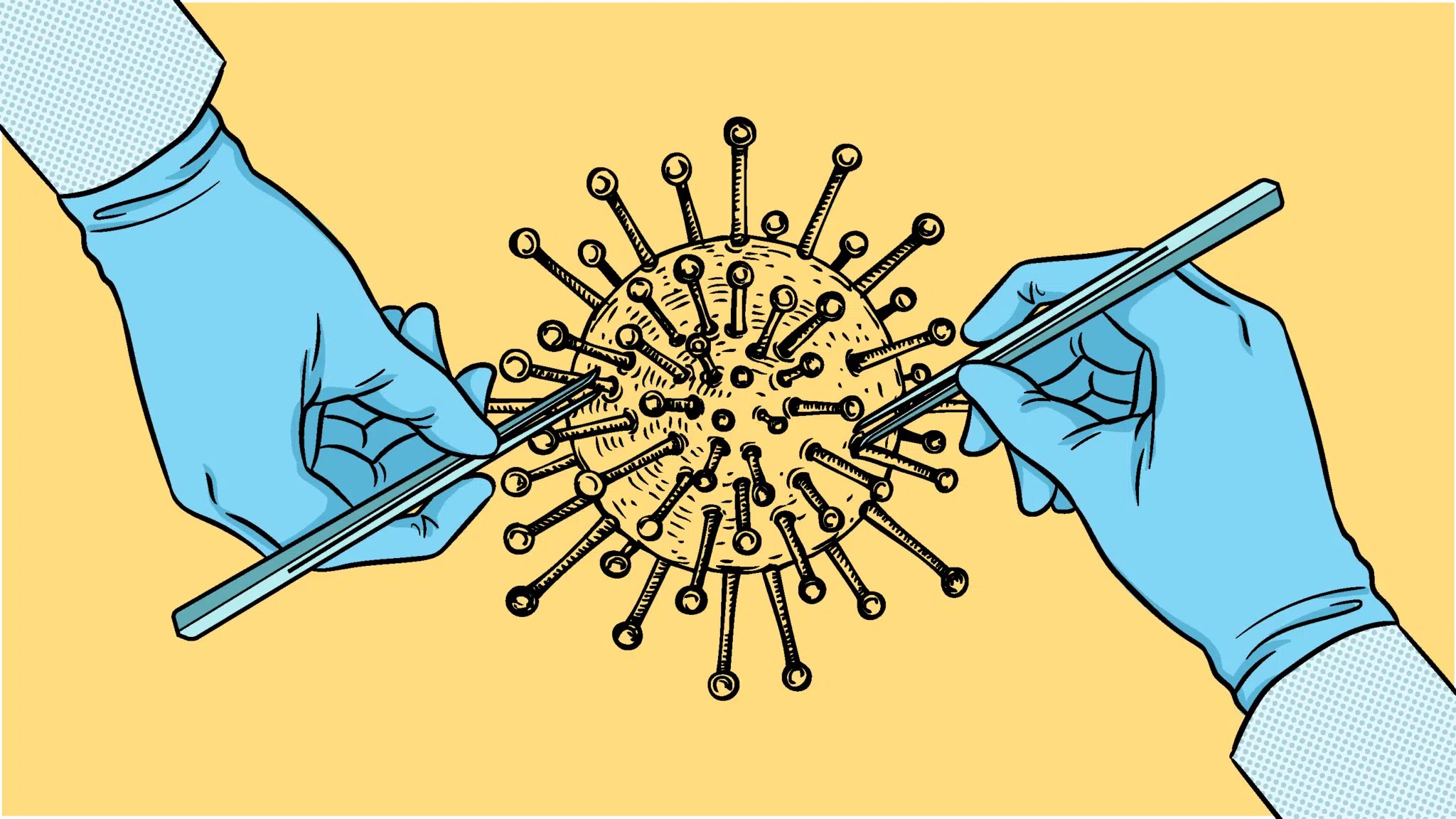
Panel recommends new controls on deadly gain-of-function research. Will the government listen?

Illustration by Erik English

This past week, a government-appointed panel of scientists released a new report recommending 13 actions the U.S. government should take to control “gain-of-function” research that has the potential to create deadly new pathogens.

This has been a long time coming, but the first thing I want to point out is that this is just an advisory panel. The government hasn’t done anything yet. Let’s unpack what happened, shall we?

First, the panel is called the NSABB: the National Science Advisory Board for Biosecurity. The new report, which was at least 3 years in the making, was created in response to a decade’s worth of concerns, raised by many scientists (including me - see my previous articles here and here and here, among others), about the dangers of a specific kind of research known as gain-of-function.

What is gain-of-function (GoF) research? Well, it can include many scientific experiments, including some that are perfectly reasonable. But the term has been used most often to refer to experiments that are designed to take a virus such as influenza or SARS-CoV-2 and alter it intentionally to make it more deadly.

This seems crazy, right? Yet it’s been going on in the influenza virus research world for at least a decade, which is why many scientists have raised alarms.

The Covid-19 pandemic gave this issue much greater urgency, after suspicions arose that the Covid-19 virus, SARS-CoV-2, might have emerged (accidentally) from gain-of-function experiments at a major virology lab in Wuhan, China. (It probably didn’t, but we still don’t know for sure, as I’ve explained in previous columns.)

So back to the topic at hand: the new NSABB report. What do they recommend, and will it matter? I don’t want to go through all 13 recommendations, but overall it’s a very good start, if (and only if) the U.S. government takes them seriously and implements them all.

And the virology community is already pushing back - but first let me go into just three of the recommendations.

First, the panel recommends that the government require that all GoF research undergo federal-level review if the work is

“reasonably anticipated to enhance the transmissibility and/or virulence of any pathogen.”

Believe it or not, GoF research that does this kind of thing is going on right now, and there’s no rule saying it must be reviewed first.

Second, the panel recommends that the government only allow such research if there’s simply no better, lower-risk way to gain the same scientific insights. As they put it, scientists who want to do GoF work would have to prove that

“there are no feasible alternative methods ... that poses less risk ... and the risks are justified by the potential benefits.”

That’s a high bar to clear, but it seems eminently reasonable to insist upon it before allowing dangerous GoF research to proceed.

The panel also recommends that the new restrictions on gain-of-function research apply to all research in the U.S., regardless of whether it’s funded by the government. This is an important addition, as illustrated recently when Boston University, after being called out for dangerous gain-of-function experiments on the Covid-19 virus, claimed that they didn’t use NIH funds for this, so (they argued) they didn’t break any rules. Technically, they were correct. This recommendation will close that giant loophole.

There’s much more in the NSABB report, and my primary reaction is that (1) it’s a good start and (2) it’s not nearly enough. I’d like to see the government make a blanket statement that research that will make deadly viruses even more deadly is simply forbidden, at least for now. If someone wants an exception, they could make the case, but I’ve yet to see a good argument for these experiments.

What about that pushback from the virologists that I mentioned above? Well, in a lengthy commentary just published in the Journal of Virology, 156 virologists argue that gain-of-function research is wonderful! And it’s brought so many benefits! Just let us handle this, and don’t worry, they seem to be saying.

To make the benefits explicit, the 156 virologists include a table listing dozens of “useful examples” of gain-of-function research. Let’s look at just two of them.

Example 1: the virologists assert that experiments on a virus called M13 led to faster computers, citing a 2018 article. First, this is nonsense: no one has been a faster computer using a modified M13 virus. Second, the M13 virus is harmless to humans (it only infects bacteria), so it wouldn’t be subject to any regulations on GoF research in human pathogens.

Example 2: this one is even more outrageous. The table lists as a “benefit” an experiment that “established that H5N1 has capacity for mammalian transmissibility.” They then cite a notorious experiment from 2012 in which scientists intentionally modified a deadly bird flu virus (H5N1) in order to make it possible for the virus to be transmitted directly between mammals. This was one of the key experiments that led to the widespread alarm about GoF research in the first places. (I wrote about it back in 2013.)

So no, creating a more-deadly virus and then saying “see? look how dangerous this virus is?” is not what I’d call useful.

Clearly, the virologists who wrote this commentary do not want to see any restrictions at all on the kind of research they do. They just don’t see the need for it. Obviously, I disagree, as do many others, including many virologists who support the NSABB recommendations.

As I wrote at the beginning of this piece, the NSABB report is just a set of recommendations, and the government might not do anything. I hope that the government will implement all of them, and then go even further, and put a stop to the dangerous, sometimes reckless experiments that a very small minority of scientists are engaging in.

We need to study viruses, and we need to control infectious diseases, but we can do this without making pathogens more deadly.

We may get a universal flu vaccine, thanks to mRNA technology


The mRNA vaccines for Covid-19 are an amazing story: a new vaccine developed in a matter of weeks for a brand-new virus, SARS-CoV-2, at the beginning of the pandemic in early 2020. Clinical trials moved forward at record speed, and by December of that year we had an approved vaccine that was safe and over 90% effective against Covid-19.

Why not use this mRNA technology for other vaccines, especially for the flu? When I asked this question last year, I didn’t realize that a group of scientists at the University of Pennsylvania were already hard at work making this idea a reality. They’ve just published their first results, and the news is very encouraging.

But first, some background. Messenger RNA (mRNA) vaccine technology was the big breakthrough behind the Covid-19 vaccines. Invented by Katalin Karikó and Drew Weissman at the University of Pennsylvania, the idea is, at its core, very simple: take the genetic code for a protein from the virus (any protein can be used, and for Covid-19 this protein is called Spike), and inject it into someone’s arm. (The genetic code I’m referring to here is the mRNA that encodes the protein.) From there, the cells of the human host manufacture the protein–not too much, though, because mRNA quickly degrades once it’s in your body.

What’s kind of amazing is that the human immune system will then recognize the Spike protein as an invader, and generate antibodies against it. From that point on, the person who received the vaccine will be prepared to fight off a real infection by Covid-19. In other words, they’ll be immunized.

The actual development of this technology was much more complicated than I’m describing here. First, you can’t just inject mRNA without causing a lot of inflammation, which can be dangerous. Weissman and Karikó solved that problem by using chemically modified mRNA. Second, you need to package the mRNA in something; the scientists discovered that they could use little packages of fat molecules called liposomes to make an effective container. Eventually, they got it to work, and the rest is (recent) history. Both the Moderna and Pfizer/BioNTech vaccines use mRNA technology.

Now about this new “universal” flu vaccine, and why it’s so much better than what we currently use. The annual flu shot contains pieces of one protein from 4 different influenza strains. Each year, as the flu itself evolves, the 4 strains used in the flu vaccine are fine-tuned in an effort to keep up. In some years, this effort fails and the vaccine just doesn’t work very well, for reasons I explained here.

One huge problem is that the current flu vaccine process grows the flu virus in chicken eggs, and sometimes the darned thing just won’t grow! So in those years, the vaccine manufacturers must switch to another flu strain, one not as well-matched to what’s circulating. The result is a vaccine that sort of sucks, although it’s usually better than nothing.

With mRNA, you don’t have to grow anything in chicken eggs, and you aren’t limited to just 4 strains. As the new research shows, you can put ALL 20 known influenza strains in the same vaccine, and it protects subjects against all of them. It even protects against other flu strains that weren’t in the vaccine. To create the vaccine, scientists simply synthesized the mRNA that encodes the surface protein of the flu, hemagglutinin, from 20 different flu strains. The synthesis process is already being done on an industrial scale for the Covid-19 vaccines, and the same process will work for any mRNA, from any virus.

In the new research, scientists at UPenn led by Scott Hensley and Drew Weissman (the co-inventor of the mRNA vaccine) inserted all 20 flu strains in a single vaccine. They found “that the vaccine dramatically reduced signs of illness and protected from death, even when the animals were exposed to flu strains different from those used in making the vaccine.”

Did I mention that the subjects in the new study were mice and ferrets, not people? Well, this experiment is just the beginning: we’ll need further trials to test the safety and efficacy of this vaccine in people. Those are much, much more costly, though, and it’s not clear when or even if those trials will happen.

If we had a universal flu vaccine, we might no longer need the annual flu shots that we beg everyone to get each year. So when can we expect to see this new 20-strain vaccine?

Well, there’s the rub. Even if this new flu vaccine works perfectly in human testing, we might never get it. At the moment, we are completely dependent on private companies to develop vaccines. At the beginning of the Covid-19 pandemic, the U.S. created incentives for vaccine manufacturers by promising to buy millions of doses, and–fortunately–that worked. We’ve never tried anything like that with the flu vaccine.

We need to re-think our dependence on private, for-profit companies for this critically important public health technology. Perhaps it’s time for the government to step in and make sure we get this vaccine, whether through incentives like the ones used to create the Covid-19 vaccine, or through a direct effort by the government itself (as other countries have done) to create a universal flu vaccine. A universal flu vaccine will save tens of thousands of lives every year. Let’s hope we get there.

Scientists have re-created the deadly 1918 flu virus and used it to infect animals. WTF?

With all the controversy about gain-of-function research and all the concerns about how dangerous it is, you might think that scientists have stopped doing that kind of work.

Well, no.

In the latest news, a team of scientists in Canada and the U.S. report that they have re-created the 1918 influenza virus and used it to infect macaques. Let’s be clear here: the 1918 flu vanished from the Earth, long ago. It’s simply not a threat, or it least it wasn’t, until someone figured out a way to bring it back.

Why would anyone do this? I’ll get to that, but first a little background.

The 1918 flu pandemic was the worst plague since the Black Death, which occured in the mid-14th century. During World War I, a new flu virus swept the planet, killing upwards of 50 million people. It probably infected a third of the entire world population at the time.

Since Covid-19 appeared, the 1918 flu pandemic has been cited often (sometimes called the Spanish flu), usually to compare or constrast it with Covid-19. Sure, Covid is bad, but at least it’s not as bad as what the world experienced in 1918.

About 20 years ago, a small team of researchers led by Jeffery Taubenberger and Ann Reid figured out how to sequence the genome of the 1918 flu. In a series of papers spread over six years, they described how they recovered pieces of the flu virus from human samples that had been frozen for nearly 100 years, including corpses buried in the permafrost of Siberia and Alaska. In 2005, they reported the complete sequence in the journal Nature. Their main discovery was that the 1918 flu had originally been a bird flu, which jumped into humans sometime before 1918. Taubenberger and others, including Adolfo Garcia-Sastre at Mt. Sinai School of Medicine, also re-constructed the virus and tested it on mice, that same year. Not surprisingly, the mice died.

It didn’t take long before gain-of-function researchers said “hey, why don’t we reconstruct the flu virus and see what happens in primates?” The tools of modern genetics make it possible to reconstruct a virus from scratch, using just the sequence.

In 2007, only two years after the 1918 flu sequence was completely decoded, influenza researcher Yoshihiro Kawaoka at the University of Tokyo and the University of Wisconsin described, in a paper in Nature, how he and his colleagues used the sequence to create live, infectious 1918 flu viruses. To demonstrate that these really were flu viruses, they infected 7 macaques with them. Not surprisingly, the macaques got severely ill, and the scientists eventually euthanized all of them.

(Insiders may recognize Kawaoka’s name: he and Dutch scientist Ron Fouchier are widely known for their gain-of-function research that aimed to give deadly bird flu the ability to infect mammals. I’ve called them out on this in the past, and I’ve openly asked why NIH was funding this work.)

In the new paper, a team of researchers at the Public Health Agency of Canada, the University of Manitoba, and Oregon Health & Science University re-created the 1918 flu virus again, and infected 15 macaques. This time they used more realistic doses, and the macaques didn’t get so sick, suffering only “mild” or “moderate” disease. Maybe macaques “are not ideal for the development and testing of novel pandemic influenza-specific vaccines and therapies,” they concluded.

So let’s review: flu scientists have been using the sequence of a long-vanished, extremely deadly virus to reconstitute the virus and infect animals, and then observe how sick they get. (Kawaoka did it a second time, in a study published in 2019.)

Why do they do it? All of the papers give essentially the same reason: these experiments, they say, will help us develop animal models in which we can test vaccines. These same justifications have been used for decades, but flu vaccines haven’t improved one whit, as far as I can tell.

But hold on a minute! Even if you accept their argument that infecting macaques and other animals with influenza virus will help develop better vaccines, why use the 1918 influenza virus at all?

They don’t answer that question, because there really is no good answer. The fact is that the experiments will be more relevant if they use currently circulating flu strains–because those are the strains that we need vaccines against.

I imagine that the scientists doing this work truly believe the arguments they make, about how their work will help design better vaccines and therapies. But they’ve been making similar arguments for decades, and it just hasn’t played out that way.

The 1918 flu disappeared long ago, and there’s no way it could possibly re-appear naturally. There’s only one way that the 1918 flu becomes a threat to human health again: through a lab leak. Re-creating the virus in a lab makes that possible.

We’re still trying to figure out if Covid-19 had a natural origin or whether it started as a lab leak. Even if it turns out to have a natural source, the intense discussions about the lab leak hypothesis have been useful, because they made it clear that lab leaks happen, and that they should be considered a genuine risk.

In recognition of this risk, scientists and non-scientists alike have called for a worldwide ban on gain-of-function research. That hasn’t happened yet, although NIH has issued a carefully worded statement about the kinds of work that it supports.

Most of the recent controversy over gain-of-function research has focused on research that makes viruses more deadly. I hope it’s clear that re-creating a deadly virus from scratch is another form of gain-of-function research, one that carries equally great risks with little or no potential benefit. We should put a halt to both types of work.

There’s an easy way to eliminate the risk that a lab leak might release the 1918 influenza virus into the human population: stop re-creating the virus. The 1918 flu disappeared from the natural world long ago–or to be more precise, it evolved into a much, much milder form of influenza. The deadly form that was recently re-created in several labs does not exist in nature today. Let’s keep it that way.

The mRNA vaccines are defeating COVID. Let's use them for the flu.


The last year has been a story of triumph in the vaccine world, with the rapid development of two highly successful vaccines for Covid-19, one developed by Moderna and the other by Pfizer and BioNTech. Now that flu season is approaching, why are we still using 50-year-old technology for the flu vaccine?

The reason the Covid-19 vaccines were developed so quickly is that they used a new, much faster and easier-to-create type of vaccine technology, based on messenger RNA, or mRNA. What’s even more exciting is that we now have an overwhelming amount of evidence, from real-world experience, that these vaccines are remarkably safe and effective.

Now, anti-vaxxers and the “vaccine hesitant” are claiming they don’t trust the vaccine because it was developed too fast. That’s ridiculous: the real reason they don’t trust the vaccine is because they’re consuming a steady diet of anti-vaccine nonsense, promoted by a combination of right-wing media and the Disinformation Dozen (who include left-wing as well as right-wing zealots). But let’s not go down that rabbit hole today.

So what is an mRNA vaccine? Here’s a brief explainer, and then we’ll look at the flu vaccine. (Note: feel free to skip ahead if you already understand the technology.)

Messenger RNA vaccines have been under development for decades, since long before Covid-19 appeared. The technology required a series of breakthroughs over the years, as described in a recent Nature news story, and many scientists contributed. It wasn’t used in vaccines in part because it wasn’t ready, but also because we rely on private companies to develop vaccines, and few of them were interested in investing in a new, not-yet-approved technology. But I digress.

Messenger RNA is the stuff that all of your cells use to translate your genes, which are encoded in DNA, into proteins. The basic process is that the DNA for a gene is copied into pieces of mRNA, where the DNA letters, ACGT, are replaced by slightly different (chemically) RNA letters, ACGU.

Every cell in your body is filled with mRNA, all the time. It’s the stuff of life, so of course it is totally safe. Each cell uses mRNA to make proteins, which do most of the actual work that keeps you alive.

Here’s the brilliant thing about mRNA vaccines: all they do is introduce some mRNA into your cells that encodes a single protein from the virus, which is called “Spike” in the case of the Covid-19 vaccines.

Your own cells then make the Spike protein, but they don’t make very much! They just make a few copies, because mRNA doesn’t last very long. And because there is no DNA copy of the Spike protein in your genome, once the mRNA in the vaccine breaks down, it’s gone forever.

The other brilliant thing is that your own immune system recognizes Spike as a foreign protein, and it generates cells that will recognize any future infections where the Spike protein is present. If you’re later infected by SARS-CoV-2 (the Covid-19 virus), your immune system is primed and ready, and in a large majority of cases it attacks and destroys the virus before you get sick.

So that’s it: an mRNA vaccine is simply a little package made of fat molecules (called liposomes) that contains a few copies of mRNA encoding a viral protein. There’s nothing to prevent us now from creating similar vaccines for the flu, or for other viruses where we need new vaccines. (In the case of flu, we can use mRNA for a gene called hemagglutinin, but again I digress.)

We make new flu vaccines every year, because the flu is constantly mutating. Most years, the flu vaccine isn’t a great match for the circulating strains of the virus, and therefore the vaccine isn’t very effective. In a good year it might be 60-70% effective, but in bad years it might be much worse. A big part of the problem comes from how we create the vaccine.

In the U.S., we make most of our flu vaccines by growing influenza viruses in chicken eggs. No, I’m not making this up. Around February of each year, a panel of experts selects 4 strains of the virus that they think will most likely match the viruses for the following flu season, which usually ramps up in November or December. (Here are this year’s choices.)

Once the experts have selected the vaccine strains, the manufacturing process begins, first by checking to see if all 4 strains will grow robustly in chicken eggs. If they don’t, the panel may have to switch to different strains that are less likely to work. No, I’m not kidding: the success of the flu vaccine depends on how well it grows in eggs. That’s one reason why, in some years, the flu vaccine is a flop. This would simply never happen if we used mRNA technology.

With mRNA vaccines, we don’t have to grow any viruses at all. The mRNA from a single gene–hemagglutinin for influenza–can simply be synthesized in large quantities, just as we’re now doing for the Spike protein in SARS-CoV-2. Or for an even more effective vaccine, we might add the gene for neuraminidase, the other protein in influenza that our immune system can “see.”

An mRNA vaccine for flu would be far cheaper to manufacture, not requiring huge chicken farms. (This year, 82% of flu doses in the U.S. were made this way.) Even more important, though, is that an mRNA vaccine for flu would likely be far more effective at controlling the severity of the infection itself.

Why aren’t we doing this already? Simply put, it’s because we rely on private companies to take the initiative, and it’s not worth it to them to test and validate an entirely new vaccine, which requires a substantial investment. There’s also a simple solution, the same one we used for Covid-19: the government should take the lead.

We’re now at the beginning of flu season, which almost disappeared last year thanks to our social distancing and masking behavior. I’ve had my flu shot, and millions more are being administered around the world. Just last week, an early report out of Europe indicated that the flu season this year might be “severe,” which is the last thing we need with Covid-19 still raging.

We don’t yet know if this year’s flu shot will be effective or not, but odds are, based on past performance, that it won’t be great. (It’s still much better than nothing, I should add.) If we want a better flu vaccine, now is the time to start developing a new one using mRNA. If private industry doesn’t step up, any one of dozens of countries have the expertise to do so instead.

We've totally crushed the flu virus this year

 As awful as the Covid-19 pandemic is, it’s given us at least one benefit: we’ve utterly crushed the flu virus.

That’s right–the flu has almost completely disappeared this year. A combination of social distancing, closed schools and businesses, dramatically reduced travel, and high flu vaccination rates has achieved something that most flu experts never thought possible.

Flu levels are so low, in fact, that one has to wonder if the flu will even come back next year. The levels now are far lower than we’ve ever seen in modern history. Let’s take a look at the numbers:

nfluenza cases reported to the CDC by US public health laboratories, 2020-2021 season. Data from the CDC, graph created by the author.


As you can see here, the very worst week had just 24 confirmed cases in the entire U.S. That is truly astonishing. And in 2021 so far, we’ve had 5 or fewer cases in the entire country each week. Basically, the flu is gone. To see how dramatic this is, let’s look at data from last year (the winter of 2019-2020), which was a typical flu season:

Influenza cases reported to the CDC by US public health laboratories, 2019-2020, season. Data from the CDC, graph created by the author.

As you can see above, the U.S. had about 3,000 cases per week in January and February of 2020, with a peak at nearly 4,000 cases.

The rate of influenza this year is over 100 times lower than it’s ever been. Why did this happen? It’s obvious: all of the precautions we’re taking to reduce the spread of Covid-19 have worked wonders to prevent the flu as well. In fact, they’ve worked far better for influenza than for the Covid-19 virus.

No one knows what the flu season will look like next year, but for now, at least we’ve won a clear victory against the influenza virus. That’s a bit of good news.


RNA vaccines have arrived. Let's starting making them for influenza, right now.

The race to end the Covid-19 pandemic will be won by vaccines. We now have at least four approved vaccines, and the first two–the fastest to be developed and approved–were both RNA vaccines, a new technology that has never before been used on a large scale.

As I’ve written before, these RNA vaccines are a scientific triumph. Both the Moderna vaccine and the Pfizer/BioNTech vaccine are 95% effective against the virus. Both were developed in a matter of days–days!–after the genome sequence of the Covid-19 virus, SARS-CoV-2, was first revealed.

Now that we know that RNA vaccines work, what’s stopping us from designing and deploying this technology for many other infections that we don’t yet have under control? Simply put: nothing. We just need to have the will to do it, and it will happen. By which I mean, we need the government to pay for it.

Once Covid-19 fades, as it will, we’ll still have to deal with influenza, which sweeps through the population every year, often mutating significantly from the previous year. That’s why we need a new flu vaccine every year: the flu itself mutates to escape the protection we have from last year’s vaccine.

(Aside: we’re in the midst of the mildest flu season in decades, perhaps ever, thanks to the Covid-19 restrictions. The CDC reports fewer than 100 confirmed cases of influenza in the entire country, at a time when we’d usually be seeing thousands of cases per week.)

RNA vaccines are remarkably easy to design, and they’re much cheaper than conventional vaccines too. We should be thinking about making them for a raft of illnesses now: not just flu, but malaria, HIV, and others. But let’s start with the flu.

We already know that we need a new flu vaccine every year, so here’s a not-so-radical proposal: let’s create an RNA vaccine for the flu, right now, paid for by the government. It’s almost certain to work, and it will likely work far better than the current vaccine. Here’s why.

For the current flu vaccines, we create a new vaccine every year based on what’s currently circulating among humans. For the Northern hemisphere, we choose the vaccine strain right around now (late January or early February), because it takes 6 months to prepare the vaccine for the following fall.

The flu vaccine production uses a crude, decades-old process. After choosing a vaccine strain, the manufacturers (GlaxoSmithKline is one) isolate the virus and then inject it into chicken eggs, where they let it grow for 4-5 days. The virus is then extracted from the eggs, killed, and stuck into a syringe. That’s basically it. (This is why people who have egg allergies are sometimes warned not to get the flu vaccine.)

There are loads of problems with this process. First, it often turns out (and this is not widely known) that the first choice for a vaccine strain doesn’t grow well in eggs. In those years, the manufacturers move on to a second, third, or fourth choice, until they find one that grows in chicken eggs. These inferior choices, in turn, lead to vaccines that are less effective at conferring immunity.

Second, the process requires huge, messy chicken farms, which means it is slow and costly. Third, even though the virus is a killed virus, there’s always a small chance that some live virus will survive and infect people.

RNA vaccines, in contrast, can be manufactured precisely to match the virus that you wish to target. There’s no need to grow it in chicken eggs. And it’s far cheaper to make. In addition, you only need a fragment of a virus to make the vaccine, so there’s zero chance that anyone can ever be infected from the vaccine. And we know exactly what to target on the influenza virus: the hemagluttinin and neuraminadase proteins that cover the surface of the virus.

If RNA vaccines are so good, one could argue, why not allow the free market to produce them? Because it just won’t happen: the flu vaccine is not very profitable, and getting an entirely new vaccine approved is very expensive. Private companies just aren’t going to do it; on the contrary, several past flu vaccine manufacturers dropped out of the business because it just wasn’t profitable.

(Interesting story: about 15 years ago, I attended a talk by Anthony Fauci about influenza. At the time, I was leading a large-scale effort to sequence thousands of influenza viruses, a project that continues to this day and that is run by Dr. Fauci’s institute, NIAID. At the end of his talk, I asked Dr. Fauci why the NIH itself couldn’t sponsor flu vaccine development. He answered that it just wasn’t done that way–that NIH handled the basic research, but left vaccine development to industry. Well, Covid-19 has changed all that.)

We don’t have to create a new government-run facility to make the vaccines in order for this to work. Instead, we can do exactly what we did for Covid-19: pre-purchase a large supply of RNA-based flu vaccines, and provide generous funding to pay for the vaccine development and testing. Then companies like Moderna and Pfizer will have proper incentives to use their technology on influenza.

The health benefits of new, better vaccines are far too important to leave this to private companies, who are motivated more by profits than by an interest in public health. Let’s use the scientific success of RNA vaccines to change the way vaccine development works in a big way. We can save untold numbers of lives if we do.