Showing posts with label SAR-CoV-2. Show all posts

Panel recommends new controls on deadly gain-of-function research. Will the government listen?

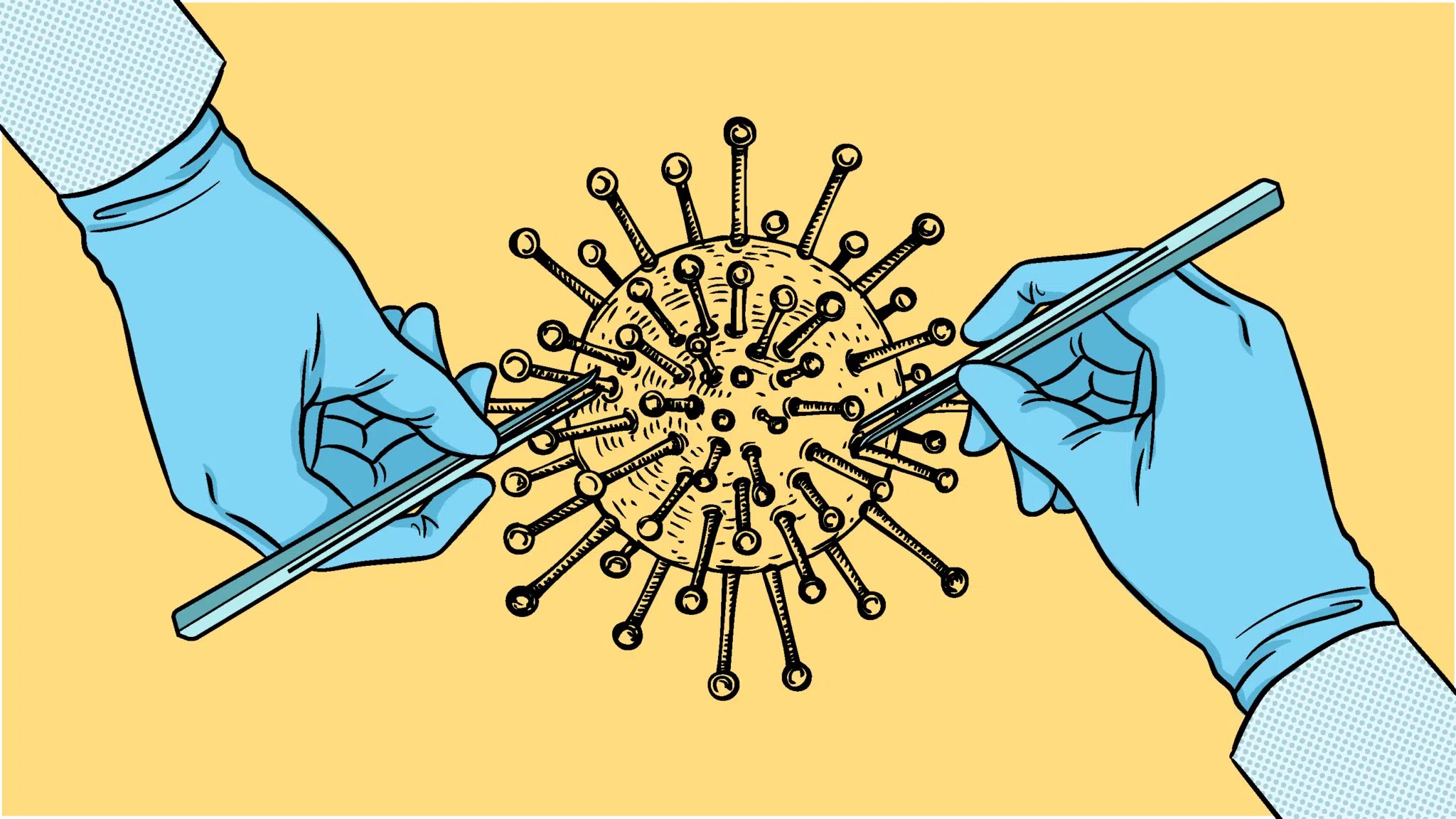
Illustration by Erik English

This past week, a government-appointed panel of scientists released a new report recommending 13 actions the U.S. government should take to control “gain-of-function” research that has the potential to create deadly new pathogens.

This has been a long time coming, but the first thing I want to point out is that this is just an advisory panel. The government hasn’t done anything yet. Let’s unpack what happened, shall we?

First, the panel is called the NSABB: the National Science Advisory Board for Biosecurity. The new report, which was at least 3 years in the making, was created in response to a decade’s worth of concerns, raised by many scientists (including me - see my previous articles here and here and here, among others), about the dangers of a specific kind of research known as gain-of-function.

What is gain-of-function (GoF) research? Well, it can include many scientific experiments, including some that are perfectly reasonable. But the term has been used most often to refer to experiments that are designed to take a virus such as influenza or SARS-CoV-2 and alter it intentionally to make it more deadly.

This seems crazy, right? Yet it’s been going on in the influenza virus research world for at least a decade, which is why many scientists have raised alarms.

The Covid-19 pandemic gave this issue much greater urgency, after suspicions arose that the Covid-19 virus, SARS-CoV-2, might have emerged (accidentally) from gain-of-function experiments at a major virology lab in Wuhan, China. (It probably didn’t, but we still don’t know for sure, as I’ve explained in previous columns.)

So back to the topic at hand: the new NSABB report. What do they recommend, and will it matter? I don’t want to go through all 13 recommendations, but overall it’s a very good start, if (and only if) the U.S. government takes them seriously and implements them all.

And the virology community is already pushing back - but first let me go into just three of the recommendations.

First, the panel recommends that the government require that all GoF research undergo federal-level review if the work is

“reasonably anticipated to enhance the transmissibility and/or virulence of any pathogen.”

Believe it or not, GoF research that does this kind of thing is going on right now, and there’s no rule saying it must be reviewed first.

Second, the panel recommends that the government only allow such research if there’s simply no better, lower-risk way to gain the same scientific insights. As they put it, scientists who want to do GoF work would have to prove that

“there are no feasible alternative methods ... that poses less risk ... and the risks are justified by the potential benefits.”

That’s a high bar to clear, but it seems eminently reasonable to insist upon it before allowing dangerous GoF research to proceed.

The panel also recommends that the new restrictions on gain-of-function research apply to all research in the U.S., regardless of whether it’s funded by the government. This is an important addition, as illustrated recently when Boston University, after being called out for dangerous gain-of-function experiments on the Covid-19 virus, claimed that they didn’t use NIH funds for this, so (they argued) they didn’t break any rules. Technically, they were correct. This recommendation will close that giant loophole.

There’s much more in the NSABB report, and my primary reaction is that (1) it’s a good start and (2) it’s not nearly enough. I’d like to see the government make a blanket statement that research that will make deadly viruses even more deadly is simply forbidden, at least for now. If someone wants an exception, they could make the case, but I’ve yet to see a good argument for these experiments.

What about that pushback from the virologists that I mentioned above? Well, in a lengthy commentary just published in the Journal of Virology, 156 virologists argue that gain-of-function research is wonderful! And it’s brought so many benefits! Just let us handle this, and don’t worry, they seem to be saying.

To make the benefits explicit, the 156 virologists include a table listing dozens of “useful examples” of gain-of-function research. Let’s look at just two of them.

Example 1: the virologists assert that experiments on a virus called M13 led to faster computers, citing a 2018 article. First, this is nonsense: no one has been a faster computer using a modified M13 virus. Second, the M13 virus is harmless to humans (it only infects bacteria), so it wouldn’t be subject to any regulations on GoF research in human pathogens.

Example 2: this one is even more outrageous. The table lists as a “benefit” an experiment that “established that H5N1 has capacity for mammalian transmissibility.” They then cite a notorious experiment from 2012 in which scientists intentionally modified a deadly bird flu virus (H5N1) in order to make it possible for the virus to be transmitted directly between mammals. This was one of the key experiments that led to the widespread alarm about GoF research in the first places. (I wrote about it back in 2013.)

So no, creating a more-deadly virus and then saying “see? look how dangerous this virus is?” is not what I’d call useful.

Clearly, the virologists who wrote this commentary do not want to see any restrictions at all on the kind of research they do. They just don’t see the need for it. Obviously, I disagree, as do many others, including many virologists who support the NSABB recommendations.

As I wrote at the beginning of this piece, the NSABB report is just a set of recommendations, and the government might not do anything. I hope that the government will implement all of them, and then go even further, and put a stop to the dangerous, sometimes reckless experiments that a very small minority of scientists are engaging in.

We need to study viruses, and we need to control infectious diseases, but we can do this without making pathogens more deadly.
How accurate are the rapid at-home COVID tests?


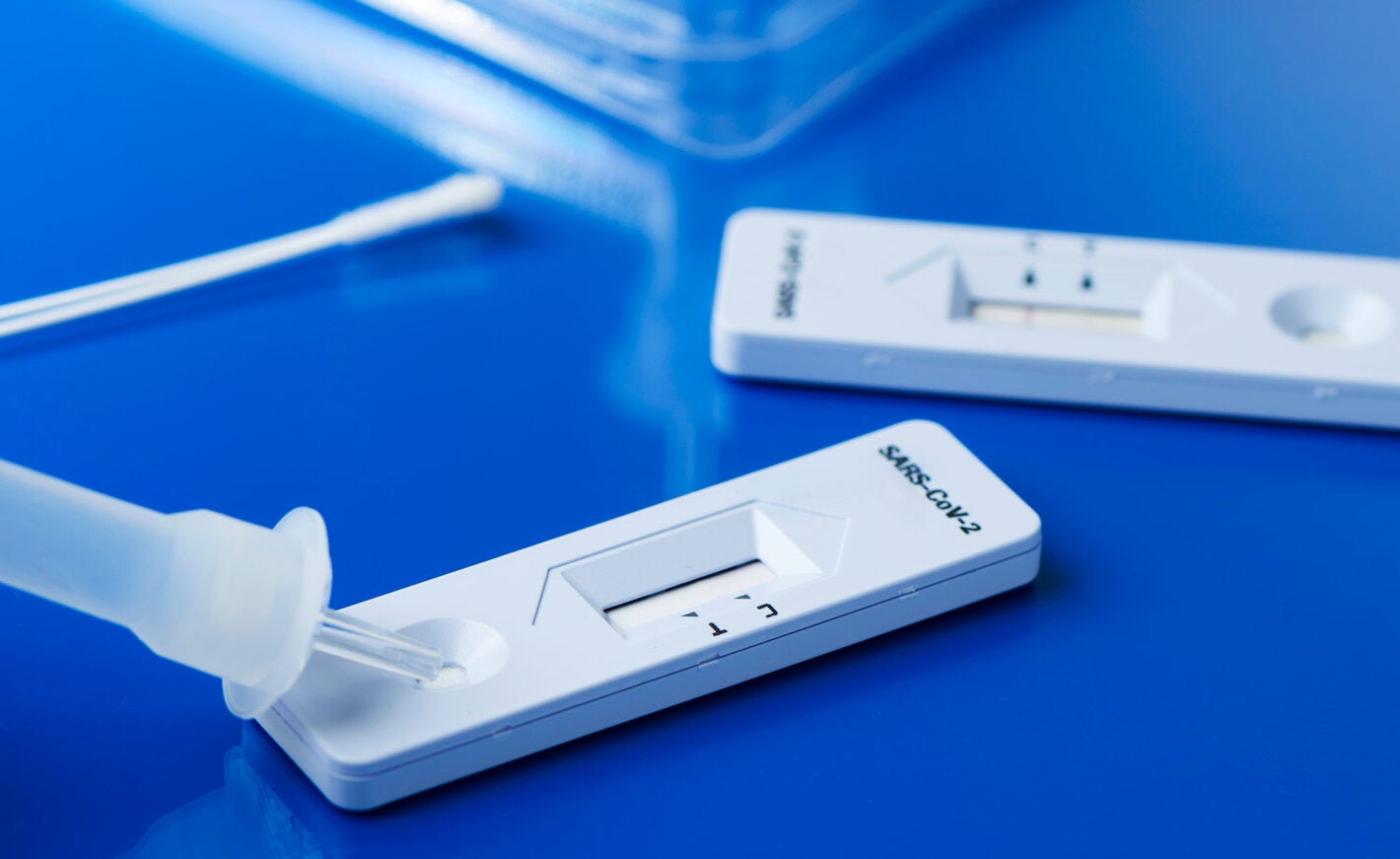
Now that 15-minute home tests are available, millions of people can get a quick reading on whether their symptoms are due to Covid-19 or something else.

The at-home tests, although very fast and convenient, are less sensitive than the tests available at most Covid-19 testing centers. The home tests are “antigen” tests, while the gold-standard tests available at medical facilities use another technology, RT-PCR. (I’ll explain a bit more about the technical differences at the end of this article.)

An at-home test is far preferable to leaving your home, possibly exposing others to the virus, and then waiting hours or overnight for test results. The question is, how accurate is it?

Very accurate, for the most part. The chance that you’ll get an incorrect reading from a rapid antigen test is less than 1%. But (there’s always a “but”) it depends on what you mean by accurate. By another measure, they are not quite so reliable.

Let’s dig into the numbers from two new studies, which looked at thousands of cases, and see what they tell us.

In the first study, published recently in JAMA, Joshua Gans and colleagues from the University of Toronto looked at over 900,000 rapid-antigen test results. As expected, the vast majority of the tests were negative, and only 1,322 (0.15% of the total) were positive. They collected results using more-sensitive PCR testing for 1,103 of the positive tests, which allowed them to check whether or not the rapid antigen tests were correct. (This assumes the PCR test is always right, which isn’t quite true either, but it’s a good approximation.)

Surprisingly, 462 (42%) of the positive results were negative when double-checked with PCR. In other words, these were false positives. The investigators tracked these tests back to the source, and they discovered that about 60% of the false positives all came from a single batch of the Abbott Panbio Covid-19 rapid tests. So apparently there was a lower-quality batch that yielded more false positives.

However, another way to look at this data is that the overall rate of false positives was still very low. Out of more than 900,000 tests, only 462 were false positives, which yields a false positive rate of just 0.05%.

Another way to explain this is: if you just walked in off the street, your chance of getting a false positive test was about half of 1%. But once you saw that your results were positive, the chance that the positive result was correct was only about 60%, at least in that study.

One thing lacking in the Toronto study is that the investigators didn’t test everyone with PCR. They only used PCR to double-check the positive tests, so that study doesn’t answer the question of how many infections might have been missed.

Fortunately, the second study answers that question.

In this study, released in late January as a preprint on medRxiv by a group of my Hopkins colleagues led by Zishan Siddiqui, the investigators looked at 1054 participants, and tested all of them with both a rapid antigen test and RT-PCR.

Even though this study looked at far fewer subjects (1000 versus 900,000), they checked everyone with PCR, which allowed them to measure both sensitivity and specificity; i.e., they could count how many infections the antigen test missed.

So how good was the rapid antigen test in this study? First, its sensitivity was 92.7%, meaning that it correctly identified 92.7% of people who had Covid-19, whether or not they had symptoms.

What about those false positives? Here the news was better than the Toronto study, but still far from perfect: about 28% of the positive results from the antigen test were false. That’s better than the 42% found in the Toronto study, but it still means that many positive results from the rapid tests turn out to be incorrect.

What’s the take-home message from these studies? Well, I’d summarize it in three points:

  1. The rapid antigen test is generally very accurate, and certainly worth taking if you have any reason to think you might have Covid-19. The chance that you’ll have an incorrect reading, either positive or negative, is very small, less than 1%.
  2. If you get a negative test, you can relax: over 99.5% of negative results are correct, meaning you truly don’t have Covid-19.
  3. If you do get a positive test, you probably have Covid-19, but there’s still a roughly 30% chance that you don’t. If possible, you should immediately get a followup test using RT-PCR, which is more accurate.

Addendum: for those who want to understand the difference between the rapid antigen test and RT-PCR, here’s a bit more on those.

The rapid antigen test contains molecules called antibodies that bind to a specific molecule, the nucleoprotein, which is present on the surface of the SARS-CoV-2 virus. The antibodies in the test kit are designed to bind to other molecules that create a small band of color on a test strip, so you can see the results as a colored band in just 15 minutes. The main drawback of these tests is that they sometimes fail to detect the virus. For more details, a good description can be found here.

The RT-PCR test detects the RNA that is the genetic code of the SARS-CoV-2 virus. Every virus particle contains this RNA, which is a sequence of about 30,000 “letters” or nucleotides. In RT-PCR tests, we first convert the virus’s RNA to DNA, and then amplify it to make millions of copies. Because this test uses an amplification step, it can detect tiny amounts of virus, which is why it is more sensitive than rapid antigen tests. However, it takes at least a few hours to run this test, so it’s not as fast as the antigen test. For more details about how these tests work, check out the NIH explanation here.

The mRNA vaccines are defeating COVID. Let's use them for the flu.


The last year has been a story of triumph in the vaccine world, with the rapid development of two highly successful vaccines for Covid-19, one developed by Moderna and the other by Pfizer and BioNTech. Now that flu season is approaching, why are we still using 50-year-old technology for the flu vaccine?

The reason the Covid-19 vaccines were developed so quickly is that they used a new, much faster and easier-to-create type of vaccine technology, based on messenger RNA, or mRNA. What’s even more exciting is that we now have an overwhelming amount of evidence, from real-world experience, that these vaccines are remarkably safe and effective.

Now, anti-vaxxers and the “vaccine hesitant” are claiming they don’t trust the vaccine because it was developed too fast. That’s ridiculous: the real reason they don’t trust the vaccine is because they’re consuming a steady diet of anti-vaccine nonsense, promoted by a combination of right-wing media and the Disinformation Dozen (who include left-wing as well as right-wing zealots). But let’s not go down that rabbit hole today.

So what is an mRNA vaccine? Here’s a brief explainer, and then we’ll look at the flu vaccine. (Note: feel free to skip ahead if you already understand the technology.)

Messenger RNA vaccines have been under development for decades, since long before Covid-19 appeared. The technology required a series of breakthroughs over the years, as described in a recent Nature news story, and many scientists contributed. It wasn’t used in vaccines in part because it wasn’t ready, but also because we rely on private companies to develop vaccines, and few of them were interested in investing in a new, not-yet-approved technology. But I digress.

Messenger RNA is the stuff that all of your cells use to translate your genes, which are encoded in DNA, into proteins. The basic process is that the DNA for a gene is copied into pieces of mRNA, where the DNA letters, ACGT, are replaced by slightly different (chemically) RNA letters, ACGU.

Every cell in your body is filled with mRNA, all the time. It’s the stuff of life, so of course it is totally safe. Each cell uses mRNA to make proteins, which do most of the actual work that keeps you alive.

Here’s the brilliant thing about mRNA vaccines: all they do is introduce some mRNA into your cells that encodes a single protein from the virus, which is called “Spike” in the case of the Covid-19 vaccines.

Your own cells then make the Spike protein, but they don’t make very much! They just make a few copies, because mRNA doesn’t last very long. And because there is no DNA copy of the Spike protein in your genome, once the mRNA in the vaccine breaks down, it’s gone forever.

The other brilliant thing is that your own immune system recognizes Spike as a foreign protein, and it generates cells that will recognize any future infections where the Spike protein is present. If you’re later infected by SARS-CoV-2 (the Covid-19 virus), your immune system is primed and ready, and in a large majority of cases it attacks and destroys the virus before you get sick.

So that’s it: an mRNA vaccine is simply a little package made of fat molecules (called liposomes) that contains a few copies of mRNA encoding a viral protein. There’s nothing to prevent us now from creating similar vaccines for the flu, or for other viruses where we need new vaccines. (In the case of flu, we can use mRNA for a gene called hemagglutinin, but again I digress.)

We make new flu vaccines every year, because the flu is constantly mutating. Most years, the flu vaccine isn’t a great match for the circulating strains of the virus, and therefore the vaccine isn’t very effective. In a good year it might be 60-70% effective, but in bad years it might be much worse. A big part of the problem comes from how we create the vaccine.

In the U.S., we make most of our flu vaccines by growing influenza viruses in chicken eggs. No, I’m not making this up. Around February of each year, a panel of experts selects 4 strains of the virus that they think will most likely match the viruses for the following flu season, which usually ramps up in November or December. (Here are this year’s choices.)

Once the experts have selected the vaccine strains, the manufacturing process begins, first by checking to see if all 4 strains will grow robustly in chicken eggs. If they don’t, the panel may have to switch to different strains that are less likely to work. No, I’m not kidding: the success of the flu vaccine depends on how well it grows in eggs. That’s one reason why, in some years, the flu vaccine is a flop. This would simply never happen if we used mRNA technology.

With mRNA vaccines, we don’t have to grow any viruses at all. The mRNA from a single gene–hemagglutinin for influenza–can simply be synthesized in large quantities, just as we’re now doing for the Spike protein in SARS-CoV-2. Or for an even more effective vaccine, we might add the gene for neuraminidase, the other protein in influenza that our immune system can “see.”

An mRNA vaccine for flu would be far cheaper to manufacture, not requiring huge chicken farms. (This year, 82% of flu doses in the U.S. were made this way.) Even more important, though, is that an mRNA vaccine for flu would likely be far more effective at controlling the severity of the infection itself.

Why aren’t we doing this already? Simply put, it’s because we rely on private companies to take the initiative, and it’s not worth it to them to test and validate an entirely new vaccine, which requires a substantial investment. There’s also a simple solution, the same one we used for Covid-19: the government should take the lead.

We’re now at the beginning of flu season, which almost disappeared last year thanks to our social distancing and masking behavior. I’ve had my flu shot, and millions more are being administered around the world. Just last week, an early report out of Europe indicated that the flu season this year might be “severe,” which is the last thing we need with Covid-19 still raging.

We don’t yet know if this year’s flu shot will be effective or not, but odds are, based on past performance, that it won’t be great. (It’s still much better than nothing, I should add.) If we want a better flu vaccine, now is the time to start developing a new one using mRNA. If private industry doesn’t step up, any one of dozens of countries have the expertise to do so instead.