Showing posts with label Fouchier. Show all posts

Panel recommends new controls on deadly gain-of-function research. Will the government listen?

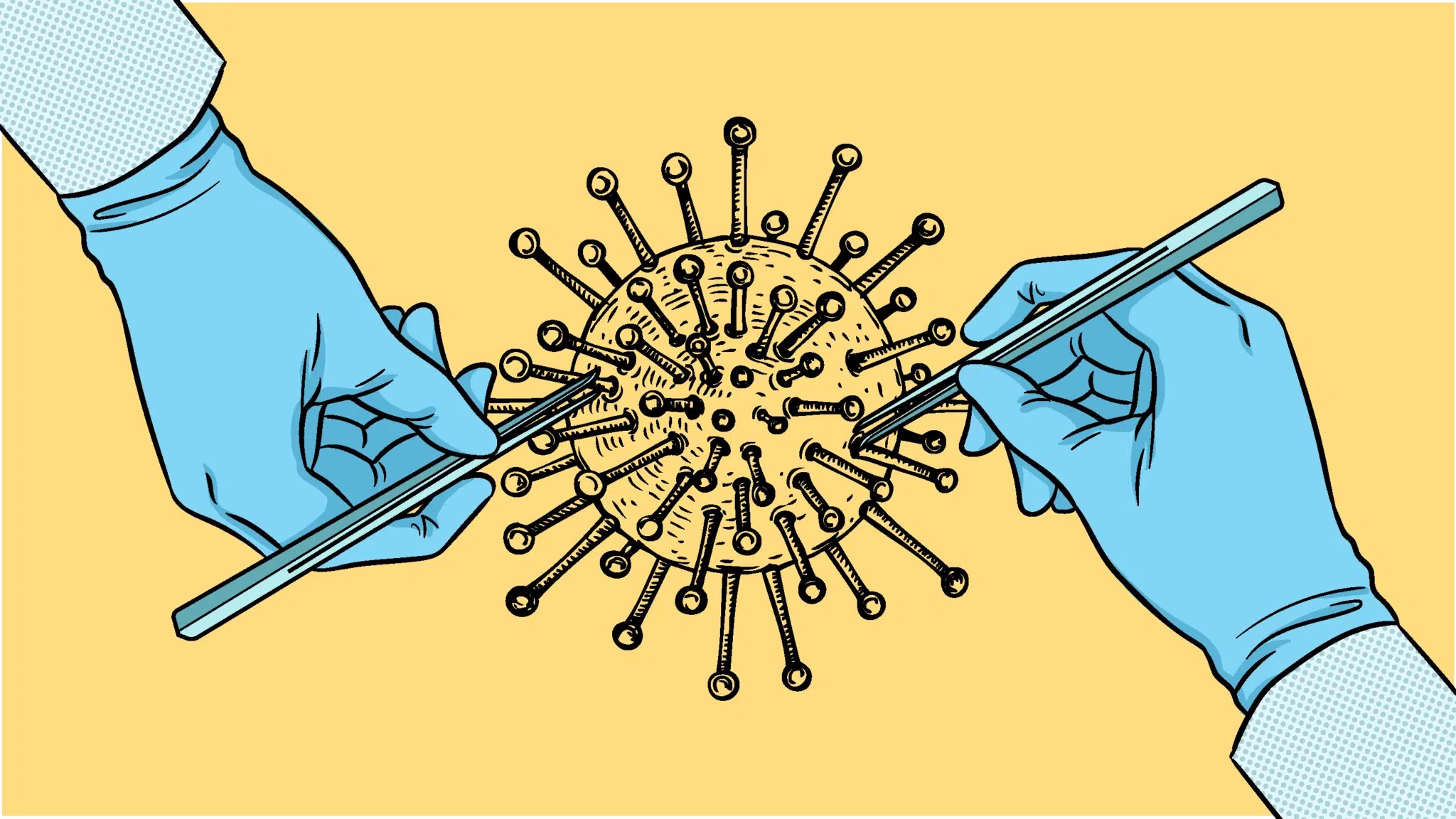
Illustration by Erik English

This past week, a government-appointed panel of scientists released a new report recommending 13 actions the U.S. government should take to control “gain-of-function” research that has the potential to create deadly new pathogens.

This has been a long time coming, but the first thing I want to point out is that this is just an advisory panel. The government hasn’t done anything yet. Let’s unpack what happened, shall we?

First, the panel is called the NSABB: the National Science Advisory Board for Biosecurity. The new report, which was at least 3 years in the making, was created in response to a decade’s worth of concerns, raised by many scientists (including me - see my previous articles here and here and here, among others), about the dangers of a specific kind of research known as gain-of-function.

What is gain-of-function (GoF) research? Well, it can include many scientific experiments, including some that are perfectly reasonable. But the term has been used most often to refer to experiments that are designed to take a virus such as influenza or SARS-CoV-2 and alter it intentionally to make it more deadly.

This seems crazy, right? Yet it’s been going on in the influenza virus research world for at least a decade, which is why many scientists have raised alarms.

The Covid-19 pandemic gave this issue much greater urgency, after suspicions arose that the Covid-19 virus, SARS-CoV-2, might have emerged (accidentally) from gain-of-function experiments at a major virology lab in Wuhan, China. (It probably didn’t, but we still don’t know for sure, as I’ve explained in previous columns.)

So back to the topic at hand: the new NSABB report. What do they recommend, and will it matter? I don’t want to go through all 13 recommendations, but overall it’s a very good start, if (and only if) the U.S. government takes them seriously and implements them all.

And the virology community is already pushing back - but first let me go into just three of the recommendations.

First, the panel recommends that the government require that all GoF research undergo federal-level review if the work is

“reasonably anticipated to enhance the transmissibility and/or virulence of any pathogen.”

Believe it or not, GoF research that does this kind of thing is going on right now, and there’s no rule saying it must be reviewed first.

Second, the panel recommends that the government only allow such research if there’s simply no better, lower-risk way to gain the same scientific insights. As they put it, scientists who want to do GoF work would have to prove that

“there are no feasible alternative methods ... that poses less risk ... and the risks are justified by the potential benefits.”

That’s a high bar to clear, but it seems eminently reasonable to insist upon it before allowing dangerous GoF research to proceed.

The panel also recommends that the new restrictions on gain-of-function research apply to all research in the U.S., regardless of whether it’s funded by the government. This is an important addition, as illustrated recently when Boston University, after being called out for dangerous gain-of-function experiments on the Covid-19 virus, claimed that they didn’t use NIH funds for this, so (they argued) they didn’t break any rules. Technically, they were correct. This recommendation will close that giant loophole.

There’s much more in the NSABB report, and my primary reaction is that (1) it’s a good start and (2) it’s not nearly enough. I’d like to see the government make a blanket statement that research that will make deadly viruses even more deadly is simply forbidden, at least for now. If someone wants an exception, they could make the case, but I’ve yet to see a good argument for these experiments.

What about that pushback from the virologists that I mentioned above? Well, in a lengthy commentary just published in the Journal of Virology, 156 virologists argue that gain-of-function research is wonderful! And it’s brought so many benefits! Just let us handle this, and don’t worry, they seem to be saying.

To make the benefits explicit, the 156 virologists include a table listing dozens of “useful examples” of gain-of-function research. Let’s look at just two of them.

Example 1: the virologists assert that experiments on a virus called M13 led to faster computers, citing a 2018 article. First, this is nonsense: no one has been a faster computer using a modified M13 virus. Second, the M13 virus is harmless to humans (it only infects bacteria), so it wouldn’t be subject to any regulations on GoF research in human pathogens.

Example 2: this one is even more outrageous. The table lists as a “benefit” an experiment that “established that H5N1 has capacity for mammalian transmissibility.” They then cite a notorious experiment from 2012 in which scientists intentionally modified a deadly bird flu virus (H5N1) in order to make it possible for the virus to be transmitted directly between mammals. This was one of the key experiments that led to the widespread alarm about GoF research in the first places. (I wrote about it back in 2013.)

So no, creating a more-deadly virus and then saying “see? look how dangerous this virus is?” is not what I’d call useful.

Clearly, the virologists who wrote this commentary do not want to see any restrictions at all on the kind of research they do. They just don’t see the need for it. Obviously, I disagree, as do many others, including many virologists who support the NSABB recommendations.

As I wrote at the beginning of this piece, the NSABB report is just a set of recommendations, and the government might not do anything. I hope that the government will implement all of them, and then go even further, and put a stop to the dangerous, sometimes reckless experiments that a very small minority of scientists are engaging in.

We need to study viruses, and we need to control infectious diseases, but we can do this without making pathogens more deadly.

Scientists restart bioweapons research, with NIH's blessing

For more than a decade now, two scientists–one in the U.S. and one in the Netherlands–have been trying to create a deadly human pathogen from avian influenza. That's right: they are trying to turn "bird flu," which does not normally infect people, into a human flu.

Not surprisingly, many scientists are vehemently opposed to this. In mid-2014, a group of them formed the Cambridge Working Group and issued a statement warning of the dangers of this research. The statement was signed by hundreds of scientists at virtually every major U.S. and European university. (Full disclosure: I am one of the signatories.)

In response to these and other concerns, in October 2014 the U.S. government called for a "pause" in this dangerous research. NIH Director Francis Collins said that his agency would study the risks and benefits before proceeding further.

Well, four years later, the risks and benefits haven't changed, but the NIH has (quietly) just allowed the research to start again, as we learned last week in an exclusive report from Science's Jocelyn Kaiser.

I can't allow this to go unchallenged. This research is so potentially harmful, and offers such little benefit to society, that I fear that NIH is endangering the trust that Congress places in it. And don't misinterpret me: I'm a huge supporter of NIH, and I've argued before that it's one of the best investments the American public can make. But they got this one really, really wrong.

For those who might not know, the 1918 influenza pandemic, which killed between 50 and 100 million people worldwide (3% of the entire world population at the time), was caused by a strain of avian influenza that made the jump into humans. The 1918 flu was so deadly that it "killed more American soldiers and sailors during World War I than did enemy weapons."

Not surprisingly, then, when other scientists (including me) learned about the efforts to turn bird flu into a human flu, we asked: why the heck would anyone do that? The answers were and still are unsatisfactory: claims such as "we'll learn more about the pandemic potential of the flu" and "we'll be better prepared for an avian flu pandemic if one occurs." These are hand-waving arguments that may sound reasonable, but they promise only vague benefits while ignoring the dangers of this research. If the research succeeds, and one of the newly-designed, highly virulent flu strains escapes, the damage could be horrific.

One of the deadliest strains of avian flu circulating today is H5N1. This strain has occasionally jumped from birds to humans, with a mortality rate approaching 50%, far more deadly than any human flu. Fortunately, the virus has never gained the ability to be transmitted directly between humans.

That is, it didn't have this ability until two scientists, Ron Fouchier in the Netherlands and Yoshihiro Kawaoka at the University of Wisconsin, engineered it to gain this ability. (Actually, their work showed that the virus could be transmitted between ferrets, not humans, for the obvious reason that you can't ethically test this on humans.)

Well, Fouchier and Kawaoka are back at it again. NIH actually lifted the "pause" in December 2017, and invited scientists to submit proposal for this type of research. Fouchier confidently stated at the time that all he had to do was "find and replace" a few terms in his previous proposal and it would likely sail through peer review. It appears he was correct, although according to the Science article, his study has been approved but not yet actually funded. Kawaoka's project is already under way, as anyone can learn by checking the NIH grants database.

And by the way: why the heck is a U.S. funding agency supporting research in the Netherlands anyway? If Fouchier's work is so great (and it isn't), let the Netherlands fund it.

I've said it before, more than once: engineering the flu to be more virulent is a terrible idea. It appears the review process at NIH simply failed, as multiple scientists stated to Vox last week. This research has the potential to cause millions of deaths.

Fouchier, Kawaoka, and their defenders (usually other flu scientists who also benefit from the same funding) like to claim that their project to engineer a deadlier bird flu will somehow help prevent a future pandemic. This argument is, frankly, nonsense: influenza mutates while circulating among millions of birds, and no one has any idea how to predict or control that process. (I should mention that I know a little bit about the flu, having published multiple papers on it, including this paper in Nature and this paper on H5N1 avian flu.)

Fouchier and Kawaoka have also argued that we can use their work to create stockpiles of vaccines in advance. Yeah, right. We don't even stockpile vaccines for the normal seasonal flu, because it mutates too fast, so we have to produce new vaccines each year. And the notion that anyone can predict a future pandemic strain so precisely that we could design a vaccine based on their prediction is laughable.

I can't quite fathom why NIH seems to be so enraptured with the work of these two labs that, rather than simply deny them funding, it has ignored the warnings of hundreds of scientists and now risks creating a new influenza pandemic. Much as I hate to say this, maybe it's time for Congress to intervene.

Research on artificially engineered flu strains expected to kill 2000 people per year

2,000 deaths expected for each year of research on how to turn avian flu into a more deadly virus. 

That’s the estimate in a new analysis by Harvard University’s Marc Lipsitch, professor and director of the Center for Communicable Disease Dynamics in the Harvard School of Public Health.

I heard Lipsitch present his results at an invitation-only hearing held at the National Academy of Sciences on December 15. The purpose of the two-day meeting, which was organized by the National Science Advisory Board for Biosecurity (NSABB), was to discuss the risks and benefits of “gain of function” research on viruses, especially the influenza virus.

What is gain-of-function (GOF) research? In this context, GOF means experiments designed to give a pathogen new powers, such as the ability to infect new species, or to jump from person to person more easily. Scientists have already conducted GOF experiments on the flu virus, and now they are considering other viruses including SARS and MERS.

What prompted the NSABB hearing was the series of experiments by researchers in the U.S. and the Netherlands designed to transform avian influenza (or “bird flu”) into a human-transmissible virus. These novel, lab-created flu strains have the potential to cause a worldwide pandemic. When virologists Ron Fouchier and Yoshi Kawaoka first published their experiments two years ago, the public, the press, and many members of the scientific community (including me; see here and here) expressed serious alarm. After a brief hiatus, though, the experiments continued. 

In mid-October, the U.S. government announced a “pause” in gain-of-function experiments, which has Fouchier, Kawaoka, and their colleagues very upset.

At the NSABB meeting in December, the vast majority of panelists were influenza researchers defending GOF research, arguing that it could lead to valuable insights about the flu. As a group, they seem to have convinced themselves that everything is fine, and they want to tell the rest of us that there’s nothing to worry about. Prof. Lipsitch (and a couple of other speakers) stood out as a voice of reason. He was one of the very few scientists who took a hard look at the risks and also pointed out alternative, low-risk methods for answering the same scientific questions.

Lipsitch conducted a careful risk analysis (something apparently not even considered by Fouchier and Kawaoka) looking at the chances of a virus escaping a lab, of such a virus causing further infections, the likely number of fatalities, and more. It turns out that the scientific community has excellent data quantifying all the key variables involved, as Lipsitch documented. He and his colleague Tom Inglesby just published these figures, with supporting data, in the journal mBio.

Using conservative estimates, many of them provided by influenza researchers themselves, Lipsitch calculated that for each year of gain-of-function research on pandemic viruses, we can expect at least 2,000 fatalities worldwide. And that’s only the low end: at the other extreme, this estimate rises to 1.4 million fatalities per year.

Lipsitch also described many other ways to study and defeat influenza, all of them with little or no risk, which he’s published in the journal PLoS Medicine. His point is that even if we accept the supposed benefits of GOF research, there are far less risky ways to obtain those same benefits.

One of the most ironic–or outrageous–claims of the pro-GOF scientists is that these experiments will help us predict future pandemic flu strains, and even help us design a vaccine in advance of outbreaks. The irony is that this year, the seasonal flu vaccine is a poor match to the strains that are circulating. This vaccine was chosen only 9 months ago, based on extensive surveillance of circulating flu strains, demonstrating how difficult it is to predict even the regular seasonal flu. As a result, we’re having a very bad flu season this year (aside: it's still worth getting the flu vaccine).

During the discussion at the NSABB meeting, an audience members observed that the claims of Fouchier, Kawaoka, and other pro-GOF scientists is hubris. She pointed out that not only are they claiming that they can predict future outbreaks–which no one has ever done accurately–but that we should invest billions of dollars stockpiling specially-designed vaccines based on their predictions. (This was indeed suggested by one of the presenters.) 

2000 deaths per year. And that’s only the direct risk: what about the risk from publishing these experiments? What happens when we provide instructions on how to build deadly biowarfare agents to anyone with an internet connection? Indeed, “gain of function” research on pandemic pathogens is really biowarfare research, which supposedly ended after the Cold War.


I’m a huge supporter of biomedical research and of NIH in general. NIH research has yielded tremendous benefits to the public health, as I’ve written before. We don’t need to overreact by cutting medical research in general, but we can make the “pause” in gain-of-function research permanent. There are far better things to do with our research funds. If you want to register your concerns, write to the NSABB at nsabb@od.nih.gov and tell them to recommend a permanent halt to gain-of-function research on pathogenic viruses.

Should the government allow scientists to create new super-viruses?

Let's suppose a bunch of scientists proposed to take one of the most infectious human viruses—influenza, say—and turn it into a super-bug. Is this a good idea?

Or to put it another way: should scientists be artificially mutating viruses so that they have the potential to become a worldwide pandemic?

Right about now you might be asking: is anyone actually doing this, and if so, what on earth are they thinking?

And yet, several of the world's most prominent influenza researchers have been engaged in exactly this enterprise for several years now. They call their work "gain of function" experiments, because they manipulating viruses to give them new (and very dangerous) functions.

I wrote about this last year, after a group led by Ron Fouchier at Erasmus Medical Center in the Netherlands and Yoshihiro Kawaoka of the University of Wisconsin announced, in a letter to Nature, that they were going to create a new strain of H7N9 influenza virus that had the potential to turn into a human pandemic. Sure enough, just a few months later, Fouchier published results showing they had done just that, although they reported that their newly engineered strain had only "limited" transmissibility between ferrets (the animal they used for all their experiments).

Fouchier and Kawaoka had already done the same thing with the deadly H5N1 "bird flu" virus, causing a huge outcry among scientists and the public. As reported in Science magazine almost three years ago, Fouchier admitted that his artificially mutated H5N1 was "probably one of the most dangerous viruses you can make."

And yet he did it anyway—and then did it again, with H7N9.

Many other scientists were and are extremely concerned about these experiments, which some of us consider dangerous and irresponsible. This past July, a large group of scientists known as the Cambridge Working Group (of which I am a member) released a statement calling for a hiatus, saying:
"Experiments involving the creation of potential pandemic pathogens should be curtailed until there has been a quantitative, objective and credible assessment of the risks, potential benefits, and opportunities for risk mitigation, as well as comparison against safer experimental approaches."
Just two days ago, the U.S. government responded, announcing that it was going to take a serious look at whether creating these superbugs is a good idea. The Office of Science and Technology Policy (OSTP) is creating two committees to "assess the potential risks and benefits" of these experiments, particularly those involving the influenza, SARS, and MERS viruses.

Until the committees come up with recommendations, the government is halting any new funding for these experiments and asking for a voluntary "pause" on existing work.

Not surprisingly, Fouchier and his colleagues have argued that their work has benefits; that it has "contributed to our understanding of host adaptation by influenza viruses, the development of vaccines and therapeutics, and improved surveillance." Yet these arguments are tenuous at best. Fouchier and company have failed to show that the mutations they found in ferret experiments are likely to occur in the natural course of human outbreaks, which means that using their viruses for vaccine development would be a huge mistake.

And to claim that creating super-viruses in the lab will lead to "improved surveillance" is, frankly, laughable. Surveillance means getting out in the field and collecting samples from sick people. Gain-of-function laboratory experiments have basically nothing to do with surveillance.

Harvard's Marc Lipitsch has been one of the prominent voices arguing against this line of research, writing just last week that the scientific benefits of these experiments are very limited, for reasons detailed in his article. Lipitsch is also one of the founding members of the Cambridge Working Group.

According to the announcement from The White House, the first committee to evaluate the merit of these experiments will meet in just a few days, on 22 October. Meetings will continue throughout the winter, with recommendations expected sometime in the spring of 2015.

We have enough problems with influenza, and now with Ebola too, without scientists creating incredibly deadly new viruses that might accidentally escape their labs. Let's hope that the OSTP does the right thing and shuts down these experiments permanently.