Showing posts with label NIAID. Show all posts

Gain-of-function experiments at Boston University have created a deadly new COVID virus. Who authorized this?


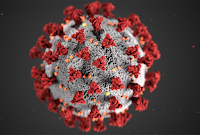
Schematic of the Covid-19
 virus, SARS-CoV-2

After all the controversy over the past few years about gain-of-function research on viruses, especially the Covid-19 virus, I thought this kind of work was on hold, at least in the U.S. Indeed, the controversy grew so hot that NIH issued a statement in May of 2021 declaring that it wouldn’t support such work.

Nonetheless, some scientists continue to pursue gain-of-function work. In a new study, just released on the preprint server bioRxiv, a group of virologists at Boston University did the following. They took the Spike protein from the Omicron BA.1 strain of SARS-CoV-2 (that’s the strain that spread throughout the world last winter, often slipping past the protection offered by vaccines) and combined it with an early 2020 strain of the Covid-19 virus.

This experiment gave them a brand-new, never-before-seen strain of Covid-19. Was it more deadly? You bet!

In their experiments, the BU scientists infected laboratory mice with the original Omicron virus, which caused “mild, non-fatal infection.” But when they infected mice with their new, recombinant virus, which they called Omi-S, 80% of the mice died. To quote from their article:


“the Omicron S-carrying virus inflicts severe disease with a mortality rate of 80%.”


Well, that’s just great. Making matters worse, the researchers found that the new recombinant virus also replicated much faster in mice: “Omi-S-infected mice produced 30-fold more infectious virus particles compared with Omicron-infected mice.” Yes, you read that right: Omi-S might grow 30 times faster than the garden-variety Omicron strain.

This, dear readers, is what we mean by “gain of function” research. The scientists took sequences from two different strains of the Covid-19 virus, one of which was relatively mild, and created a new strain that is far more infectious and far more deadly. As many scientists (and others) have pointed out, research like this carries great risks, foremost among them the chance that an accidental lab leak could create a new pandemic, killing millions of people.

And the benefits? There must be some pretty major benefits to offset this risk, right? Well, not exactly. The researchers say that these experiments show that the pathogenicity of the Covid virus is determined primarily by something other than the Spike protein. That’s a pretty narrow finding, and the authors don’t seem to consider that they might have learned this without creating an entirely new, more-lethal virus.

Does this work violate NIH policies? The NIH director has stated that

“neither NIH nor NIAID have ever approved any grant that would have supported ‘gain-of-function’ research on coronaviruses that would have increased their transmissibility or lethality for humans.”

First, let me point out that this is a very narrow statement: the NIH doesn’t deny that it funds gain-of-function work on viruses, because it does. They even put a “pause” on such work for 3 years, but they lifted it (regrettably) in 2017. I wrote about that at the time (“NIH Re-opens the Door to Creation of Super-Viruses,” December 2017).

Second, the NIH policy carefully says they don’t support work that would make viruses more deadly for humans. The BU study only looked at mice, so one might argue that it wasn’t making the viruses more deadly in humans–but there’s simply no way we can tell that, not unless we intentionally infect someone. Having read the paper, this work seems to me to be a clear violation of NIH rules.

Boston University and the researchers who led the study disagree. In a statement issued last week, BU officials wrote:

“First, this research is not gain-of-function research, meaning it did not amplify the Washington state SARS-CoV-2 virus strain or make it more dangerous.”

Let’s take a look at this denial, shall we? First, let me reiterate that the new experiments combined 2 strains of the Covid-19 virus: the Omicron strain, which has been the main strain infecting humans since last winter, and an earlier strain that was collected from a patient in Washington state in 2020. The Omicron strain causes only mild infections in mice, but the new Omi-S strain–the one that Boston University scientists created in their lab–kills 80% of them. The Washington state strain, which is no longer circulating in people and thus isn’t a current threat, kills 100% of mice.

So that is the BU argument: because Omi-S is less deadly than one of its parental strains, the research doesn’t meet the definition of gain-of-function.

Sorry, but this argument is just nonsense. You don’t get to redefine gain-of-function in the same sentence where you’re denying you’ve done it. These experiments created a brand-new, recombinant strain of Covid-19, and that strain was much more infectious and much more deadly than Omicron, which is one of the strains it was created from. This is precisely what most scientists mean when they describe gain-of-function research and the risks that it carries.

Furthermore, we have no idea how this virus will behave in humans. It might be far more deadly than Omicron in people. Let’s hope we never find out.

And what about that 80% mortality rate? According to Prof. Ronald Corley, Director of BU’s National Emerging Infectious Diseases Laboratories (NEIDL), “This was a statement taken out of context for the purposes of sensationalism, and it totally misrepresents not only the findings, but [also] the purpose of the study.”

Out of context? Well, here’s what the scientists themselves wrote in the very first paragraph (the abstract) of their paper: “We generated chimeric recombinant SARS-CoV-2 encoding the S gene of Omicron in the backbone of an ancestral SARS-CoV-2 isolate and compared this virus with the naturally circulating Omicron variant.... In K18-hACE2 mice, while Omicron causes mild, non-fatal infection, the Omicron S-carrying virus inflicts severe disease with a mortality rate of 80%.”

That’s the scientists’ own statement, and it’s not out of context. The authors themselves were emphasizing this dramatic mortality rate.

The experiments also present another problem for BU. Despite being funded by multiple NIH grants, neither the scientists themselves nor Boston University appears to have informed NIH about this work, which is a requirement for gain-of-function research.

BU officials addressed this problem by stating, first, that the NIH funds only supported some of the underlying “tools and platforms,” and that NIH funds did not directly support the research. Really, BU? How stupid do you think we are? Money, as we all know, is fungible.

Second, according to BU, “there was no gain of function with this research. If at any point there was evidence that the research was gaining function, under both NIAID and our own protocols we would immediately stop and report.” (Read the full BU statement here.)

Well, I would say that when those mice started dying, you had some pretty good evidence that “the research was gaining function.”

I’ve been in touch with multiple virologists who take a similar view. Simon Wain-Hobson, an Emeritus Professor at the Pasteur Institute, wrote to tell me that the BU research “is a GOF outcome in that the recovered virus is more pathogenic than the parental (backbone) virus, albeit in a transgenic mouse setting.” Prof. Wain-Hobson also pointed out that this work “provides a road map to [creating] a virus that might be dangerous to man. By posting this, these authors are making life easier for the next person or copycat.”

Another virologist, Dr. Valentin Bruttel of the University of Würzburg, pointed out the same problems and more, writing that:

• [the experiments] could have produced a virus that is “way more lethal” than the original SARS-CoV-2 strain
• “the study is useless for the general population, because the chance that exactly this Omi-Spike [would] recombine with an extinct variant [the Washington state strain] are zero,”
• “the chimeric virus could cause more severe disease in humans than estimated from mouse data.”

Like Prof. Wain-Hobson, Dr. Bruttel also pointed out that “any terrorist group could copy the BU group’s protocols.”

What does NIH think? They don’t appear convinced by the BU denials. According to an article in The Hill, “NIH is examining the matter to determine whether the research” fits the definition of gain-of-function. And as reported by Helen Branswell in Stat last week, an NIAID official said that NIH should have been informed, at a minimum so that they could determine whether or not the research was permitted under NIH’s gain-of-function rules.

I contacted the lead author of the study to get his response, but he did not reply.

The bottom line here is that some virologists (by no means a majority) believe that conducting gain-of-function research on the Covid-19 virus is just fine. Many other scientists disagree, and strongly. Some have pointed out that this work is qualitatively no different from biowarfare research. I’ve been warning about the risks for years, and I’m certainly not the only one.

Merely requiring scientists to inform the government, which is the current NIH policy, is not enough. We need to shut this research down and take a long, hard look at it before any such experiments can go forward again.

RNA vaccines have arrived. Let's starting making them for influenza, right now.

The race to end the Covid-19 pandemic will be won by vaccines. We now have at least four approved vaccines, and the first two–the fastest to be developed and approved–were both RNA vaccines, a new technology that has never before been used on a large scale.

As I’ve written before, these RNA vaccines are a scientific triumph. Both the Moderna vaccine and the Pfizer/BioNTech vaccine are 95% effective against the virus. Both were developed in a matter of days–days!–after the genome sequence of the Covid-19 virus, SARS-CoV-2, was first revealed.

Now that we know that RNA vaccines work, what’s stopping us from designing and deploying this technology for many other infections that we don’t yet have under control? Simply put: nothing. We just need to have the will to do it, and it will happen. By which I mean, we need the government to pay for it.

Once Covid-19 fades, as it will, we’ll still have to deal with influenza, which sweeps through the population every year, often mutating significantly from the previous year. That’s why we need a new flu vaccine every year: the flu itself mutates to escape the protection we have from last year’s vaccine.

(Aside: we’re in the midst of the mildest flu season in decades, perhaps ever, thanks to the Covid-19 restrictions. The CDC reports fewer than 100 confirmed cases of influenza in the entire country, at a time when we’d usually be seeing thousands of cases per week.)

RNA vaccines are remarkably easy to design, and they’re much cheaper than conventional vaccines too. We should be thinking about making them for a raft of illnesses now: not just flu, but malaria, HIV, and others. But let’s start with the flu.

We already know that we need a new flu vaccine every year, so here’s a not-so-radical proposal: let’s create an RNA vaccine for the flu, right now, paid for by the government. It’s almost certain to work, and it will likely work far better than the current vaccine. Here’s why.

For the current flu vaccines, we create a new vaccine every year based on what’s currently circulating among humans. For the Northern hemisphere, we choose the vaccine strain right around now (late January or early February), because it takes 6 months to prepare the vaccine for the following fall.

The flu vaccine production uses a crude, decades-old process. After choosing a vaccine strain, the manufacturers (GlaxoSmithKline is one) isolate the virus and then inject it into chicken eggs, where they let it grow for 4-5 days. The virus is then extracted from the eggs, killed, and stuck into a syringe. That’s basically it. (This is why people who have egg allergies are sometimes warned not to get the flu vaccine.)

There are loads of problems with this process. First, it often turns out (and this is not widely known) that the first choice for a vaccine strain doesn’t grow well in eggs. In those years, the manufacturers move on to a second, third, or fourth choice, until they find one that grows in chicken eggs. These inferior choices, in turn, lead to vaccines that are less effective at conferring immunity.

Second, the process requires huge, messy chicken farms, which means it is slow and costly. Third, even though the virus is a killed virus, there’s always a small chance that some live virus will survive and infect people.

RNA vaccines, in contrast, can be manufactured precisely to match the virus that you wish to target. There’s no need to grow it in chicken eggs. And it’s far cheaper to make. In addition, you only need a fragment of a virus to make the vaccine, so there’s zero chance that anyone can ever be infected from the vaccine. And we know exactly what to target on the influenza virus: the hemagluttinin and neuraminadase proteins that cover the surface of the virus.

If RNA vaccines are so good, one could argue, why not allow the free market to produce them? Because it just won’t happen: the flu vaccine is not very profitable, and getting an entirely new vaccine approved is very expensive. Private companies just aren’t going to do it; on the contrary, several past flu vaccine manufacturers dropped out of the business because it just wasn’t profitable.

(Interesting story: about 15 years ago, I attended a talk by Anthony Fauci about influenza. At the time, I was leading a large-scale effort to sequence thousands of influenza viruses, a project that continues to this day and that is run by Dr. Fauci’s institute, NIAID. At the end of his talk, I asked Dr. Fauci why the NIH itself couldn’t sponsor flu vaccine development. He answered that it just wasn’t done that way–that NIH handled the basic research, but left vaccine development to industry. Well, Covid-19 has changed all that.)

We don’t have to create a new government-run facility to make the vaccines in order for this to work. Instead, we can do exactly what we did for Covid-19: pre-purchase a large supply of RNA-based flu vaccines, and provide generous funding to pay for the vaccine development and testing. Then companies like Moderna and Pfizer will have proper incentives to use their technology on influenza.

The health benefits of new, better vaccines are far too important to leave this to private companies, who are motivated more by profits than by an interest in public health. Let’s use the scientific success of RNA vaccines to change the way vaccine development works in a big way. We can save untold numbers of lives if we do.

Scientists restart bioweapons research, with NIH's blessing

For more than a decade now, two scientists–one in the U.S. and one in the Netherlands–have been trying to create a deadly human pathogen from avian influenza. That's right: they are trying to turn "bird flu," which does not normally infect people, into a human flu.

Not surprisingly, many scientists are vehemently opposed to this. In mid-2014, a group of them formed the Cambridge Working Group and issued a statement warning of the dangers of this research. The statement was signed by hundreds of scientists at virtually every major U.S. and European university. (Full disclosure: I am one of the signatories.)

In response to these and other concerns, in October 2014 the U.S. government called for a "pause" in this dangerous research. NIH Director Francis Collins said that his agency would study the risks and benefits before proceeding further.

Well, four years later, the risks and benefits haven't changed, but the NIH has (quietly) just allowed the research to start again, as we learned last week in an exclusive report from Science's Jocelyn Kaiser.

I can't allow this to go unchallenged. This research is so potentially harmful, and offers such little benefit to society, that I fear that NIH is endangering the trust that Congress places in it. And don't misinterpret me: I'm a huge supporter of NIH, and I've argued before that it's one of the best investments the American public can make. But they got this one really, really wrong.

For those who might not know, the 1918 influenza pandemic, which killed between 50 and 100 million people worldwide (3% of the entire world population at the time), was caused by a strain of avian influenza that made the jump into humans. The 1918 flu was so deadly that it "killed more American soldiers and sailors during World War I than did enemy weapons."

Not surprisingly, then, when other scientists (including me) learned about the efforts to turn bird flu into a human flu, we asked: why the heck would anyone do that? The answers were and still are unsatisfactory: claims such as "we'll learn more about the pandemic potential of the flu" and "we'll be better prepared for an avian flu pandemic if one occurs." These are hand-waving arguments that may sound reasonable, but they promise only vague benefits while ignoring the dangers of this research. If the research succeeds, and one of the newly-designed, highly virulent flu strains escapes, the damage could be horrific.

One of the deadliest strains of avian flu circulating today is H5N1. This strain has occasionally jumped from birds to humans, with a mortality rate approaching 50%, far more deadly than any human flu. Fortunately, the virus has never gained the ability to be transmitted directly between humans.

That is, it didn't have this ability until two scientists, Ron Fouchier in the Netherlands and Yoshihiro Kawaoka at the University of Wisconsin, engineered it to gain this ability. (Actually, their work showed that the virus could be transmitted between ferrets, not humans, for the obvious reason that you can't ethically test this on humans.)

Well, Fouchier and Kawaoka are back at it again. NIH actually lifted the "pause" in December 2017, and invited scientists to submit proposal for this type of research. Fouchier confidently stated at the time that all he had to do was "find and replace" a few terms in his previous proposal and it would likely sail through peer review. It appears he was correct, although according to the Science article, his study has been approved but not yet actually funded. Kawaoka's project is already under way, as anyone can learn by checking the NIH grants database.

And by the way: why the heck is a U.S. funding agency supporting research in the Netherlands anyway? If Fouchier's work is so great (and it isn't), let the Netherlands fund it.

I've said it before, more than once: engineering the flu to be more virulent is a terrible idea. It appears the review process at NIH simply failed, as multiple scientists stated to Vox last week. This research has the potential to cause millions of deaths.

Fouchier, Kawaoka, and their defenders (usually other flu scientists who also benefit from the same funding) like to claim that their project to engineer a deadlier bird flu will somehow help prevent a future pandemic. This argument is, frankly, nonsense: influenza mutates while circulating among millions of birds, and no one has any idea how to predict or control that process. (I should mention that I know a little bit about the flu, having published multiple papers on it, including this paper in Nature and this paper on H5N1 avian flu.)

Fouchier and Kawaoka have also argued that we can use their work to create stockpiles of vaccines in advance. Yeah, right. We don't even stockpile vaccines for the normal seasonal flu, because it mutates too fast, so we have to produce new vaccines each year. And the notion that anyone can predict a future pandemic strain so precisely that we could design a vaccine based on their prediction is laughable.

I can't quite fathom why NIH seems to be so enraptured with the work of these two labs that, rather than simply deny them funding, it has ignored the warnings of hundreds of scientists and now risks creating a new influenza pandemic. Much as I hate to say this, maybe it's time for Congress to intervene.