Panel recommends new controls on deadly gain-of-function research. Will the government listen?

Illustration by Erik English

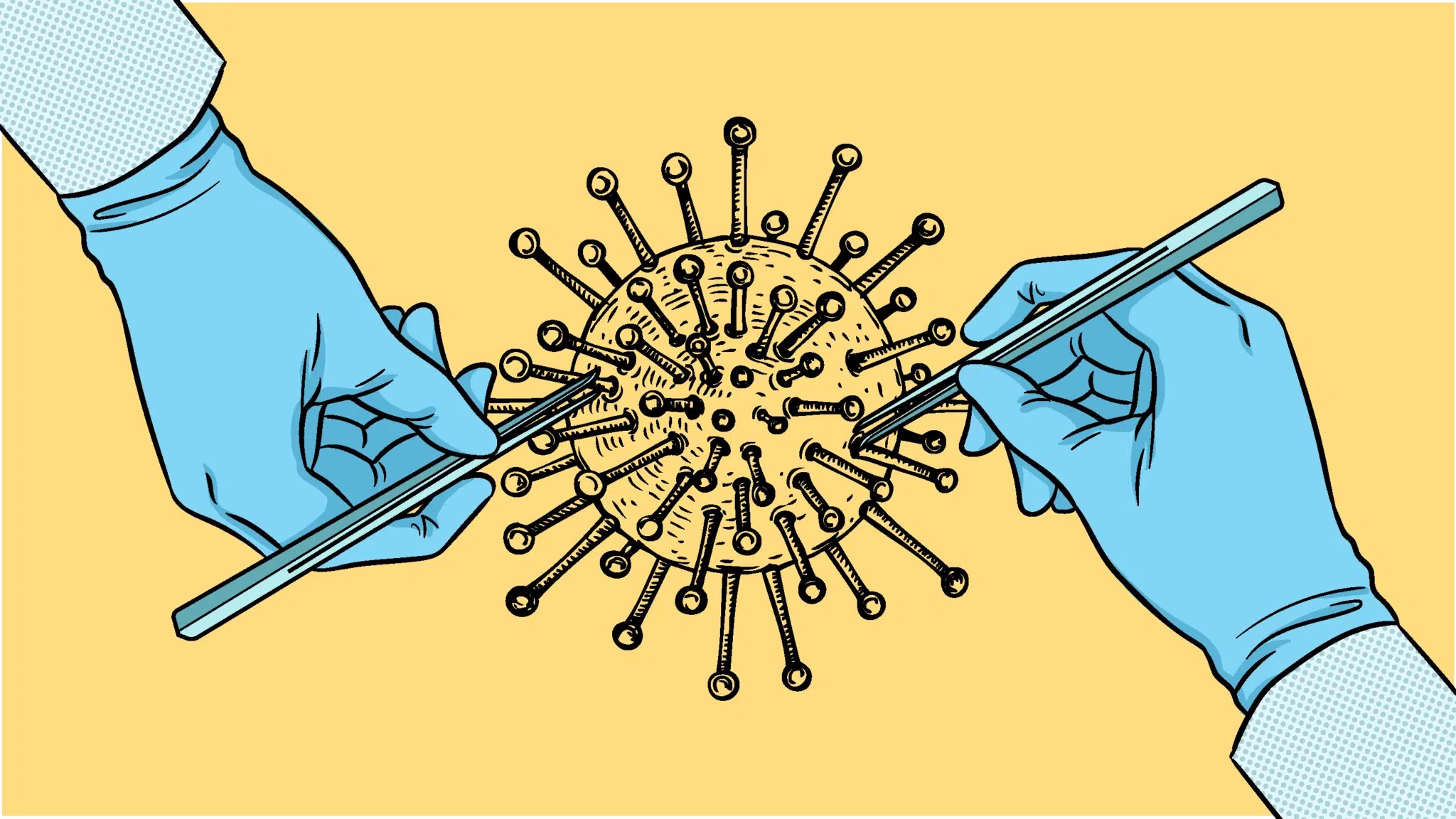
This past week, a government-appointed panel of scientists released a new report recommending 13 actions the U.S. government should take to control “gain-of-function” research that has the potential to create deadly new pathogens.

This has been a long time coming, but the first thing I want to point out is that this is just an advisory panel. The government hasn’t done anything yet. Let’s unpack what happened, shall we?

First, the panel is called the NSABB: the National Science Advisory Board for Biosecurity. The new report, which was at least 3 years in the making, was created in response to a decade’s worth of concerns, raised by many scientists (including me - see my previous articles here and here and here, among others), about the dangers of a specific kind of research known as gain-of-function.

What is gain-of-function (GoF) research? Well, it can include many scientific experiments, including some that are perfectly reasonable. But the term has been used most often to refer to experiments that are designed to take a virus such as influenza or SARS-CoV-2 and alter it intentionally to make it more deadly.

This seems crazy, right? Yet it’s been going on in the influenza virus research world for at least a decade, which is why many scientists have raised alarms.

The Covid-19 pandemic gave this issue much greater urgency, after suspicions arose that the Covid-19 virus, SARS-CoV-2, might have emerged (accidentally) from gain-of-function experiments at a major virology lab in Wuhan, China. (It probably didn’t, but we still don’t know for sure, as I’ve explained in previous columns.)

So back to the topic at hand: the new NSABB report. What do they recommend, and will it matter? I don’t want to go through all 13 recommendations, but overall it’s a very good start, if (and only if) the U.S. government takes them seriously and implements them all.

And the virology community is already pushing back - but first let me go into just three of the recommendations.

First, the panel recommends that the government require that all GoF research undergo federal-level review if the work is

“reasonably anticipated to enhance the transmissibility and/or virulence of any pathogen.”

Believe it or not, GoF research that does this kind of thing is going on right now, and there’s no rule saying it must be reviewed first.

Second, the panel recommends that the government only allow such research if there’s simply no better, lower-risk way to gain the same scientific insights. As they put it, scientists who want to do GoF work would have to prove that

“there are no feasible alternative methods ... that poses less risk ... and the risks are justified by the potential benefits.”

That’s a high bar to clear, but it seems eminently reasonable to insist upon it before allowing dangerous GoF research to proceed.

The panel also recommends that the new restrictions on gain-of-function research apply to all research in the U.S., regardless of whether it’s funded by the government. This is an important addition, as illustrated recently when Boston University, after being called out for dangerous gain-of-function experiments on the Covid-19 virus, claimed that they didn’t use NIH funds for this, so (they argued) they didn’t break any rules. Technically, they were correct. This recommendation will close that giant loophole.

There’s much more in the NSABB report, and my primary reaction is that (1) it’s a good start and (2) it’s not nearly enough. I’d like to see the government make a blanket statement that research that will make deadly viruses even more deadly is simply forbidden, at least for now. If someone wants an exception, they could make the case, but I’ve yet to see a good argument for these experiments.

What about that pushback from the virologists that I mentioned above? Well, in a lengthy commentary just published in the Journal of Virology, 156 virologists argue that gain-of-function research is wonderful! And it’s brought so many benefits! Just let us handle this, and don’t worry, they seem to be saying.

To make the benefits explicit, the 156 virologists include a table listing dozens of “useful examples” of gain-of-function research. Let’s look at just two of them.

Example 1: the virologists assert that experiments on a virus called M13 led to faster computers, citing a 2018 article. First, this is nonsense: no one has been a faster computer using a modified M13 virus. Second, the M13 virus is harmless to humans (it only infects bacteria), so it wouldn’t be subject to any regulations on GoF research in human pathogens.

Example 2: this one is even more outrageous. The table lists as a “benefit” an experiment that “established that H5N1 has capacity for mammalian transmissibility.” They then cite a notorious experiment from 2012 in which scientists intentionally modified a deadly bird flu virus (H5N1) in order to make it possible for the virus to be transmitted directly between mammals. This was one of the key experiments that led to the widespread alarm about GoF research in the first places. (I wrote about it back in 2013.)

So no, creating a more-deadly virus and then saying “see? look how dangerous this virus is?” is not what I’d call useful.

Clearly, the virologists who wrote this commentary do not want to see any restrictions at all on the kind of research they do. They just don’t see the need for it. Obviously, I disagree, as do many others, including many virologists who support the NSABB recommendations.

As I wrote at the beginning of this piece, the NSABB report is just a set of recommendations, and the government might not do anything. I hope that the government will implement all of them, and then go even further, and put a stop to the dangerous, sometimes reckless experiments that a very small minority of scientists are engaging in.

We need to study viruses, and we need to control infectious diseases, but we can do this without making pathogens more deadly.

Are there two sides in the vaccine debate?

from December 2020.

I keep getting into debates with people about the safety and efficacy of vaccines. I’m not talking about anti-vaxxers (though I’ve encountered plenty of them), but level-headed, rational people who genuinely have doubts.

Usually their doubts about vaccines come from dubious sources, but there’s so much misinformation out there, often coming from people with the letters M.D. or Ph.D. after their names, that I can understand why it’s confusing.

So let me engage in what is sometimes called “both-sides-ism” (a disparaging term, of course) and consider, briefly, the pluses and minuses of vaccines. While I’m at it, I’ll include some points specific to the Covid-19 vaccines.

Let’s start with the pluses, shall we?

  1. Vaccines are the single greatest public health innovation in the history of medicine. They’ve saved millions of lives.
  2. Vaccines completely eliminated smallpox from the planet. They have nearly (but not quite, due to anti-vax resistance) eliminated polio.
  3. The new mRNA vaccines for Covid-19 are remarkably effective, have very few side effects, and are easy to modify as the virus itself mutates over time.
  4. Vaccines protect us so thoroughly against childhood infections that many formerly common infections–including measles, mumps, and Haemophilus influenza–have almost disappeared.
  5. Child mortality from infectious has plummeted in countries with robust early childhood vaccine programs.
  6. The vaccine against human papillomavirus (HPV) will prevent many thousands of cases of cervical cancer, throat cancer, and other cancers, saving lives for decades to come.
  7. Vaccines train our immune system to recognize and fight off infections, in many cases stopping the infection before we even have symptoms.

I could go on, but the bottom line is that vaccines continue to save millions of lives every year. They also dramatically reduce non-fatal illnesses, sparing people a great deal of suffering as well as long-term harms caused by some infections. (For example, mumps can cause permanent hearing loss.)

Given all of these benefits, you might wonder why everyone doesn’t get every vaccine available. Well, some people do, and part of the answer is simply that we don’t have enough vaccines for everyone, and many countries lack the public health infrastructure to deliver vaccines. But there are a few very small minuses, so let’s consider the downsides of vaccines:

  1. The shot (or “jab”) hurts a little bit, and your arm might be sore for a day.
  2. In very rare cases with some vaccines, some people might have allergic reactions. One example is that some flu vaccines are manufactured in chicken eggs, and people with egg allergies might react to those.
  3. In a few rare cases, the live polio virus vaccine has caused some people to get polio. This vaccine was discontinued in the U.S. decades ago.
  4. In rare cases, some people might have an immune response to a vaccine that causes ongoing inflammation. This includes the Covid-19 vaccine. However, the risk is much smaller than the risks associated with an actual infection.

That’s pretty much it. I hope it’s clear that the pluses far outweigh the minuses, but I imagine that some people looking at this list are wondering why I didn’t include a host of other supposed harms of vaccines, such as an increased risk of autism.

That’s because vaccines don’t cause autism or any other neurological disorder, as I’ve written before. Studies involving hundreds of thousands of people have been done to investigate this possibility, starting in the early 2000s, and all of the science points the same way: vaccines do not cause autism.

This supposed risk, and others like it, are inventions of the modern anti-vaccine movement. I won’t go into the history of the anti-vax movement here (I’ve done that before, many times), except to point out that many people promoting anti-vax misinformation are making lots of money selling “cures” for problems that don’t exist in the first place.

Anti-vaxxers continue to invent new harms caused by vaccines, and spread these claims on social media. Even with no evidence whatsoever, some of these claims catch on, because - well, the Internet.

Now back to the title of this column: are there really two sides to the vaccine debate?

Well, no.

Among doctors, scientists, and public health professionals, virtually everyone agrees with my first point in the “pluses” list above. However, we all recognize that when a foreign substance (a vaccine) is injected into one’s body, it’s possible that something unexpected might happen, and we must continually monitor vaccines so that we’ll know if something goes awry.

Let me end with an analogy. Seat belts in cars have been around for decades, and they’ve prevented millions of injuries and deaths. And yet people have argued (and probably still do) that it’s possible that wearing a seat belt might cause harm, for example if the belt jams and one cannot escape a burning car after an accident. (This seems to happen all too often in movies.) Thus you can’t argue that wearing a seat belt is 100% risk-free. Even so, wearing a seat belt is a really good idea, because the benefits are so much greater than the risks.

The same is true of vaccines. There might be some very, very small risks, but the benefits vastly outweigh them. And modern vaccines are safer than ever. There’s no serious debate about that.

Do telomeres measure our true biological age, and can we do anything to maintain them?


Telomeres are one of the keys to aging. We’ve known this for decades, and the scientists who first figured it out won the Nobel Prize in 2009. (One of them was my former colleague at Johns Hopkins University, Carol Greider.) Not surprisingly, many people have been trying, ever since, to use this discovery to slow down or reverse the aging process.

No luck so far, but that doesn’t mean you can’t spend money on your telomeres.

Over the past decade or so, a number of companies have started offering to measure your telomere length, which they suggest will tell your true, biological age. Sometimes, along with these measurements, they will offer to sell you something that they claim maintains or even lengthens your telomeres, thereby making you younger. What’s all the fuss?

Well, let’s start by explaining what telomeres are. Every cell in your body contains your DNA, arranged into 23 pairs of chromosomes. (That’s the origin of the company name for 23andMe, by the way.) Your chromosomes are very long strings of DNA letters (usually written A, C, G, and T). Through a quirk of biology, the very tips of our chromosomes are special: they contain thousands of copies, repeated end-to-end, of the 6-letter sequence TTAGGG. These are the telomeres, and they are a common feature in all animals, plants, and pretty much every living thing except for some single-celled microbes.

What’s fascinating about telomeres is that they provide a molecular “clock” that you can use to tell how old a cell is–sort of. You see, each time your cells divide, they have to copy all of that DNA, and sometimes they don’t quite copy the entire telomere. Over time, your telomeres get shorter.

This means that, in theory at least, your telomere length can tell you something about your age.

When humans are still infants, our telomeres are about 10,000 DNA letters long, and they slowly get shorter. By the time we’re in our 80s and 90s, our telomeres might be only 4000-5000 letters long–but this varies enormously. Telomere length varies from tissue to tissue–even your blood has many different types of cells in it, with different telomere lengths–and from person to person. Thus it’s entirely possible for a healthy 40-year-old to have telomere lengths that are typical of 80-year-olds, and vice versa. Here’s a graph from a scientific study that looked at telomeres in over 800 people, showing how they get shorter as you age. Length is on the vertical axis, measured in thousands, versus age on the horizontal axis:

As you can see, telomeres decline from about 10,000 letters (bases) at birth to about 5,000 in 80-year-olds, but many people have telomeres that are thousands of bases shorter or longer than the average.

When its telomeres get too short, a cell will die. So the reasoning goes, if we can keep our telomeres nice and long, we’ll live longer! It might seem simple, but it’s not.

First, it’s not clear that there’s anything we can do if we know the length of our telomeres. As my Hopkins colleagues Mary Armanios explained, “Within the normal telomere length range, it is not possible to determine a person’s exact biologic age, nor is it a good marker of a person’s ‘youthfulness.’”

The other problem is that it’s not clear that we can take any action to make our telomeres longer, or even to prevent them from getting shorter. But there are a couple of things you can try:

Exercise regularly. There is some evidence that regular exercise is correlated with longer telomeres. A study in 2017 concluded that “adults who participate in high levels of physical activity tend to have longer telomeres, accounting for years of reduced cellular aging compared to their more sedentary counterparts.”

Avoid stress. Another study in 2016 found that stress tended to make telomeres shorter.

Even if both of those studies are wrong about telomeres, the general advice to exercise and avoid stress is good for all sorts of reasons, so I’m happy to endorse these recommendations.

In addition, there are companies (like this one) that claim you can take supplements that will maintain telomere length, but I couldn’t find any solid evidence to back up those claims. So no, you can’t take a supplement or a pill that will restore your telomeres to the lengths they had when you were a baby.

Finally, there is some promising early research that uses mRNA technology–the same technology used to develop the new COVID vaccines–to deliver enzymes that rapidly increase telomere length in human cells. A huge caveat is that this only works in cells growing in a laboratory culture, and no one knows if it’s possible to do this in a living human. But it isn’t a crazy idea, so I’ll keep an eye on this research.

So what about companies that offer to measure your telomere length? Well, they really can do it, although the accuracy of various technologies will vary. Given what we know today, it seems unlikely that these tests will provide anything of value, unless you’re among a very small cohort of people who have a telomere-related genetic disorder. So my advice is, don’t waste your money. But it can’t hurt to exercise regularly and avoid stress, and both of these pieces of advice might help maintain your telomeres as well.

No, You Still Don’t Need Vitamin D Supplements!

The NY Times this week ran a story under the headline “Am I Getting Enough Vitamin D During the Winter?” I’ll give you one guess how they answered that one.

Yes, the days are at their shortest right now. (The shortest day of the year will be Wednesday, December 21.) And yes, your body synthesizes vitamin D when you’re out in the sun, so you make less of it this time of year.

You also get vitamin D from a variety of foods. The Times story quoted a skin cancer expert from NYU School of Medicine, Dr. Deborah Sarnoff from, who said “you don’t need to get it [vitamin D] from sunshine.”

So you don’t need to run out and take vitamin D supplements. as I pointed out emphatically in a column I wrote back in August, and in several earlier columns too. Scientists have conducted multiple major studies of vitamin D supplements, as I wrote before, and those studies–involving thousands of subjects and running for many years–showed that

  • Vitamin D supplements do not improve bone density, and they do not reduce the risk of osteoporosis.
  • Vitamin D supplements don’t prevent heart disease, weight gain, mood disorders, multiple sclerosis, or metabolic disorders.
  • Vitamin D supplements (in the most recent study, involving 26,000 men and women followed for more than five years) don’t do anything to prevent bone fractures.

But the NY Times reporter (Rachel Peachman) really wanted to recommend supplements, it appears. She apparently wasn’t able to get a doctor to say that, so instead she quoted a dietitian nutritionist, who provided the quote, saying “Especially as we’re entering the winter months, most people would benefit from taking a supplement.”

Not surprisingly, the Times doesn’t quote an actual study that supports this recommendation, because that’s not what the science says. (To be fair, the dietitian also included some caveats, which are paraphrased in the article, including the point that “it’s difficult to suggest one blanket recommendation for everyone.”)

So no, NY Times, most people wouldn’t benefit from taking a supplement. As Drs. Steven Cummings and Clifford Rosen wrote last summer in the New England Journal of Medicine, “providers should stop screening for 25-hydroxyvitamin D levels or recommending vitamin D supplements, and people should stop taking vitamin D supplements to prevent major diseases or extend life.” And as five of my Hopkins colleagues wrote in a 2013 review in The Annals of Internal Medicine, “stop wasting money on vitamin and mineral supplements.” The science just doesn’t support it.

Cummings and Rosen also pointed out that more than 10 million blood tests for vitamin D levels are conducted in the US each year, with the vast, vast majority of these being unnecessary. These tests aren’t free, and our costly health care system doesn’t need the extra burden.

Finally, let me offer a caveat that I’ve written before: although routine supplementation is worthless and megadoses of vitamins can be harmful, if you think you have a vitamin deficiency, consult with your doctor. Serious vitamin deficiencies might be the result of other health problems that your doctor can help you address, and treatments for specific conditions or diseases may include vitamins.

We may get a universal flu vaccine, thanks to mRNA technology


The mRNA vaccines for Covid-19 are an amazing story: a new vaccine developed in a matter of weeks for a brand-new virus, SARS-CoV-2, at the beginning of the pandemic in early 2020. Clinical trials moved forward at record speed, and by December of that year we had an approved vaccine that was safe and over 90% effective against Covid-19.

Why not use this mRNA technology for other vaccines, especially for the flu? When I asked this question last year, I didn’t realize that a group of scientists at the University of Pennsylvania were already hard at work making this idea a reality. They’ve just published their first results, and the news is very encouraging.

But first, some background. Messenger RNA (mRNA) vaccine technology was the big breakthrough behind the Covid-19 vaccines. Invented by Katalin Karikó and Drew Weissman at the University of Pennsylvania, the idea is, at its core, very simple: take the genetic code for a protein from the virus (any protein can be used, and for Covid-19 this protein is called Spike), and inject it into someone’s arm. (The genetic code I’m referring to here is the mRNA that encodes the protein.) From there, the cells of the human host manufacture the protein–not too much, though, because mRNA quickly degrades once it’s in your body.

What’s kind of amazing is that the human immune system will then recognize the Spike protein as an invader, and generate antibodies against it. From that point on, the person who received the vaccine will be prepared to fight off a real infection by Covid-19. In other words, they’ll be immunized.

The actual development of this technology was much more complicated than I’m describing here. First, you can’t just inject mRNA without causing a lot of inflammation, which can be dangerous. Weissman and Karikó solved that problem by using chemically modified mRNA. Second, you need to package the mRNA in something; the scientists discovered that they could use little packages of fat molecules called liposomes to make an effective container. Eventually, they got it to work, and the rest is (recent) history. Both the Moderna and Pfizer/BioNTech vaccines use mRNA technology.

Now about this new “universal” flu vaccine, and why it’s so much better than what we currently use. The annual flu shot contains pieces of one protein from 4 different influenza strains. Each year, as the flu itself evolves, the 4 strains used in the flu vaccine are fine-tuned in an effort to keep up. In some years, this effort fails and the vaccine just doesn’t work very well, for reasons I explained here.

One huge problem is that the current flu vaccine process grows the flu virus in chicken eggs, and sometimes the darned thing just won’t grow! So in those years, the vaccine manufacturers must switch to another flu strain, one not as well-matched to what’s circulating. The result is a vaccine that sort of sucks, although it’s usually better than nothing.

With mRNA, you don’t have to grow anything in chicken eggs, and you aren’t limited to just 4 strains. As the new research shows, you can put ALL 20 known influenza strains in the same vaccine, and it protects subjects against all of them. It even protects against other flu strains that weren’t in the vaccine. To create the vaccine, scientists simply synthesized the mRNA that encodes the surface protein of the flu, hemagglutinin, from 20 different flu strains. The synthesis process is already being done on an industrial scale for the Covid-19 vaccines, and the same process will work for any mRNA, from any virus.

In the new research, scientists at UPenn led by Scott Hensley and Drew Weissman (the co-inventor of the mRNA vaccine) inserted all 20 flu strains in a single vaccine. They found “that the vaccine dramatically reduced signs of illness and protected from death, even when the animals were exposed to flu strains different from those used in making the vaccine.”

Did I mention that the subjects in the new study were mice and ferrets, not people? Well, this experiment is just the beginning: we’ll need further trials to test the safety and efficacy of this vaccine in people. Those are much, much more costly, though, and it’s not clear when or even if those trials will happen.

If we had a universal flu vaccine, we might no longer need the annual flu shots that we beg everyone to get each year. So when can we expect to see this new 20-strain vaccine?

Well, there’s the rub. Even if this new flu vaccine works perfectly in human testing, we might never get it. At the moment, we are completely dependent on private companies to develop vaccines. At the beginning of the Covid-19 pandemic, the U.S. created incentives for vaccine manufacturers by promising to buy millions of doses, and–fortunately–that worked. We’ve never tried anything like that with the flu vaccine.

We need to re-think our dependence on private, for-profit companies for this critically important public health technology. Perhaps it’s time for the government to step in and make sure we get this vaccine, whether through incentives like the ones used to create the Covid-19 vaccine, or through a direct effort by the government itself (as other countries have done) to create a universal flu vaccine. A universal flu vaccine will save tens of thousands of lives every year. Let’s hope we get there.

College football continues to corrupt our universities. At least we could pay the players

More than ten years ago, I wrote that it was time to get football out of our universities because the sport was corrupting the universities’ mission. Not surprisingly, I got a lot of pushback about that, but I’ve continued to make this point, both here at Forbes and in The New York Times.

This weekend, I watched a college football game for the first time in years. I was struck by how much worse things are–and by worse, I mean driven by money.

Don’t get me wrong. Football is entertaining for its millions of fans, and college football is extremely popular, especially for those who live in cities without a professional team. I’m not so naive as to think people will give this up.

The problem is that major college football is a professional sport where everyone makes money except the main participants: the players. Worse, the players are being told by their coaches, assistant coaches, athletic directors, and university presidents that they’re getting a great deal. We give you free education! And you get to play football for our great team, and everyone will cheer for you!

If this is really so great, then why don’t the coaches work for free? College football coaches are paid multimillion-dollar salaries, usually far higher than anyone else at the same university, even the university president. The average salary of NCAA Division I coaches this year is $1.75 million, and some coaches make over $10 million. In most states, a football coach at a public university is the highest-paid state employee.

But the players get zero. This situation, to put it bluntly, is unethical. Universities with large football programs are profiting handsomely off the unpaid labor of their own students.

Universities have been told this before. In 2011, civil rights historian Taylor Branch wrote a ground-breaking cover story in The Atlantic titled “The Shame of College Sports,” As Branch wrote then:

“Big-time college sports are fully commercialized. Billions of dollars flow through them each year. The NCAA makes money, and enables universities and corporations to make money, from the unpaid labor of young athletes.”

That was 11 years ago. The situation has only gotten worse.

What’s striking about watching a college football game on television, as I did this past weekend, is the degree of commercialization of the sport. The game is interrupted constantly with advertisements from sponsors, and the stadiums are decorated with ads as well. ESPN has a large, professional team of announcers covering every aspect of the game. The television work is highly coordinated and professional, with many cameras covering every angle of every play.

There is a LOT of money in college football.

I listened to interviews with some of the (winning) players after the game. They were excited, and they praised their coaches and fellow teammates as they were supposed to. They seemed to believe that the game they’d just won was supremely important, and that their performance (an upset victory) was meaningful and even “historic” (as one player said).

But it wasn’t. Football is just entertainment.

What’s especially sad, to me, is that nearly all of these players are getting short-changed on their education. They spend most of their time on football for a good portion of their year, despite the laughable pretense by the NCAA that these are “student athletes.” They’re athletes, certainly, but they don’t have time to be students, not during football season. The universities (and especially the football coaches) just don’t seem to care, despite their continual protestations to the contrary.

Only 1.6% of college football players make it into the NFL. Or to put it another way: at the end of their college years, 98.4% of college football players will be spit out into the real world, with poor job prospects because they didn’t focus on their education.

And it’s actually even worse than this. We’ve learned in recent years that football carries serious risk of permanent neurological damage, due to repeated blows to the head that happen to many players. It’s a violent contact sport, and the ever-greater size of today’s players has made it much more dangerous than in its early years in the mid-20th century. (I wrote about this too, back in 2019.)

Universities could start to fix this unethical situation by paying the players what they’re worth. Here’s one idea: if universities are seriously concerned about the education of these young men, they should separate their football programs from their education programs. Teams could pay to license the university’s name, hire and pay players, and pay fees to use the football stadiums. (Football fans claim that the sport makes a profit, and if this is true, the teams should do just fine in this scenario.) The athletes could be offered full 4-year scholarships that they could use after their playing years were over, or perhaps in the off seasons, so that they would be able to truly focus on their education.

But meanwhile, as The Atlantic‘s editors put it over 10 years ago,

“the real scandal is the very structure of college sports, wherein student-athletes generate billions of dollars for universities and private companies while earning nothing for themselves.”

Pay the players. That’s the only way to fix this.